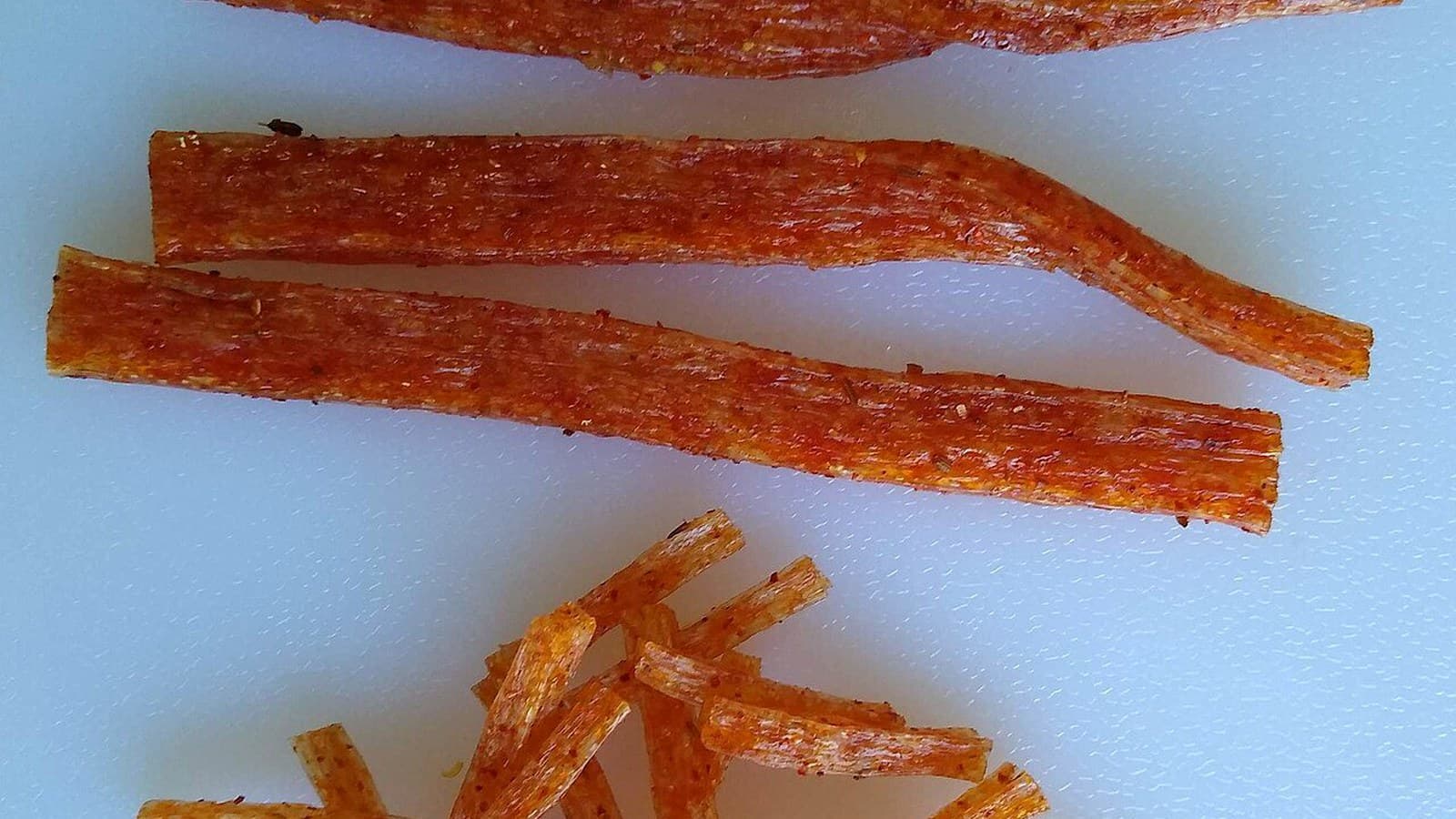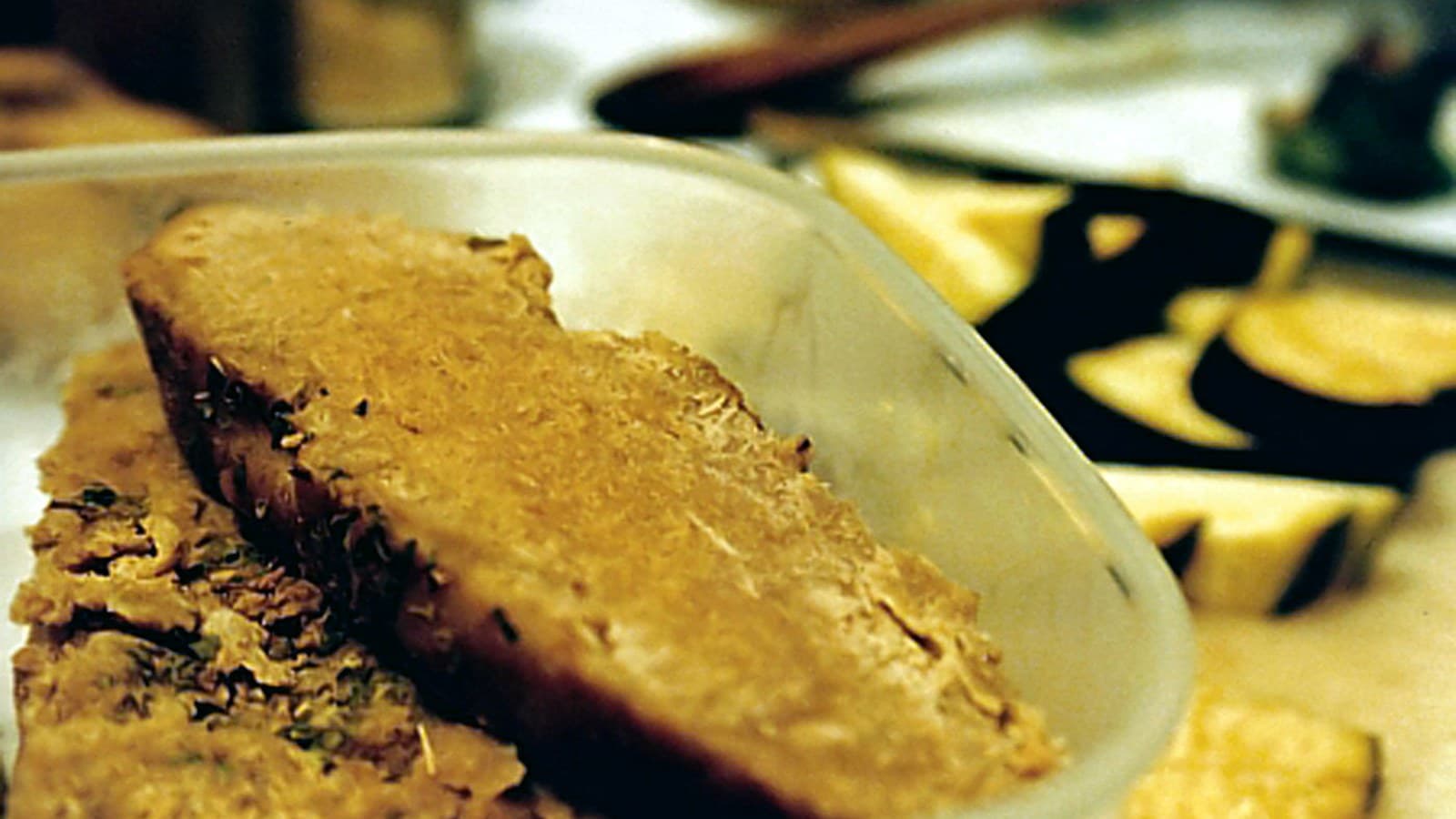
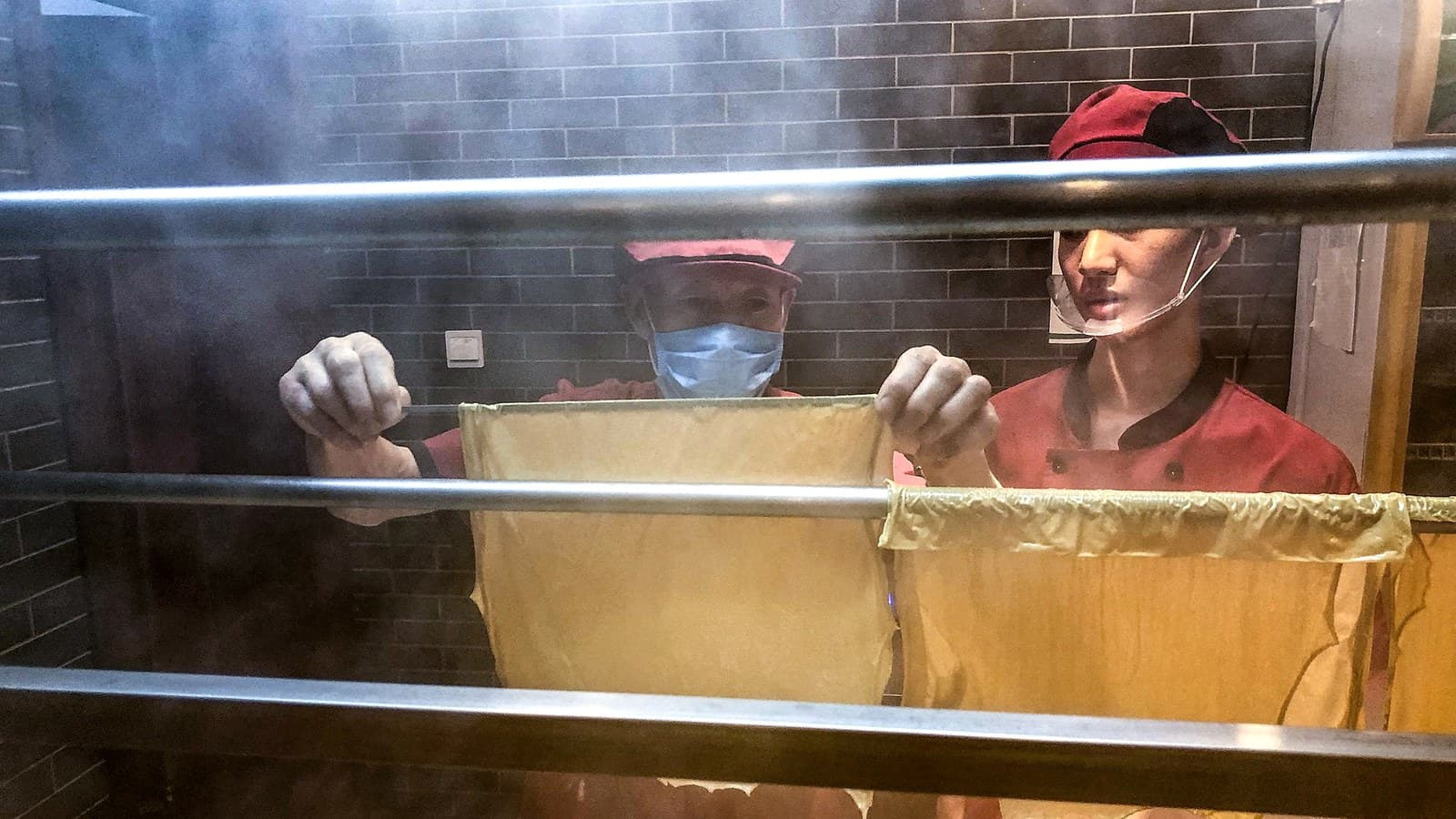
Latiao starts to make more sense once you separate the structure from the seasoning. The structure usually comes from wheat gluten, wheat flour, soy materials, or bean-curd sheets. The flavor comes from chili oil, salt, sweetness, umami seasoning, and the way oil is distributed.
Mass Balance: From Raw Wheat to Finished Strip
A single 65g bag of mainstream wheat-based latiao does not start as 65g of wheat. The mass balance from raw material to retail bag is informative when you compare brands by claimed pack weight:
| Stage | Material | Mass per 100g final product | Loss / addition |
|---|---|---|---|
| Raw wheat flour | Bread-quality wheat (12–13% protein) | ~58g | starting input |
| After dough mixing | Wheat dough + ~32% water | ~85g | water added |
| After extrusion | Cooked wheat strip (gluten-developed) | ~70g | ~17% water flash-loss in extrusion zone |
| After drying / forming | Dried strip (8–12% moisture) | ~55g | further moisture removal |
| After oil + seasoning | Final strip with chili oil + spices | ~100g | +35–45g chili oil + seasoning |
| After packaging | Sealed retail unit | 100g | nitrogen-flush headspace (typical 20–25% of pack volume) |
The implication: chili oil + seasoning is 35–45% of the final product weight in mainstream latiao. That is why "looks oily" is not a quality flaw — it is the recipe. Industry chili-oil-to-base ratios commonly range from 25–50% depending on whether the brand pursues a "dry" (Mala Prince-style) or "saturated" (Weilong-style) profile.
Mass balance · raw wheat → 100g final bag
58g raw flour → 100g final bag, with 35–45% added chili oil + seasoning. This component only appears in the main-ingredients article — mass balance is its specific job.
- Raw wheat flour58g
Starting input
- After extrusion70g
Water added then flash-lost
- After drying55g
Moisture stabilized
- After oil + seasoning100g
+35–45g chili oil + spice
Implication: chili oil + seasoning is 35–45% of final product weight. The oily appearance is the recipe, not a flaw.
Structural Ingredients
The base decides the chew before the chili oil arrives:
- wheat flour / wheat gluten creates the elastic bite associated with mainstream latiao
- soy protein can create a firmer, more fibrous vegetarian-meat style
- tofu skin / bean-curd sheets make a flatter, sheet-like chew
Industry-typical wheat latiao uses 60–72% wheat-derived material by mass, with vital wheat gluten (specified as ≥75% protein per GB/T 21924-2008 for vital wheat gluten) accounting for 8–15% inside that base. The remaining ~30–40% is the seasoning + chili oil layer covered later in this article.
This is why Weilong and ZHUZHIYUAN should not be judged with exactly the same expectations.
Wheat Gluten Specifications
Industry-typical specifications for wheat used in latiao manufacturing:
- Protein content: 12–14% (bread-quality wheat) — lower-protein wheat lacks elasticity, higher-protein wheat extrudes too tough
- Gluten index: 70–85 (per GB/T 5506.4 wet gluten test)
- Ash content: ≤0.55% (cleaner wheat = whiter strip = better visual on photos)
Brands that source from Henan local mills (Luohe area in particular) tend to favor mid-protein wheat (~13%), which produces the elastic-but-not-tough chew that mainstream latiao is known for. Bibizan and Weilong both fall into this category. Mala Prince, by contrast, is associated with slightly higher-protein wheat for a sturdier bite.
Soy Material Specifications
For bean-based routes:
- Defatted soy meal: ~50% protein content, used in textured soy protein (TSP) extrusion
- Whole soybeans: 35–40% protein, ~18–20% oil — used for tofu-skin / bean-curd routes
- Texture proteins: typically 70%+ protein concentrate after processing
GB 19295-2021 governs hygiene indicators for these soy raw materials, which is why factory-grade soy snacks are food-safe even when home-soaked soybeans are not.
Chili Oil: The Most Underrated Ingredient
Chili oil is not a single ingredient — it is a sub-recipe inside the recipe. Industry-typical chili oil composition:
| Component | Typical share | Function |
|---|---|---|
| Vegetable oil base | 60–70% | Solvent for capsaicin extraction |
| Chili powder | 15–25% | Provides heat (Scoville depends on chili variety) |
| Sichuan peppercorn | 1–3% | Numbing (málà brands only) |
| Star anise / cinnamon | 1–2% | Background warmth |
| Garlic / ginger powder | 2–4% | Aromatic depth |
| Sesame seeds / oil | 2–5% | Roasted aroma layer |
The vegetable oil base is usually rapeseed oil (菜籽油) or soybean oil (大豆油) in Chinese factories — rarely peanut oil or sesame oil at scale, because cost per kg matters at industrial volumes. Brands that claim "premium oil" usually mean a higher-quality first-press rapeseed oil, not a different oil category.
Chili variety matters too: Erjingtiao (二荆条) chilis from Sichuan provide aromatic heat; Chao Tian Jiao (朝天椒) from Henan and Hubei provides sharper heat with less aroma. Look for "二荆条" or "朝天椒" in the ingredient list when you want to predict heat profile beyond a simple "spicy" label.
Raw Material Origins: Where Latiao Ingredients Come From
The supply chain behind a 65g bag is more regional than buyers usually realize:
| Material | Common origin | Why this region |
|---|---|---|
| Wheat flour | Henan (Luohe, Zhumadian) | Henan is China's largest wheat producer (~30% of national output) |
| Soy materials | Heilongjiang (north) or Hubei (central) | Heilongjiang for high-protein soybeans, Hubei for nearby tofu-skin processing |
| Chili powder | Henan (朝天椒) or Sichuan (二荆条) | These two provinces dominate dried chili supply |
| Sichuan peppercorn | Sichuan (Hanyuan) or Gansu | Hanyuan is the geographic-indication origin for premium peppercorn |
| Soybean / rapeseed oil | Imported soybean oil (US/Brazil) or domestic rapeseed | Industrial latiao usually uses cost-optimized imported oil |
| Salt | Mostly domestic refined salt | Purified to meet GB 5461 food-grade standards |
| MSG / yeast extract | Domestic chemical / fermentation suppliers | Common 3rd-party suppliers |
This regional clustering is also why most latiao factories cluster in Henan (Luohe, Zhengzhou) and Hunan (Pingjiang) — they are close to wheat and chili supply respectively, which lowers logistics cost.
Raw material origins · 6 inputs
6 raw materials × origin × why-this-region. This component only appears in the main-ingredients article — origin map is its specific job.
Wheat flour
Henan (Luohe, Zhumadian)
Henan = ~30% of national wheat output
Soy materials
Heilongjiang or Hubei
High-protein beans (north) / processing hubs (central)
Chili powder
Henan (朝天椒) or Sichuan (二荆条)
Two provinces dominate dried chili supply
Sichuan peppercorn
Sichuan (Hanyuan) or Gansu
Hanyuan = geographic-indication origin
Vegetable oil
Imported soy oil (US/Brazil) or domestic rapeseed
Cost-optimized at industrial volume
Salt + MSG
Domestic refined salt + chemical / fermentation suppliers
Standard third-party supply
Seasoning Ingredients
Most labels combine chili, oil, salt, sugar, and savory seasoning. The exact balance decides whether the snack feels sweet, sharp, oily, or rounded.
Industry-typical seasoning ratios in mainstream wheat latiao:
- Salt: 3–5g per 100g final product (which is why 100g of latiao = ~100% daily WHO sodium budget)
- Sugar: 4–8g per 100g (higher for sweet-savory brands like Bestore, lower for spicy-forward brands like Mala Prince)
- MSG + I+G (disodium 5'-inosinate / 5'-guanylate): 0.5–1.5g per 100g — the umami booster pair
- Yeast extract: 0.3–0.8g per 100g — newer brands use this in place of MSG for "clean label" positioning
GB 2760-2014 caps several preservatives (sorbates, dehydroacetic acid) at industrial-realistic levels — most mainstream brands use sorbic acid potassium salt at 0.05–0.1% to extend shelf life from days to months.
What Buyers Should Check First
Before buying, read the visible label for:
- wheat or soy as the main structure cue (first ingredient by mass)
- chili variety mentioned (二荆条 / 朝天椒) if heat profile matters
- sesame, peanut, or soy allergen language
- package weight and count
- whether the page shows a real back-label photo
If a marketplace listing hides the back panel and only shows lifestyle photos, treat that as a buying risk — you cannot verify mass balance, oil ratio, or origin claims from a hero shot alone.
Final Take
Ingredients explain why two snacks can both be called latiao-style but feel completely different. The structural base sets the chew, the chili oil composition sets the heat profile, and the seasoning ratio sets the salt-sugar-umami balance. Use the ingredient list before judging heat or price.
Source Notes
- GB 7718-2011 预包装食品标签通则 — the 2% disclosure threshold and ingredient mass-order rule applied throughout this article
- GB 19295-2021 速冻面米与调制食品 (oil-rich packaged-food sanitary) — referenced for oil-handling thresholds in the chili-oil composition section
- GB/T 5506.4-2008 小麦面筋指数测定 — Chinese standard underlying the 12–14% protein wheat specification cited above
- Henan provincial wheat-mill industry profile — regional context for the Luohe / Zhumadian wheat sourcing pattern
- China General Chamber of Commerce food-sector portal — chili-supply and seasoning-blend industry coverage
- Hanyuan Sichuan-peppercorn geographic-indication portal — Hanyuan as the GI origin for premium peppercorn referenced in the chili-oil section