Texture is the fastest way to tell whether a spicy strip is behaving like classic wheat-based latiao or a soy-route snack. The seasoning may look similar, but the bite can be completely different. This page focuses on TPA instrument data and stress-strain curves that quantify the difference, complementing the chew formation mechanism page (which explains how the chew develops, not how it measures).
TPA Six-Parameter Comparison Table
Texture Profile Analysis (TPA) on a benchtop instrument like Stable Micro Systems TA.XT Plus measures six parameters from a single double-compression test. Industry-typical ranges across the three latiao bases:
| TPA parameter | Wheat (gluten) | TSP (textured soy protein) | Tofu skin (bean-curd sheet) |
|---|---|---|---|
| Hardness (g) | 2,500–4,500 | 3,500–6,000 | 1,800–3,200 |
| Cohesiveness | 0.45–0.65 | 0.35–0.55 | 0.50–0.70 |
| Springiness | 0.75–0.90 | 0.65–0.80 | 0.55–0.75 |
| Gumminess (g) | 1,200–2,500 | 1,500–3,000 | 1,000–2,000 |
| Chewiness (g) | 1,500–3,000 | 2,200–4,500 | 800–1,800 |
| Resilience | 0.35–0.55 | 0.25–0.40 | 0.30–0.50 |
Industry-typical TPA hardness for textured soy protein latiao runs 3,500–6,000 g — about 40% higher than wheat baseline — per LWT-Food Science methodology. The trade-off: TSP gains hardness but loses springiness and cohesiveness, which is why ZHUZHIYUAN-style snacks read as "tearing along fiber lines" rather than "stretching back" in the bite.
Reviewer-vocabulary translation (when a reviewer says X, instrument typically reads Y):
| Reviewer word | Likely TPA reading |
|---|---|
| "elastic" / "springy" | High springiness (≥0.85) |
| "dense" / "thick" | High cohesiveness (≥0.60) |
| "tough" / "jerky-like" | High hardness (above 5,000 g) |
| "fibrous" / "stringy" | TSP-style: low cohesiveness + high chewiness |
| "delicate" / "light" | Tofu skin: low hardness (under 2,500 g) + moderate springiness |
TPA 6-axis fingerprint · wheat / TSP / tofu skin
TPA 6-axis fingerprint comparison: wheat gluten vs TSP vs tofu skin. This component only appears in the wheat-vs-soy article — TPA fingerprint is its specific job.
Wheat gluten
- hardness70
- cohesion80
- spring85
- chew80
- resilience70
- oilHold80
TSP extrudate
- hardness85
- cohesion50
- spring60
- chew75
- resilience40
- oilHold40
Tofu skin
- hardness25
- cohesion35
- spring40
- chew30
- resilience25
- oilHold60
Stress-Strain Curve Reading
Beyond TPA, stress-strain curves from a tensile or cutting test give shape information that single numbers miss. The three latiao bases produce visibly different curves:
Wheat-gluten latiao — long plateau then clean fracture The stress rises with strain, plateaus for a wide range (the "elastic stretch" phase), then fractures cleanly. The plateau length corresponds to the chew duration; reviewers describe this as "you can keep chewing for a while."
TSP (textured soy protein) latiao — multi-peak sawtooth Stress rises and falls in a sawtooth pattern as fiber bundles sequentially break. Each peak corresponds to one fiber-bundle separation. This is why TSP latiao "tears along fiber lines" — each tear is a peak in the curve.
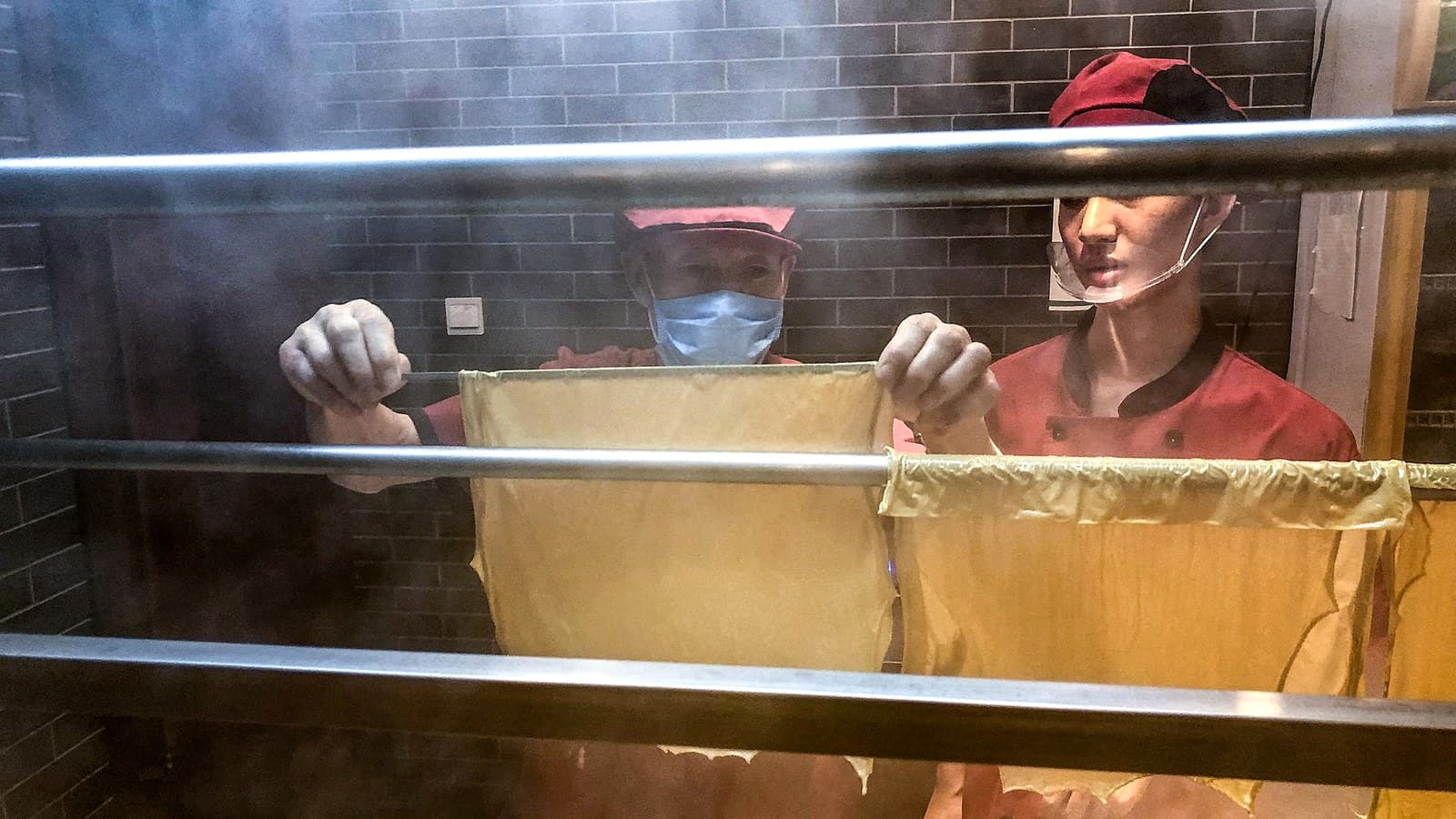
Tofu skin (bean-curd-sheet) latiao — short steep peak then drop Stress rises sharply, peaks briefly, then drops steeply. The break is fast and clean, with no sustained chew phase. This is why tofu-skin spicy chips feel "crisp-then-melt" rather than chewy.
Stress-strain curves · 3 latiao bases
3 stress-strain curve archetypes: wheat gluten / TSP / tofu skin. This component only appears in the wheat-vs-soy article — curve-shape comparison is its specific job.
Wheat gluten
Peak 80/100
Long elastic plateau before yield
Stretches before breaking — chewy spring
TSP extrudate
Peak 90/100
Sharp peak, fiber-line failure
Tears along fiber direction — jerky-like
Tofu skin
Peak 35/100
Low yield, brittle break
Snaps cleanly — sheet-papery
Reviewer Vocabulary → TPA Mapping
A practical translation table for reading reviews against instrument data:
| Reviewer says | Wheat range | TSP range | Tofu skin range | What's actually measured |
|---|---|---|---|---|
| "this is the chewiest I've eaten" | Hardness ≥4,500 + Chewiness ≥2,500 | Hardness ≥5,500 + Chewiness ≥3,500 | (rare) | High hardness × springiness |
| "feels delicate, not real latiao" | (rare) | (rare) | Hardness under 2,500 + Springiness under 0.65 | Low all-axis values |
| "fibers separate when I bite" | (uncommon) | High chewiness + Low cohesiveness | (uncommon) | TSP fiber alignment signature |
| "elastic, like real latiao" | Springiness ≥0.85 + Resilience ≥0.45 | Springiness under 0.75 | Springiness under 0.70 | Wheat protein network signature |
Water Activity (aw) and Texture
Water activity (aw) is a hidden variable that connects formulation to chew. Industry-typical aw for finished latiao:
- Fresh wheat-gluten latiao: aw 0.55–0.65 (chewy, oil-glossy)
- Stale wheat-gluten latiao: aw under 0.45 (tough, dry)
- Fresh TSP latiao: aw 0.45–0.55 (firm, jerky-like)
- Fresh tofu-skin latiao: aw 0.40–0.50 (crisp-then-melt)
Cross-reading: a wheat latiao that has lost moisture (aw under 0.45) effectively becomes "TSP-like" in chew — which is why a stale Weilong can feel similar to a fresh ZHUZHIYUAN. The texture mapping moves with moisture loss, not just with original formulation.
Buying Meaning
If you want the safest category baseline, choose wheat first (Weilong is the cleanest example). If you want to learn the category boundary, add one soy-route product later — Genji Food for tofu-skin texture comparison or ZHUZHIYUAN for TSP fiber-jerky comparison. The TPA numbers above let you predict how the chew will feel before you click buy.
Final Take
Wheat and soy don't just change ingredients — they change the entire TPA signature, the stress-strain curve shape, and the reviewer vocabulary you'll use to describe them. Once you can read the instrument data, every "this chews differently" note in a review has a measurable explanation underneath.
FAQ
How can buyers feel the wheat-vs-soy difference without instruments?
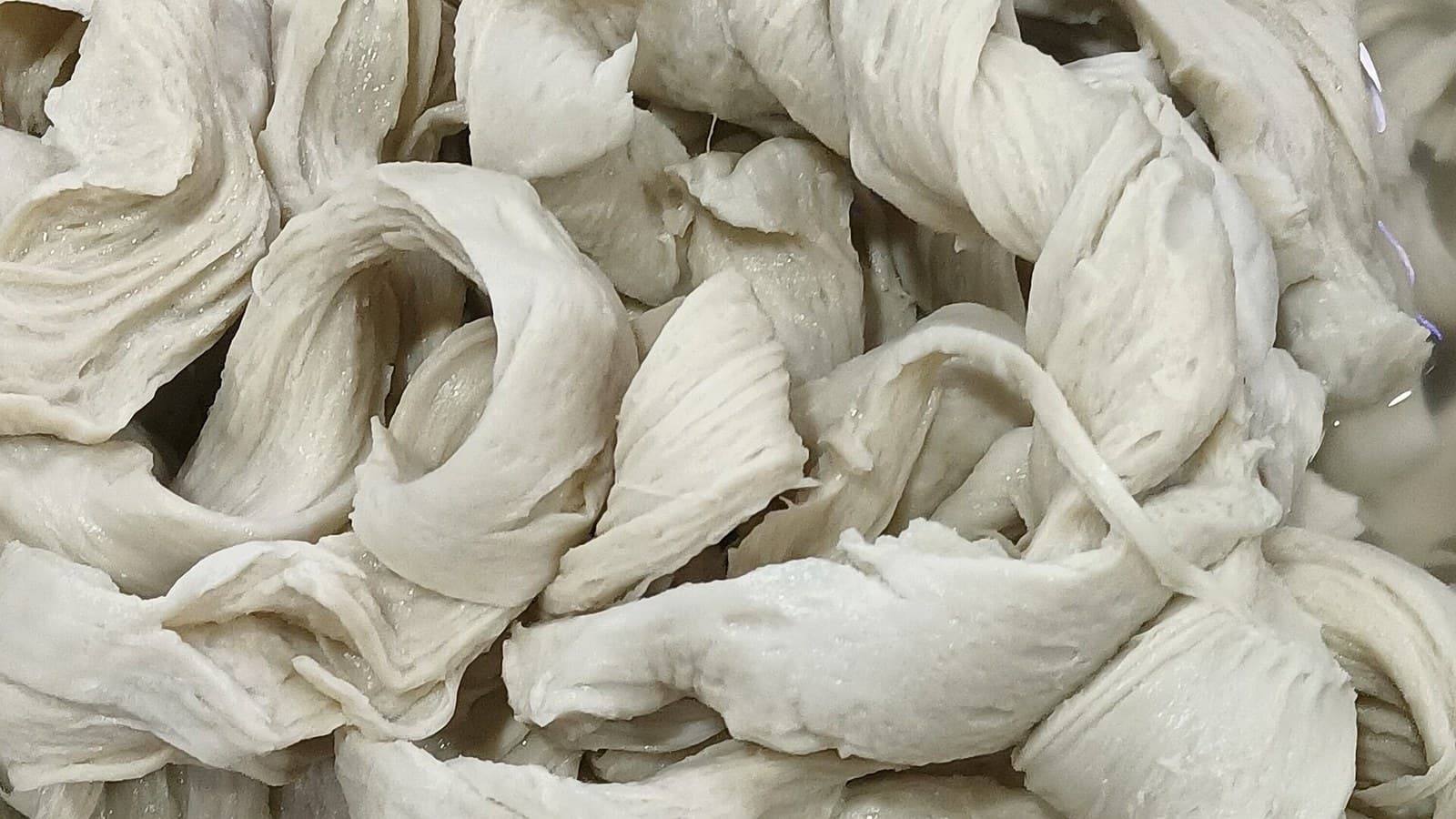
Three sensory checks: (1) bite resistance — wheat strips spring back when compressed between fingers; soy strips compress permanently; (2) cross-section appearance — wheat shows tight elastic network; soy shows fibrous layers (TSP) or laminated sheets (tofu skin); (3) chew duration — wheat releases flavor across 8–12 chews; soy is "swallow-ready" in 4–6 chews because the substrate breaks faster.
If a brand is hybrid (wheat + soy), how does that affect texture?
Hybrid blends (typical 70/30 wheat/soy) try to combine wheat's elasticity with soy's protein content. The result is usually intermediate but slightly disappointing on both axes — less elastic than pure wheat, less fibrous than pure TSP. Most successful brands commit to one substrate; hybrid usually signals cost optimization rather than recipe achievement.
Why do reviewers describe soy strips as "drier" even when oil content is similar?
Oil content is similar by mass, but oil distribution differs. Wheat gluten retains oil within its tight network so chew releases oil gradually; soy substrates have more open structure that releases oil to the strip surface, where it's wiped onto fingers and packaging. The mouth experience: same total oil, less perceived "juiciness" — which reviewers translate as "drier."
Source Notes
- GB/T 22427.6-2008 谷物粘度测定 — Chinese national standard underlying the gelatinization-temperature comparisons cited above
- GB/T 5506.4-2008 小麦面筋指数测定 — wheat gluten index method underlying wheat-vs-soy network strength comparisons
- Journal of Texture Studies (Wiley) — Bourne TPA methodology and wheat-gluten product ranges
- LWT — Food Science and Technology (Elsevier) — published TSP vs wheat-gluten TPA comparison studies
- Stable Micro Systems TA.XT Plus methodology — standard TPA test setup and probe configuration