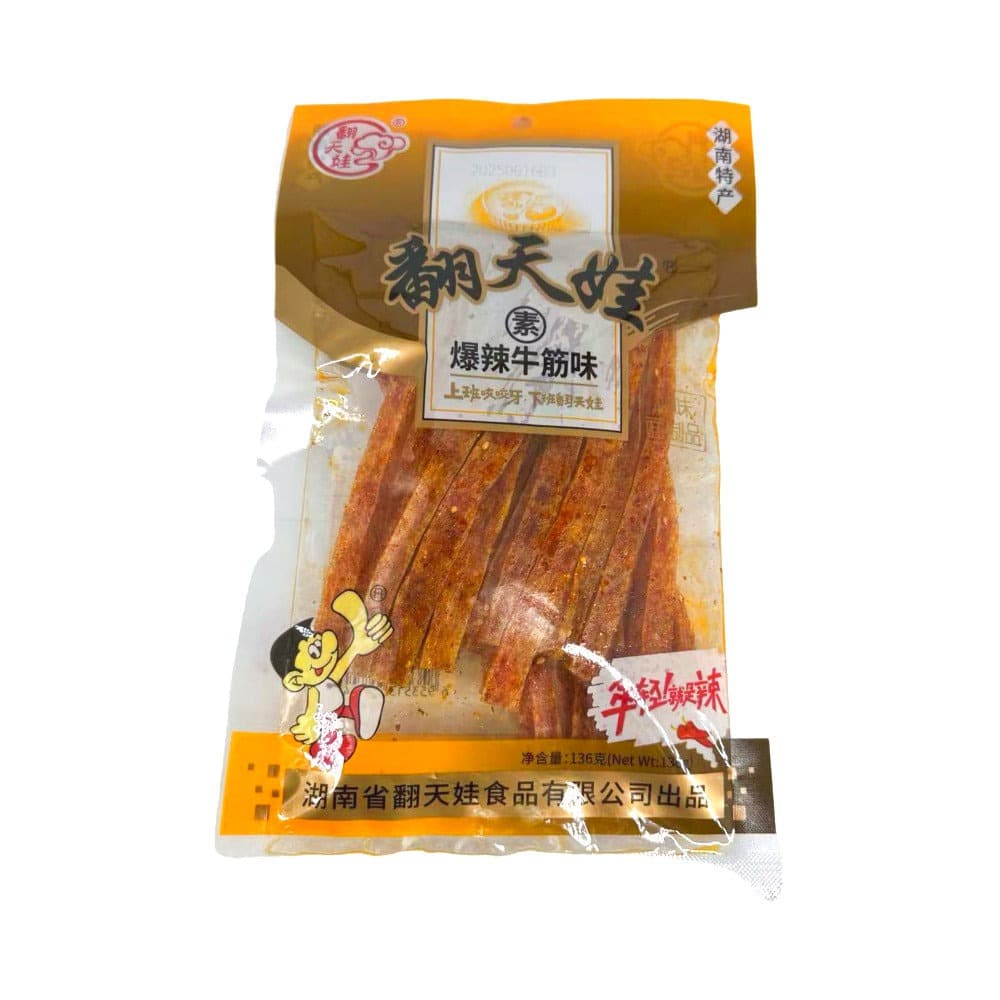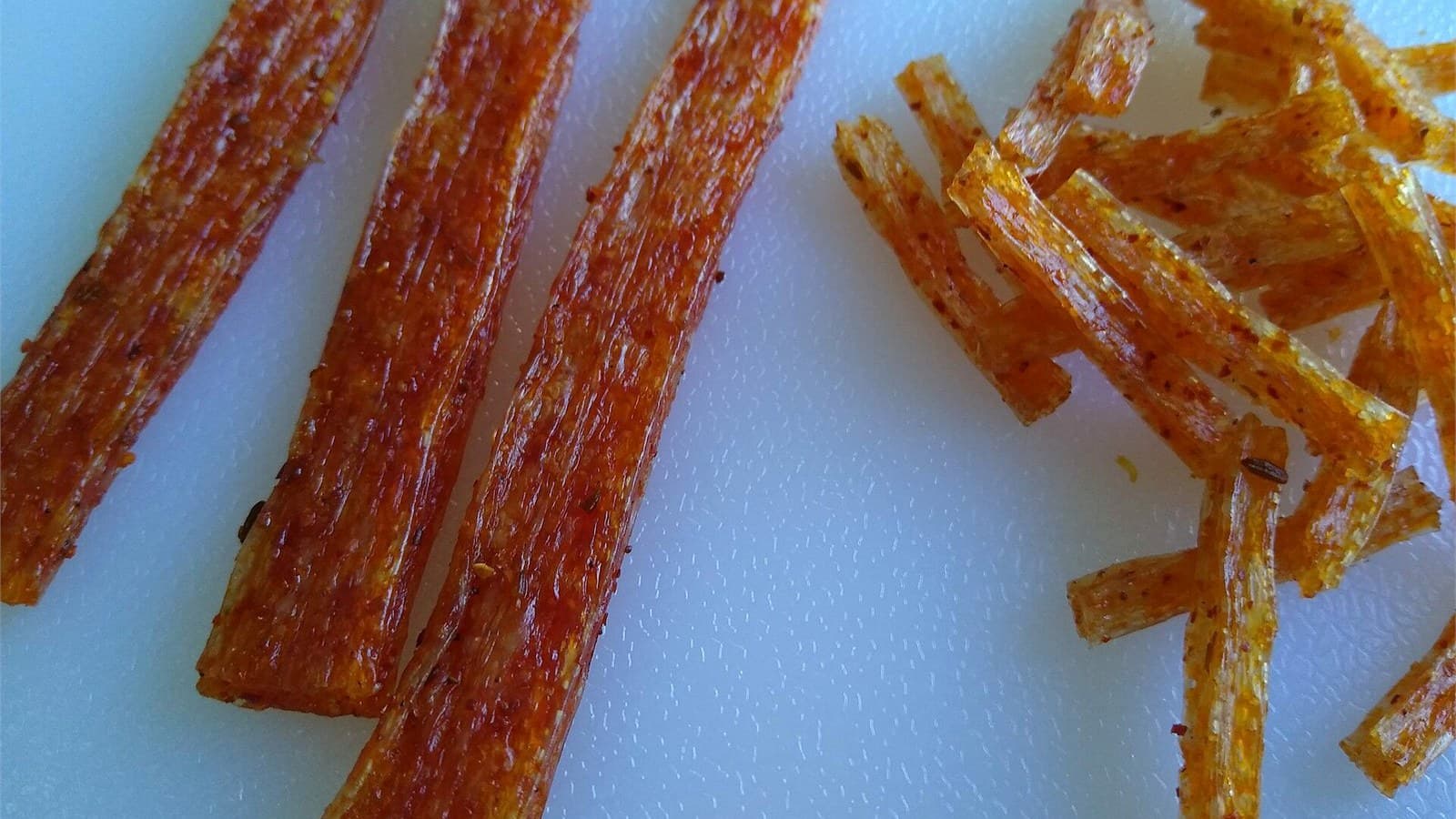
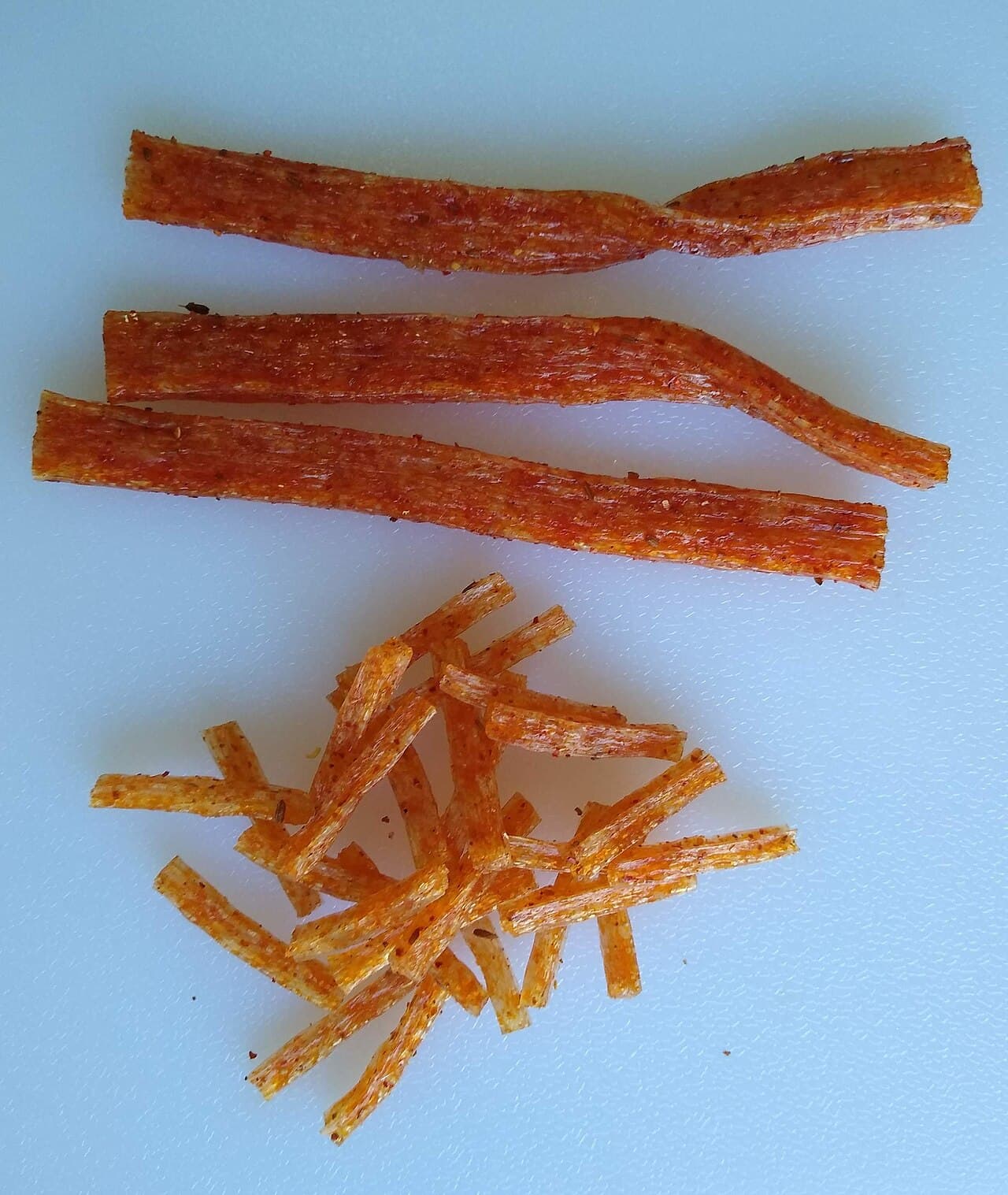
Latiao is a chewy, ready-to-eat Chinese snack made primarily from wheat gluten, chili oil, and soy-based seasoning. Its texture is dense and elastic — not crunchy like a chip or dry like jerky. Most mainstream latiao contains no meat, though not every product is automatically vegan. Seasoning systems vary by brand, so always check the ingredient label rather than assuming all latiao is plant-based.
What this page is: the cornerstone definition page covering what latiao is, what it is made of, how it tastes, where it came from, and what distinguishes it from related snacks. What it is not: a heat quantification page — for SHU numbers and burn timelines see How Spicy Is Latiao?. For diet labels (vegetarian / vegan / halal / gluten-free) see Is Latiao Vegetarian or Vegan?. For cross-category boundaries see Latiao vs Konjac & Gluten Snacks.
What Is Latiao?
Latiao is a seasoned wheat-gluten snack that is usually cut into strips, sheets, or thick ribbons. The name is often translated informally as "spicy strips," but the texture and flavor are more distinctive than that translation suggests. A typical piece is glossy with chili oil, slightly elastic, and deeply savory.
For many Chinese snack fans, latiao is familiar convenience-store food. For first-time international buyers, it is more useful to think of it as a spicy, chewy, ready-to-eat wheat snack with a strong seasoning profile. The chew comes from the wheat gluten network rather than from dehydration or frying, which sets it apart from both meat jerky and fried chips.
Latiao shares the snack aisle with three other product families — konjac snacks, soy-based gluten snacks, and extruded spicy chips — but the ingredient base, texture, and nutrition profile are different in each case. See Latiao vs Konjac & Gluten Snacks for a comparison of the three overlapping categories.
What Is Latiao Made Of?
Latiao is built on wheat gluten (structure), chili oil (heat and gloss), salt and sugar (savory-sweet balance), and a soy-based umami system (soy sauce powder, yeast extract). The chewy, elastic texture comes from the gluten network — not from meat or dehydration. Some soy-based variants exist; check the first ingredient on the label.
→ For the full ingredient breakdown, production process, and wheat-vs-soy comparison, see What Is Latiao Made Of?.
What Does Latiao Taste Like?
The five flavor dimensions of latiao: spicy (chili-forward, from mild warmth to numbing má-là), savory (deep umami from soy seasoning), sweet (subtle balancing note), oily (rich mouthfeel from 18–28% oil), and chewy (dense, elastic — the texture is part of the taste). Heat levels range from mild (Weilong) to hot (Mala Prince).
→ For the full flavor profile, spice tiers, brand comparison, and first-bite expectations, see What Does Latiao Taste Like?.
Is Latiao Meat?
No. The most common misunderstanding about latiao is that it is made from meat, chicken, or fish because the chewy texture and savory seasoning can read as "meaty" to first-time eaters.
Standard latiao uses wheat gluten as its primary structural ingredient. The "meaty" flavor comes from soy-based umami seasoning and flavor enhancers, not from animal protein. However:
- The seasoning system in some brands may include animal-derived ingredients such as dairy or meat stock powder.
- Products that are branded as "spicy strips" but whose main ingredient is soy protein, chicken, or fish belong to a different snack category — they are not latiao even if a marketplace listing calls them that.
If you need to confirm whether a specific product is meat-free, read the ingredient label directly rather than relying on the product name. The guide Is Latiao Vegetarian or Vegan? explains how to check labels and packaging signals.
Is Latiao Vegetarian or Vegan?
Often, yes, but not automatically. The base is usually wheat gluten rather than meat, yet seasoning systems can still change the answer. Some bags stay plant-based, while others may use dairy, meat-style seasoning, or other additives that matter to cautious buyers.
If diet rules matter, do not stop at the product title. Read Is Latiao Vegetarian or Vegan? before ordering, which covers how to check ingredient labels and packaging signals for vegan and vegetarian suitability.
Where Did Latiao Originate?
The most well-documented modern commercial origin is Pingjiang County in Hunan Province, often recognized as the "hometown of Chinese latiao." The snack later spread nationwide through multiple regions, brands, and factories — so it helps to separate "point of origin" from "national brand expansion."
Latiao did not exist as a distinct category before 1998. The seven nodes below trace how it became a recognizable Chinese snack and arrived on overseas shelves:
1998–2026 timeline
Seven moments that turned a Hunan workshop substitution into a globally recognized snack category.
1998
Pingjiang, Hunan
Pingjiang Flood
A flood in Hunan's Pingjiang County made traditional bean-curd snack ingredients (the local specialty) too expensive. Snack workshops including the founders of what later became Weilong, Mala Prince, and BiBiZan substituted wheat gluten, accidentally creating the chewy, oil-glossed strip we now call latiao.
2001
Luohe, Henan
Weilong Industrialized
The Liu brothers moved north from Pingjiang to Luohe, Henan and founded what became Weilong (公司全称:漯河市平平食品). This is the moment latiao went from workshop snack to factory product.
2007
Zhengzhou
BiBiZan Bulk-Format Era
BiBiZan formalized the night-market grilled gluten format into industrial bulk-pack retail, anchoring the "pantry-size sharing bag" lane.
2014
Pingjiang
Mala Prince Brand Founded
Mala Prince formally branded the Pingjiang-style chili-forward variant, becoming the flag-bearer of the Hunan Pingjiang school vs. Henan-Luohe industrial school.
2018
US trial
First Overseas Mainstream Listings
Weilong tested Walmart shelves in select US Asian-American markets; latiao stopped being a "specialty Asian grocery only" item.
2022
Global
TikTok Overseas Breakout
Latiao reaction videos went viral on Western TikTok / Reddit r/snackexchange; demand outran the supply chain.
2026
Editorial sweep
11+ Brands Cross-Border Verified
As of the 2026-04-30 sweep, 9 of the 11 reviewed brands have verified US purchase routes. Two (ZHUZHIYUAN, parts of FEIWANG) remain inconsistent.
Wheat, Soy and Konjac Snack Differences
The three most common snack categories that overlap with latiao in marketplace listings are:
- Wheat gluten latiao (this page's subject): wheat gluten + chili oil + seasoning. Chewy, ~450 kcal/100g, typically 18-28% oil. This is what "latiao" means in the original Chinese snack context.
- Soy-based gluten snacks: made from soy protein or textured vegetable protein. Different chew — more like a dense protein bite than a stretchy strip. Some brands mix soy and wheat gluten.
- Konjac snacks (魔芋): made from konjac glucomannan. ~50 kcal/100g, rubbery texture, low-calorie. Not latiao, but often found in the same retail shelf or marketplace category.
The full ingredient-level breakdown is covered in Latiao vs Konjac & Gluten Snacks. If you are shopping for a specific texture type, check the ingredient label for "wheat gluten" as the first or second ingredient — that is the most reliable identifier for true latiao.
What Latiao Is NOT — Adjacent Category Exclusion
The fastest way to understand what latiao is, is to rule out four things it is often confused with:
- Latiao ≠ jerky. Jerky is dehydrated meat (or, for vegan jerky, soy/seitan dried to a meat-like density). Latiao is wheat gluten with chili oil and seasoning, retaining 18-22% moisture. Jerky's chew comes from desiccation; latiao's comes from gluten network elasticity.
- Latiao ≠ chili crisp. 老干妈 chili crisp is a condiment (oil + dried chili + fermented bean), eaten on top of other food. Latiao is a standalone ready-to-eat snack with the chili already integrated into a chewy substrate.
- Latiao ≠ konjac (魔芋). Konjac snacks are made from glucomannan (90%+ water), giving a rubbery low-calorie chew at ~50 kcal/100g. Latiao is wheat-gluten + 18-28% oil at ~450 kcal/100g — the energy density is 9× higher. See Latiao vs Konjac for the full nutrition triangle.
- Latiao ≠ spicy chips. Takis, hot Cheetos, and spicy potato chips are fried/baked extruded carb chips with seasoning powder coating. Latiao's substrate is protein-based (wheat gluten = mostly protein), and the chili is delivered through oil, not powder.
If a marketplace listing's photo shows something that looks like jerky, chili crisp in a jar, gelatinous noodles, or thin crispy chips — it's not latiao, regardless of what the title says.
What latiao is NOT · 4 exclusion cards
The 4-card exclusion grid. This component only appears in the what-is-latiao cornerstone — adjacent category boundary is its specific job.
≠
Jerky
Dehydrated meat (or soy/seitan dried to meat density). Latiao is wheat gluten + chili oil at 18–22% moisture.
≠
Chili crisp
Condiment (oil + dried chili + fermented bean) eaten on top of food. Latiao is a standalone ready-to-eat snack.
≠
Konjac (魔芋)
Glucomannan + 90% water at ~50 kcal/100g. Latiao is wheat gluten + 18–28% oil at ~450 kcal/100g (9× energy density).
≠
Spicy chips
Fried/baked extruded carb chips with seasoning powder. Latiao's substrate is protein-based; chili comes through oil, not powder.
Name variants in the wild
5 name variants and how they overlap. This table only appears in the what-is-latiao page — name disambiguation is its specific job.
辣条 (la tiao)
spicy strip
Most common; covers wheat-gluten + adjacent shapes
辣片 (la pian)
spicy slice
Flatter / sheet-style; 大辣片 = larger format
辣丝 (la si)
spicy thread
Thin shred; usually wheat-gluten only
spicy strips (English)
transliteration
Cross-border marketplace title default
spicy gluten / seasoned wheat snack
ingredient-led
Used by listed brands targeting Western buyers
How to Choose a First Bag
If you are buying latiao for the first time, here are three practical steps:
- Pick a benchmark brand — Weilong is the most recognized and the easiest reference point for texture and seasoning. Compare it against Mala Prince or Fan Tian Wa if you want a hotter option.
- Check the heat level — Most mainstream latiao lands between mild and medium. The How Spicy Is Latiao? guide has a brand-by-brand heat breakdown.
- Look for a clear listing — A good product page shows real packaging photos, ingredient labels, and package dimensions. The Best Brands page ranks all major options by heat, texture, and beginner friendliness.
Avoid buying from listings that only show stock illustrations or have vague descriptions — the risk of getting a different product type (konjac, soy snack, or old stock) is higher when the listing lacks visual evidence. Our buying guide covers what to look for in a product listing before you place an order.
Related In-Depth Guides
Once you understand what latiao is, the following pages will help you refine your knowledge and make your first purchase more confident:
- What Is Latiao Made Of? — full ingredient breakdown, production process, wheat vs soy comparison
- What Does Latiao Taste Like? — flavor profile, spice tiers, texture guide, first-bite expectations
- Where to Buy Latiao Online — platform comparison, price ranges, listing verification signals
- How Spicy Is Latiao? — SHU estimates, brand heat comparison, and burn timeline
- Is Latiao Vegetarian or Vegan? — diet label checks, ingredient signals, and what to look for on packaging
- Best Latiao Brands 2026 — 10-brand ranking by heat, texture, and beginner suitability
- Top 5 Brands for First-Time Buyers — curated selection if the full ranking feels overwhelming
FAQ
Is latiao always very spicy?
No. Many popular products are medium or milder than first-time buyers expect.
Is latiao meat?
Usually no. The signature chewy texture usually comes from wheat gluten rather than meat.
Why does latiao look oily?
Oil helps carry the seasoning and gives the snack its glossy finish. That richness is part of the expected texture.
Where should I buy latiao online?
Use a listing with clear brand photos, visible size details, and readable package information. The buying guide is the best next step.
Where did latiao originate?
The most well-documented modern commercial origin is Pingjiang County in Hunan Province, often recognized as the "hometown of Chinese latiao." The snack later spread nationwide through multiple regions, brands, and factories.