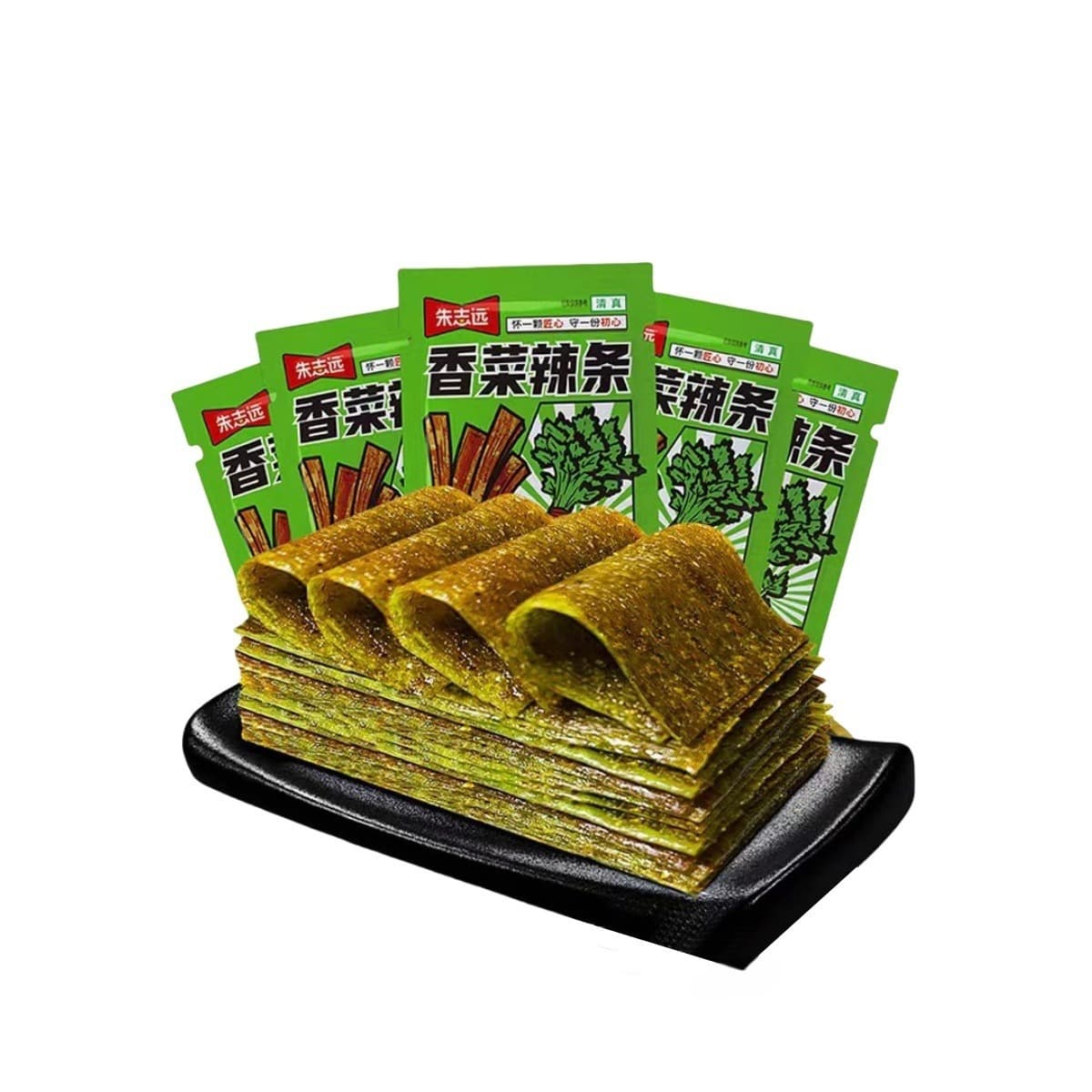
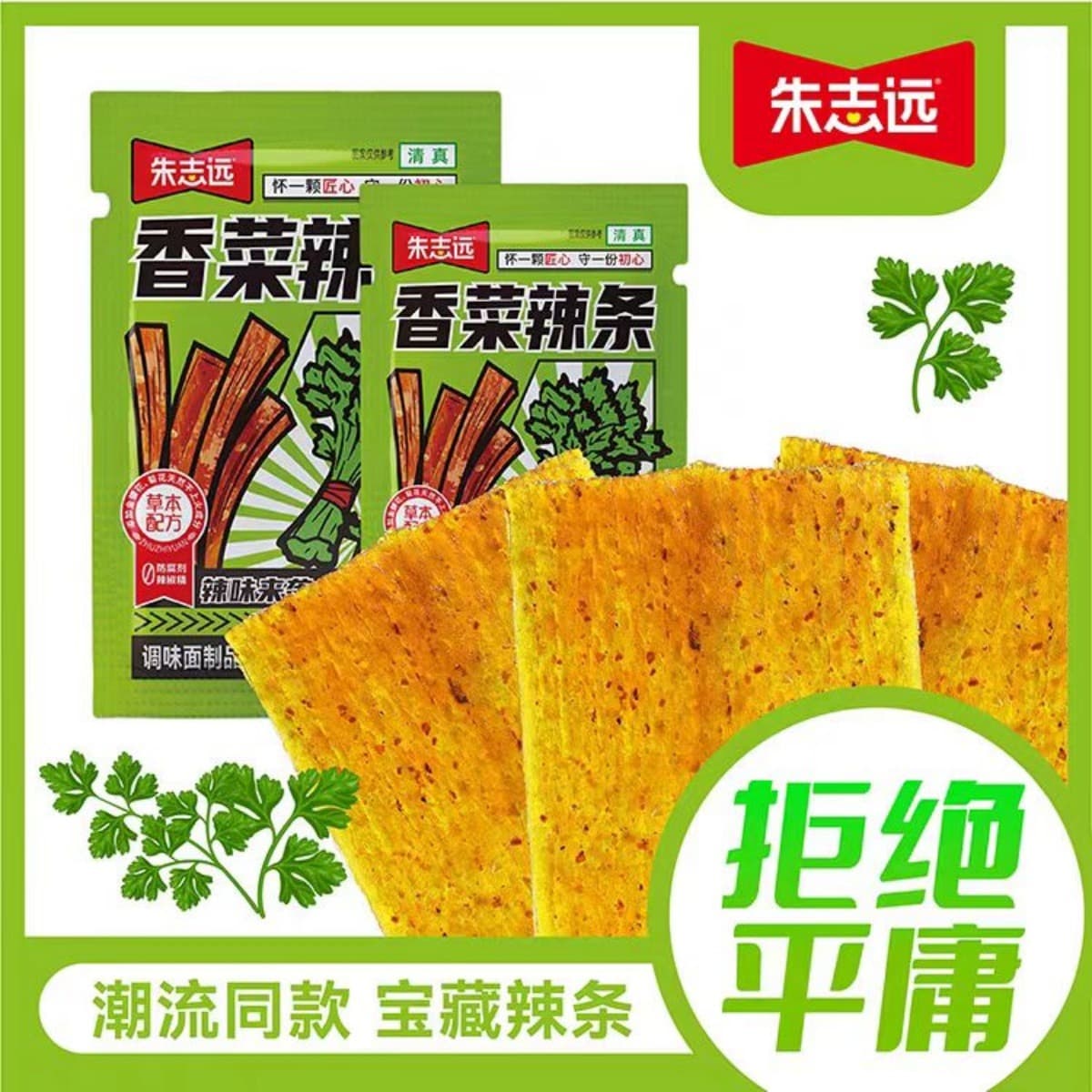
If you already enjoy chewy spicy snacks, latiao may not be your first stop. Some readers arrive from konjac snacks, grilled gluten snacks, bean-curd strips, or other oil-and-chili pantry favorites. The confusing part is that those snacks can look similar in photos while eating very differently.
This guide compares the experience, not just the ingredients.
Per-100g Nutrition Triangle
Three categories, three radically different nutrition profiles. Industry-typical per-100g values:
| Metric | Latiao (wheat gluten) | Konjac (魔芋爽 style) | Grilled gluten (烤面筋, low-oil) |
|---|---|---|---|
| Energy | 400–525 kcal | 45–60 kcal | 240–320 kcal |
| Fat | 22–30 g | 0.2–1 g | 6–12 g |
| Protein | 12–18 g | 0.5–1.5 g | 14–22 g |
| Carbohydrate | 35–45 g | 8–12 g | 30–40 g |
| Sodium | 1,200–2,500 mg | 800–1,400 mg | 900–1,600 mg |
| Water content | 18–22% | 88–92% | 14–18% |
| Shelf life | 6–9 months | 12–18 months | 6–10 months |
The "konjac is so low calorie" puzzle: konjac glucomannan is a soluble fiber that contributes negligible energy. The 50 kcal/100g comes mostly from added oil and seasoning, not from the substrate itself. That's why a 100g konjac snack feels filling without delivering sustained energy — you're eating water-bound fiber.
The "grilled gluten is healthier" puzzle: same wheat protein as latiao, but pan-grilled or air-baked instead of oil-coated. Lower fat by ~60-70%, similar protein. Best of both: jerky-class chew without latiao's oil load. The trade-off: less seasoning intensity, drier mouth feel.
Sodium · Fat · Sugar — per 100g
Bars show how much of an adult daily ceiling each category occupies per 100g. Konjac wins on fat-by-far, latiao spends 90%+ of daily sodium per bag.
Reference: 2000mg sodium · 70g fat · 50g sugar (per 100g, daily ceiling reference)
Latiao (wheat gluten, mainstream)
- Sodium1850mg · 93%
- Fat26g · 37%
- Sugar12g · 24%
One 100g bag ≈ 90%+ daily sodium; treat as sharing portion.
Konjac (魔芋爽 style)
- Sodium1100mg · 55%
- Fat0.6g · 1%
- Sugar4g · 8%
Negligible fat. Sodium is still material — not a 'free snack'.
Grilled gluten (烤面筋, low-oil)
- Sodium1250mg · 63%
- Fat9g · 13%
- Sugar6g · 12%
Same wheat protein as latiao, but 60–70% less fat.
Origin & Convergence Timeline
The three categories have separate origins but converged on overseas Asian-American shelves around 2020:
- 1998 — Latiao born in Hunan Pingjiang (1998 flood, wheat gluten substituted for soy)
- 2005 — BiBiZan industrializes grilled gluten from night-market street food
- 2010s — Konjac snack reformulated for industrial production; Sichuan/Chongqing factories scale glucomannan strip processing
- 2018 — Latiao first Walmart US test (Weilong, regional Asian-American markets)
- 2020 — Konjac 魔芋爽 brand explosion on Chinese social media (Douyin / RED), driven by "low-calorie chewy spicy" positioning
- 2022 — All three categories arrive on H-mart and 99 Ranch shelves, often in the same aisle, often labeled inconsistently
- 2026 — Cross-platform SKU convergence: same shelf, three different food categories, frequent buyer confusion
The shelf placement is the convergence — but the nutrition + chew profiles still differ by 5-10× across multiple metrics.
3 categories · 1998–2026 origin & convergence
3 categories from 1998 to 2026 convergence. This component only appears in the latiao-vs-konjac guide — cross-category history is its specific job.
1998
Latiao born — Hunan Pingjiang flood, wheat gluten substituted for soy
2005
BiBiZan industrializes grilled gluten from night-market street food
2010s
Konjac snack reformulated for industrial production; Sichuan / Chongqing factories scale
2018
Latiao first Walmart US test (Weilong, regional Asian-American markets)
2020
Konjac 魔芋爽 brand explosion on Douyin / RED
2022
All three categories arrive on H-mart and 99 Ranch shelves
2026
Cross-platform SKU convergence; same shelf, three different food categories
5 marketplace title traps
5 marketplace title traps. This component only appears in the latiao-vs-konjac guide — title-trap detection is its specific job.
"Spicy Strip Konjac Crisp 200g"
Konjac sold under 'Spicy Strip' tag — wheat-free but not wheat latiao
"Vegan Spicy Chips Mala Flavor"
Could be konjac, tofu skin, or wheat — title doesn't disclose substrate
"Hunan Spicy Snack Variety Pack"
Mixed bag of latiao + konjac + tofu skin — calorie / texture vary 9×
"Grilled Gluten 烤面筋 Spicy"
Grilled gluten ≠ latiao; lower oil, drier mouthfeel
"Mala Crispy Strips"
'Crispy' usually = thin sheet (tofu skin) not chewy strip (gluten)
How to Tell Them Apart in a Marketplace Photo
Five visual cues that reliably separate the categories:
- Latiao: glossy chili-oil coating, visible orange-red surface oil, wheat-fiber visible inside
- Konjac (魔芋爽): gelatinous translucent strands, often rubbery-looking, less visible oil
- Grilled gluten (烤面筋): matte surface, brown char marks, dry-looking exterior
- Tofu skin / bean-curd spicy chip: layered sheets visible from the side, papery edges
- Vegetarian meat (TSP): fibrous strands, jerky-like fiber alignment, less elastic
If a marketplace title says "spicy strip" but the photo shows gelatinous translucent strands → that's konjac, not latiao. The Chinese keyword cheat: 魔芋 = konjac, 蒟蒻 = also konjac (Japanese loanword), 烤面筋 = grilled gluten, 豆皮 / 千张 = tofu skin, 大豆素肉 = TSP vegetarian meat.
The Fast Difference
The easiest summary is:
- Latiao is usually oilier, more seasoned, and more explicitly built around a chewy wheat-gluten bite.
- Konjac snacks often feel springier, wetter, and less bread-like.
- Other gluten snacks can overlap with latiao, but some are drier, grilled, or less chili-forward.
If you are new to the category, read What Is Latiao? before making a substitute decision.
Texture: The Biggest Shift
Texture is the most important change between these snacks.
Latiao usually feels:
- chewy
- oily
- dense but flexible
- designed to carry seasoning
Konjac snacks often feel:
- bouncier
- slicker or wetter
- more elastic in a jelly-like way
- less bread-like than wheat-gluten snacks
Grilled gluten snacks can feel:
- firmer
- more repetitive in chew
- less rounded in sweetness
- better for people who already know they enjoy gluten-heavy snacks
If you are not sure you like chewy gluten snacks, start with a balanced beginner option instead of a very dense pantry-size bag.
Heat and Richness
Latiao often feels richer because oil is part of the identity. Konjac snacks can still be spicy, but the heat usually lands on a different base texture. That changes how the chili reads.
For many first-time buyers:
- latiao feels fuller and more snack-like
- konjac feels lighter but more unusual in texture
- grilled gluten can feel more repetitive and heavier over time
The best choice depends on which risk bothers you more: oil richness, dense chew, or unusual bounce.
Which Snack Suits Which Buyer?
Use this shortcut:
| If you want... | Better place to start |
|---|---|
| the classic latiao benchmark | Weilong review |
| a beginner-friendly shortlist | Best latiao for beginners |
| a denser gluten-heavy option | BiBiZan review |
| stronger heat after the benchmark | Mala Prince review |
Final Buying Logic
Do not buy based on packaging similarity alone. Decide first whether you want:
- balanced benchmark latiao
- denser grilled gluten chew
- springier konjac texture
Then judge the listing quality and pack size. The guide to single packs versus variety packs helps once you know which snack family you actually want.
FAQ
Is latiao the same as konjac snacks?
No. They may share chili-oil styling, but the base texture is different and that changes the whole experience.
Is latiao always heavier than konjac?
Often yes, especially in richness and chew, though specific products vary.
Which one is safer for a first-time buyer?
A balanced benchmark latiao is safer if you want to understand the classic category. Konjac is better only if you already know you enjoy that springier texture.
What should I compare before buying?
Compare texture goal, chili intensity, pack size, and whether the listing clearly shows the exact product family.