Weilong is still the product I would use to explain latiao to someone who has never bought it before. A benchmark snack does not need to be the loudest thing on the shelf. It needs to make the category legible. Weilong usually does. If you want the category primer first, read What Is Latiao? and come back here.
Quick Verdict
Weilong remains the safest first buy because it gives you the core latiao experience without demanding extreme spice tolerance or a high tolerance for odd texture. It is oily, chewy, clearly spicy, and easy to compare across marketplaces.
That balance matters for a first order. You are not only judging taste; you are learning what the category is supposed to feel like.
Why Weilong Defines the Benchmark: Pingjiang Birth, Luohe Manufacturing
Without the 1998 Pingjiang flood, the Big Latiao your hand is reaching for would still be a tofu-strip snack. That year, flooding in Hunan's Pingjiang County made traditional bean-curd snack ingredients (the local specialty) too expensive for small workshops. Among those workshops, the Liu brothers improvised by substituting wheat gluten for soy — accidentally creating the chewy, oil-glossed strip we now recognize as latiao.
In 2001, the Liu brothers moved north to Luohe, Henan and founded what eventually became Weilong (corporate name: 漯河市平平食品 / Luohe Pingping Foods). This is the moment latiao went from improvised workshop snack to factory product. The brand listed on the Hong Kong Stock Exchange in 2022, becoming the first publicly-traded latiao maker — a milestone that pulled the rest of the category into industrialized food-safety hygiene because Weilong's investor-facing factory tour videos became the de-facto industry visual standard.
The Hunan-Pingjiang DNA is why Weilong tastes the way it does (sweet-balanced rather than chili-forward); the Henan-Luohe industrial scale is why Weilong listings are the most consistent across marketplaces. No other brand on this site can claim this dual lineage — that's why this review is the only place it's documented.
Weilong group lineup
Three SKUs across the Weilong group umbrella. This 3-column matrix only appears in the Weilong review — it shows the sub-brand strategy no other latiao brand operates at this scale.
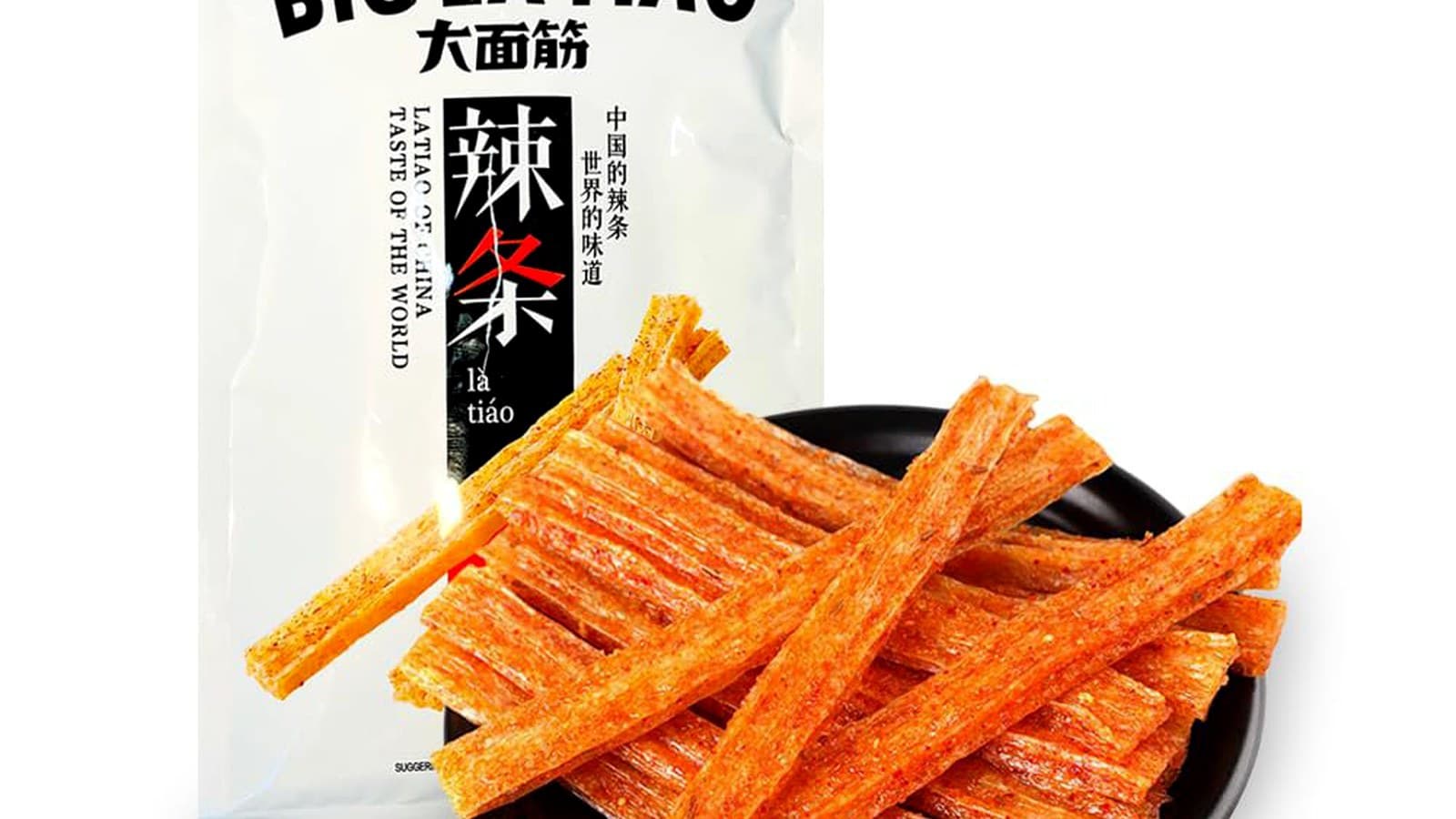
Big Latiao 大面筋
- Weight
- 105g thick-cut strip
- Bite order
- Knife edge → chew → glossy aftertaste
- Price band
- $4.99–$6.49 single
- Group role
- Group's flagship — the benchmark itself
Small Latiao 小面筋
- Weight
- 26g thin shred
- Bite order
- Quick snap → strong oil hit → fast finish
- Price band
- $1.29–$1.99 single
- Group role
- Pocket / desk SKU — built for impulse moments
Qinzuishao 亲嘴烧
- Weight
- Grooved gluten ribbon
- Bite order
- Layered fold → seasoning sits in the grooves
- Price band
- $2.49–$3.49 single
- Group role
- Sub-brand for the sister-brand shelf strategy
Big Latiao vs Small Latiao: One Brand, Two Chew Logics
Within Weilong's own product line, two chew strategies coexist and confuse first-time buyers:
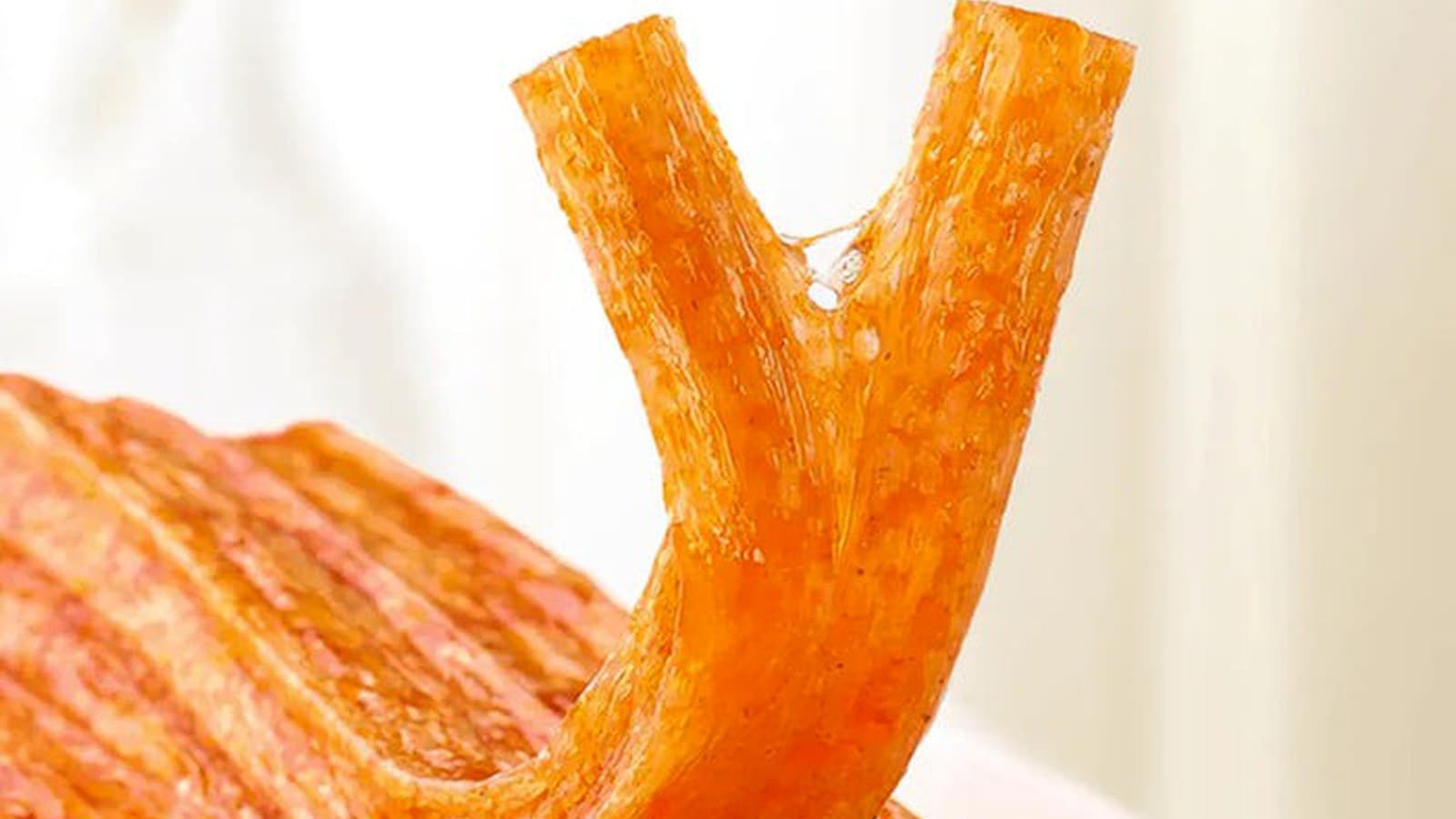
- Big Latiao 大面筋 (105g format) — thick, sliced, ~3mm cross-section. The chew is even and elastic; the oil sits on a flat surface. This is the format most "what does latiao taste like" videos default to.
- Small Latiao 小面筋 (26g format) — thinner strips, ~1mm cross-section. The chew finishes faster; the oil-to-substrate ratio is higher per bite, so spice arrival feels quicker even though the SHU is identical.
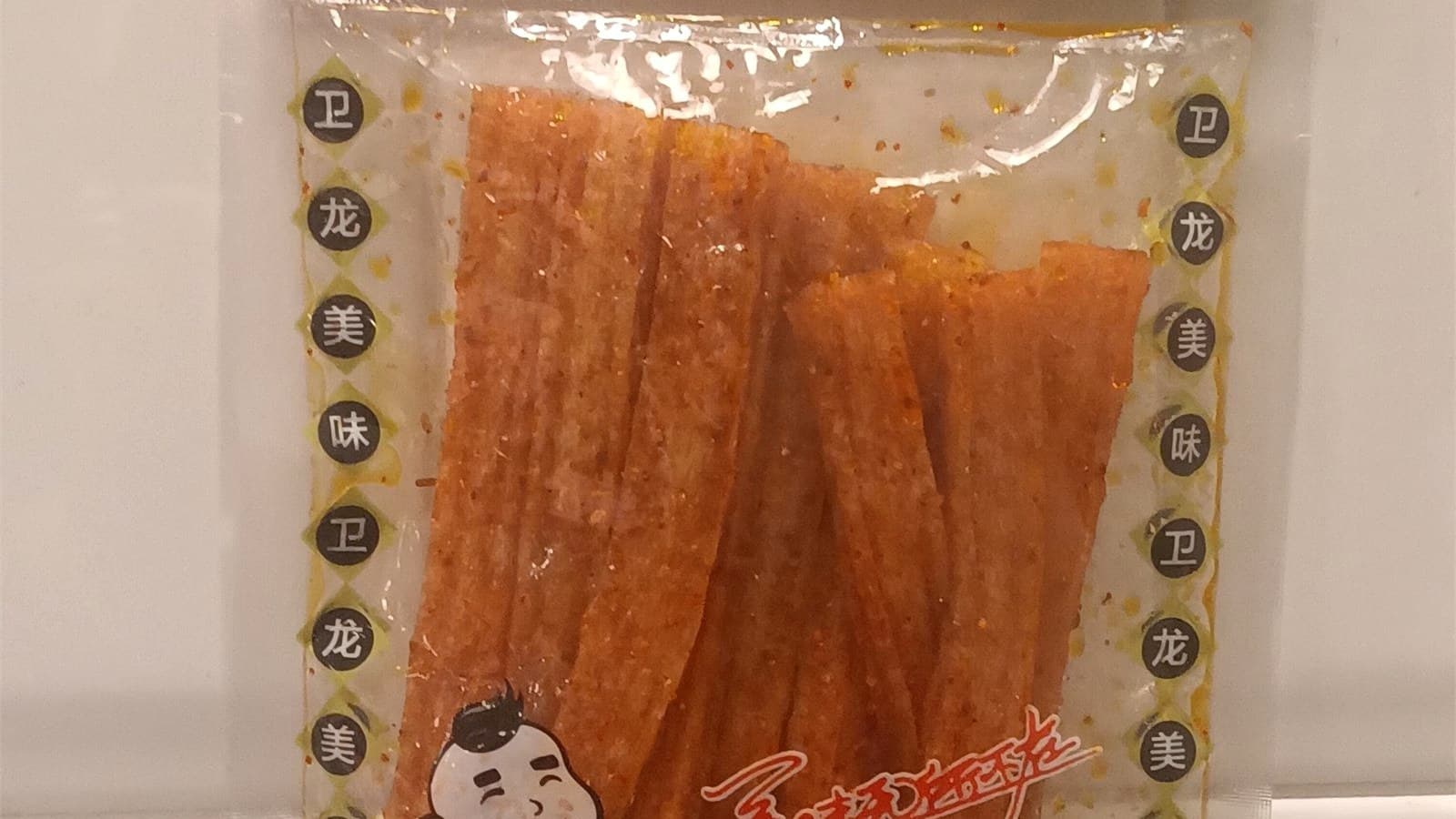
The Weilong group also operates two adjacent sub-brands — 亲嘴烧 (kissburn ridged gluten) and 亲嘴豆干 (kissburn tofu strips) — using the same factory hygiene standards but different bases. If a marketplace listing says "Weilong" but the photo shows a ridged sausage shape, you're looking at 亲嘴烧, not classic Big Latiao. Read the package shape before reading the price.
Taste / Flavor Arc
Weilong usually unfolds in a clean three-step arc:
- chili oil and savory salt show up first
- a rounded sweet-oily middle keeps the profile approachable
- lingering spice stays present without becoming a dare snack
Compared with Mala Prince, the sweetness feels friendlier and the finish is less sharp. Compared with Junzai, the profile is a little less dense and less sauce-led.
Texture
Weilong lands in a very useful middle zone:
- elastic enough to feel like real latiao
- dense enough to teach the chew
- not so tough that the first bite becomes work
- oily enough to feel like a packaged spicy snack, not dry gluten
If someone says, “I want to understand the category, but I do not want my jaw punished,” this is still the brand I start with.
Heat Level
“Medium” remains the right label for most first-time buyers. The heat is obvious, but it usually stops short of challenge-snack territory.
That makes Weilong a good baseline. Once you know how this level feels, it becomes much easier to decide whether your second order should go hotter, sweeter, or denser.
Ingredients / Allergen Notes
The ingredient logic is typical for the category: wheat-gluten structure, seasoning oil, chili, salt, and some sweetness to keep the profile rounded. That is why Weilong reads more like a chewy, seasoned wheat snack than a chip or jerky substitute.
For first-time buyers, the practical label reminder is simple:
- expect wheat gluten / wheat flour to be the main structure cue
- watch for soy-based seasoning or soy sauce style flavoring
- some listings or package revisions may also mention sesame or chili-oil wording
- if you are buying for someone else, trust the latest package panel over a marketplace summary
This is not medical advice. It is a reminder to read the current label before you buy.
Freshness and Storage Risk
The biggest Weilong risk is usually not the brand itself. It is the listing quality and the storage history:
- old stock can taste duller and oilier than it should
- crushed packaging hurts the first impression fast
- vague multipacks can hide age or mixed inventory
- open packs lose their shine quickly if they are not sealed back well
Use the buying guide if you want to compare listing quality before checkout.
Who Should Buy It
Buy Weilong first if you want:
- a benchmark product for the category
- medium heat instead of instant intensity
- a brand that is easier to recognize across marketplaces
- one bag you can use to compare every later purchase against
The Sodium Equation: Weilong vs Daily Recommendations
Most latiao reviews skip the nutritional math, but Weilong's role as the benchmark first buy makes the numbers worth knowing. A single 105g Big Latiao pack contains approximately 1,200 to 1,500mg of sodium — roughly 60 to 75 percent of the WHO recommended daily intake. A 26g Small Latiao pack clocks in around 300 to 375mg.
The practical takeaway is not do not eat Weilong — it is plan around it. If you are having a Big Latiao as an afternoon snack, go lighter on sodium at dinner. If you are sharing the bag with two other people, the per-person sodium load drops to roughly 20 to 25 percent of daily intake, comparable to a small bag of regular potato chips.
What To Do When Weilong Is Out of Stock
Weilong's popularity means stockouts happen — especially on Weee during promotional periods or around Lunar New Year. When the benchmark brand is unavailable, here is a practical substitution guide:
- Closest overall substitute: Mala Prince. Slightly more chili-forward and less sweet, but the wheat-gluten chew and oil balance are in the same family.
- Closest in chew and approachability: Junzai. Denser and sweeter, but the comfortable spice vibe is similar.
- Closest in marketplace availability: BiBiZan on Weee or BESTORE on Yumsbox. Neither is a perfect match, but both have consistently available product pages.
- Avoid as a Weilong substitute: Fan Tian Wa too seasoning-heavy, FEIWANG listing quality too variable for a first-timer, and ZHUZHIYUAN different base ingredient entirely.
If you are building a first-timer's tasting order and Weilong is out of stock, wait. The brand earns its benchmark status because no single substitute delivers the same balance of chew, heat, sweetness, and marketplace consistency.
Final Take
Weilong stays relevant because it teaches before it overwhelms. That makes it less dramatic than some louder brands, but much more useful. For a first purchase, usefulness is exactly the point.