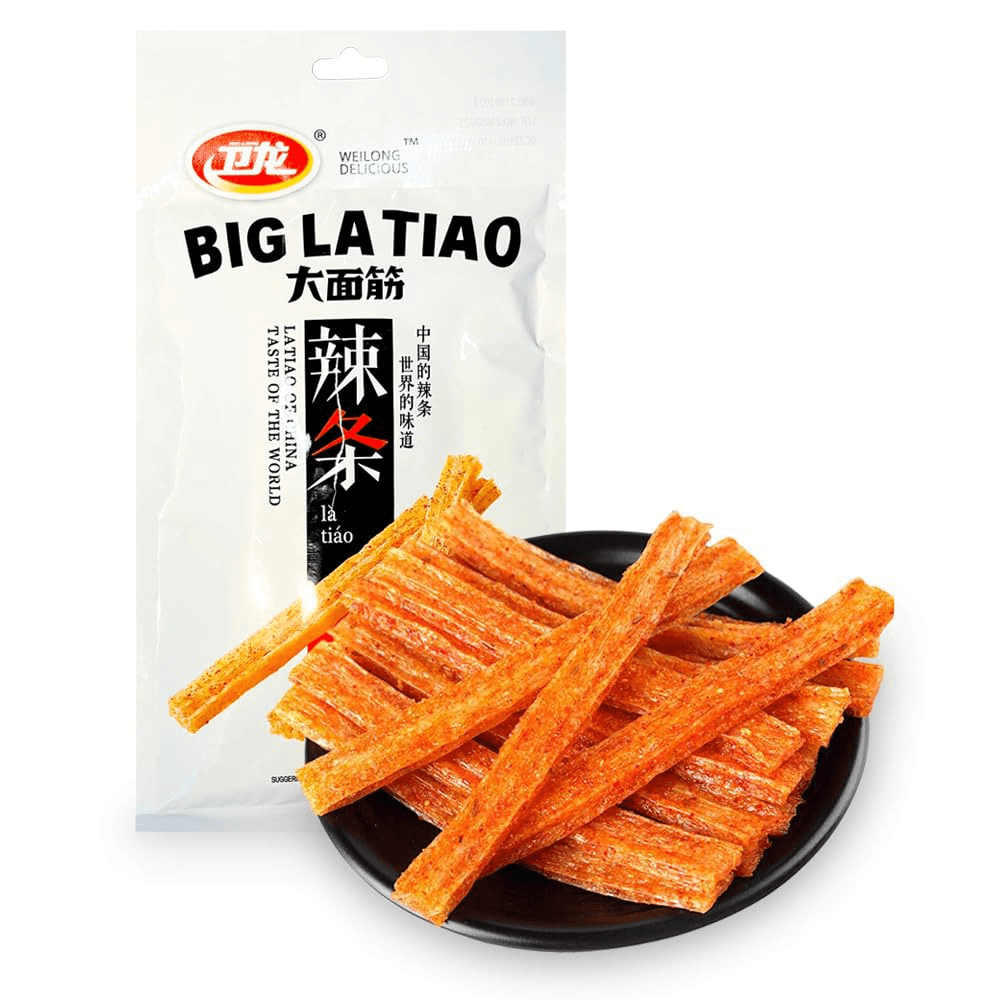
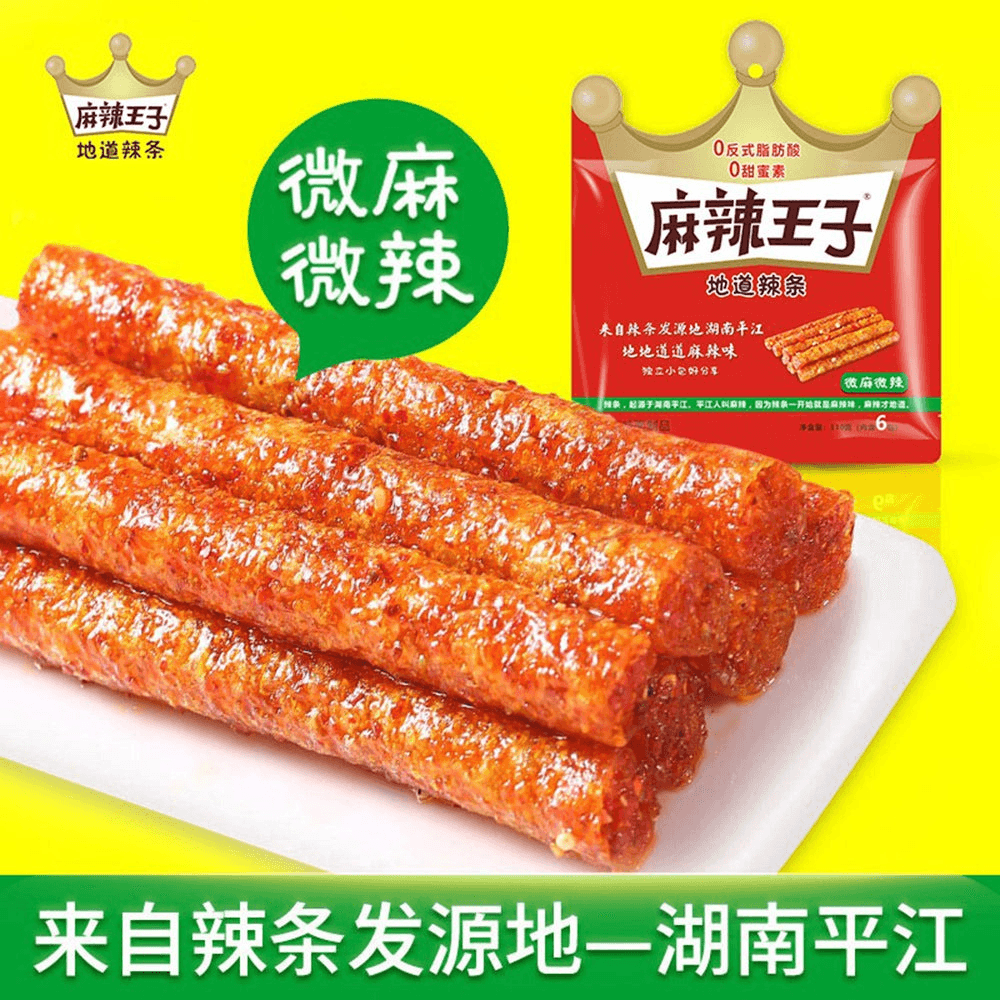
Weilong and Mala Prince are the two-brand comparison many new latiao buyers actually need. One is the mainstream benchmark. The other is the sharper, more chili-forward step up. Both can be good choices, but they solve different problems.
If you are buying latiao for the first time, the question is not "which brand is famous?" The better question is "what kind of first impression do I want?" A nervous first-timer needs a readable benchmark. A spicy snack fan may want a stronger chili signal. A group tasting needs both so people can understand the range.
Disclosure: shopping links in this guide use internal /go/ routes and may earn us a commission if you buy through them. The recommendation logic here is based on buyer fit, review evidence, and listing clarity rather than commission rate.
What this page is: a full all-use-case head-to-head — five-dimension mirror scorecard, six-scene pairing matrix, full purchase route map, and price-per-100g comparison (verified 2026-04-30). What it is not: a "which one for my first bag" decision tool. For pure first-buyer decision (3-question decision tree + 5-pitfall checklist), see Weilong vs Mala Prince for First-Time Buyers. For the full 10-brand picture, see Best Latiao Brands 2026.
Short Answer
Buy Weilong first if you want the safest category baseline. Buy Mala Prince first only if you already like spicy, oily, chewy snacks and would be disappointed by a calmer bag. Buy both if you want the most useful two-brand tasting comparison.
The full Weilong Spicy Strip Review explains why Weilong is still the benchmark. The full Mala Prince Spicy Strip Review explains why Mala Prince is better as a second step for many people.
Side-by-side compare · Heat · Texture
Weilong vs Mala Prince across the five dimensions used in our review rating card.
| Weilong | Mala Prince | |
|---|---|---|
| Heat | 3/5 | 4/5 |
| Texture | 3/5 | 3/5 |
| Value | 4/5 | 4/5 |
| Freshness risk | 2/5 | 2/5 |
| Beginner | 5/5 | 3/5 |
| Best for | Readers who want the category explained through one safe benchmark. | Buyers who already know they want more direct chili presence than Weilong. |
| Watch for | A tired listing can make the snack seem oilier and duller than it should. | It can read harsher if you expected sweetness or a softer texture first. |
Flavor Difference
Weilong usually reads as rounded and approachable. Chili oil appears early, but sweetness and savory seasoning keep the snack in a friendlier middle lane. The finish lingers, but it does not usually dominate the whole bite.
Mala Prince feels more pointed. Chili arrives faster. Sweetness stays further back. The finish is more noticeable on the lips and tongue. That sharper finish is the reason some buyers love it and some cautious buyers should wait.
Think of Weilong as the bag that says, "this is what mainstream latiao feels like." Think of Mala Prince as the bag that says, "now turn the chili dial up."
Heat Comparison
| Question | Weilong | Mala Prince |
|---|---|---|
| Practical heat label | Medium | Medium-high |
| First bite | Warm, oily, sweet-savory | Faster chili hit |
| Finish | Present but manageable | More persistent |
| Best buyer | First-timer or group baseline | Spice-ready second buyer |
| Main risk | Too calm for heat seekers | Too sharp for cautious buyers |
5-dimension mirror scorecard
Weilong vs Mala Prince across 5 dimensions, mirrored side by side. This scorecard only appears in the full vs comparison — first-timer-only version uses pitfall checklist instead.
Weilong
3/5
Heat
Mala Prince
4/5
Mala lands sharper, Weilong stays balanced
Weilong
3/5
Sweetness
Mala Prince
2/5
Weilong noticeably sweeter; Mala drier finish
Weilong
4/5
Oil mouthfeel
Mala Prince
3/5
Weilong glossier; Mala less oil residue
Weilong
3/5
Chew
Mala Prince
3/5
Similar elastic baseline
Weilong
2/5
Aftertaste linger
Mala Prince
4/5
Weilong ~2 min; Mala 5+ min
Pairing & Use-Case Matrix
Six everyday scenarios mapped to which brand wins, with one reason and one counter-case each:
| Scenario | Winner | Why | Counter-case |
|---|---|---|---|
| Solo desk snack | Weilong | Balanced chew handles 30 minutes of slow grazing without lip burn | If you want adrenaline to break boredom, Mala Prince wins |
| Pairing with cold beer | Mala Prince | Sharper chili cuts through carbonation and resets palate | Weilong's sweetness can muddy the beer profile |
| After spicy hot pot (palate already loaded) | Weilong | Mainstream sweetness softens accumulated heat | Mala Prince layered on hot pot stacks too far |
| Office afternoon (mixed audience) | Weilong | Lower risk of someone getting more spice than they planned | Mala Prince could surprise a colleague badly |
| Group tasting flight (intentional comparison) | Buy both | The 5-min linger gap is the lesson | Picking only one wastes the comparison value |
| Long-distance gift to non-spicy-trained relatives | Weilong | Familiar brand recall + manageable heat = lower complaint risk | Mala Prince to elders unfamiliar with strong chili = social risk |
6-scenario pairing matrix
6-scenario pairing matrix between Weilong and Mala Prince. This matrix only appears in the full vs comparison — scenario-by-scenario pairing is its specific job.
Solo desk snack
Weilong: Wins — manageable heat, doesn't dominate
Mala Prince: Too sharp for repeated bites
Pair with light beer
Weilong: Balanced — both hold their own
Mala Prince: Wins — chili-forward complements lager
Side dish with hotpot
Weilong: Loses — already redundant flavor
Mala Prince: Wins — adds dry-chili contrast
Office afternoon tea
Weilong: Wins — small pack, low aroma intrusion
Mala Prince: Heat lingers; awkward for next call
Group / party
Weilong: Wins — broad acceptance
Mala Prince: Risk — alienates non-spice eaters
Senior / first-time taster
Weilong: Wins — gentle introduction
Mala Prince: Loses — sharper than typical first bag
Price per 100g (2026-04-30 snapshot)
A normalized cost view across primary verified routes:
| Brand | Primary route | Pack size | Approx. pack price | Approx. per-100g |
|---|---|---|---|---|
| Weilong | Yami / Weee | 106g (Big Latiao) | $4.49–6.99 | $4.20–6.60 |
| Weilong | Yumsbox | 65g | $2.49–3.99 | $3.80–6.10 |
| Mala Prince | Sayweee | 18g single | $0.95–1.99 | $5.30–11.10 |
| Mala Prince | Sayweee | 4-pack (~72g) | $4.99–7.99 | $6.90–11.10 |
Reading the numbers: Weilong's larger formats win on per-100g economics; Mala Prince's small singles cost more per gram but lower first-buyer regret because each pack is one tasting session. Snapshot taken 2026-04-30; recheck the live listing before checkout.
Heat ladder · Heat
Heat positioning of Weilong and Mala Prince against the rest of the reviewed shortlist.
- Mala Prince
Chili-forward
4/5 - Fantianwa
Wing-style seasoning
4/5 - Weilong
Benchmark first buy
3/5 - Junzai
Dense chew
3/5 - Bibizan
Large-format bag
3/5
If you are still learning the category, medium heat is more useful than maximum heat. It lets you judge texture, oil, seasoning, and freshness. If the first bag is too intense, all you learn is that your mouth is busy.
If you already eat hot chips, chili crisp, mala noodles, or spicy dried tofu, Mala Prince may feel more exciting. Still, it is worth checking whether the live listing is the same format discussed in the review. Marketplace titles can blur classic strips, extra-spicy variants, and bundles.
Per-100g price · 2026-04-30 snapshot
Per-100g price compare badge. This component only appears in the full vs comparison — normalized price is its specific job.
Weilong Big Latiao 106g
$4.71/100g
$4.99 / 106g
Mala Prince 18g single
$11.06/100g
$1.99 / 18g
Mala Prince's per-100g is 2.4× higher because it's sold as single-pack tasting size; on a per-bag basis Mala is cheaper. Both are correct depending on goal.
Texture Difference
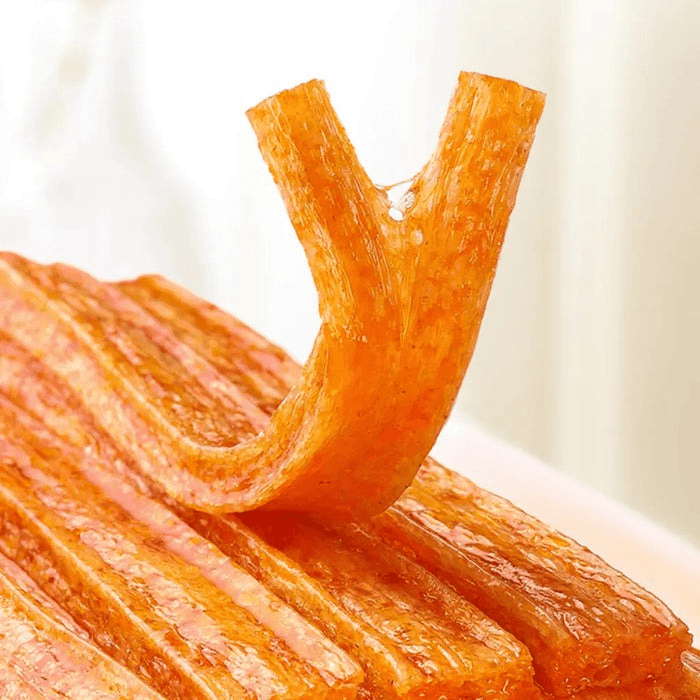
Weilong gives a flexible, balanced chew. It is elastic enough to feel like latiao, but it usually does not make the first bite feel like work. That is why it keeps showing up in beginner recommendations.
Mala Prince keeps the chewy structure but makes the seasoning feel more forward. Because the chili profile is sharper, the chew can feel more serious even when the physical texture is not dramatically harder. The snack slows you down, which can be a good thing if you want a deliberate spicy bite.
If texture is your main curiosity, read the Junzai Spicy Strip Review after this comparison. Junzai is useful because it shows how a denser chew changes the whole snack even when heat is not the only variable.
Buying Routes to Recheck
For Weilong, start with whichever route has the clearest current seller and package information:
- Weilong via Weee product page
- Weilong via specialty retailer product page
- Weilong via Walmart product page
- Weilong via Amazon product page
- Weilong via eBay item page
For Mala Prince, compare the current product format and seller details before deciding:
Use the live listing, not only the brand name. Check pack size, flavor wording, seller freshness comments, and whether the photo shows the product format you expect.
Which One Is Better for a First Order?
For most first orders, Weilong is the better single choice. It gives you a clearer baseline. If you like it, you can move hotter, denser, or more giftable. If you dislike it, you know the issue may be the oily wheat-gluten format itself rather than one extreme brand choice.
Mala Prince becomes the better first choice when the buyer is not really a beginner to spicy snacks. If someone already likes chili-heavy snacks and wants latiao to feel vivid right away, Mala Prince can be more satisfying. The important thing is expectation. Do not present it as the calm starter. Present it as the spice-ready route.
Buyer Scenarios
For the cautious first-time buyer, choose Weilong and keep the order small. This buyer is still learning whether oily gluten chew, chili oil, and sweet-savory seasoning feel appealing. A calmer benchmark gives them enough information without making the whole category feel too intense.
For the confident spicy snack fan, choose Mala Prince or buy both. This buyer may find a safe benchmark pleasant but not memorable. Mala Prince gives a clearer chili signal and helps them decide whether latiao belongs in the same rotation as hot chips, mala noodles, spicy dried tofu, or chili crisp snacks.
For the shopper building a comparison basket, buy Weilong, Mala Prince, and one texture contrast. Junzai is useful when the third slot should teach chew. BiBiZan is useful when the third slot should serve a group. YANJINPUZI or Genji Food is useful when the third slot should show a soy-sheet or tofu-skin edge of the broader spicy snack shelf.
For the buyer who dislikes sweetness, Mala Prince has the better chance. Weilong's rounded sweet-oily middle is part of why it works for beginners, but that same feature can feel too soft to people who want salt, chili, and a cleaner finish.
For the buyer who dislikes lingering heat, Weilong is safer. Mala Prince does not need to be an extreme challenge snack to feel more persistent. The difference is enough that a heat-sensitive person may enjoy one and struggle with the other.
Which One Is Better for a Group?
For a group tasting, buy both or choose a variety route that includes similar roles. Weilong gives everyone a common reference. Mala Prince gives the spice-ready people something to compare against it. The conversation becomes more useful because people can describe differences instead of only saying "spicy" or "weird."
If the group includes very cautious eaters, open Weilong first. Let people decide whether they want to continue. Then open Mala Prince for the people who ask for more heat. This order makes the tasting feel organized instead of chaotic.
Which One Is Better for Gifting?
Weilong is usually safer for a casual gift because it is more recognizable and less likely to overwhelm someone who is simply curious. Mala Prince is better for a recipient who actively asks for spicy snacks.
If presentation matters more than brand purity, read the Lunar New Year gift guide too. Sometimes a polished mixed pack or larger wrapped format is a better gift than the most technically interesting single bag.
What Not to Overread
Do not overread one marketplace photo. Product photos can lag behind packaging updates, and search pages can mix variants. Use the photo as a clue, then look for matching weight, flavor wording, seller notes, and recent review language.
Do not overread the word "mala" either. Some buyers see that word and expect Sichuan restaurant-level numbing intensity. Packaged latiao often uses the language of spicy, numbing, or extra spicy in a loose snack-shelf way. The actual experience depends on oil freshness, seasoning balance, and the specific product line.
Do not treat "more famous" as the same thing as "better for you." Weilong is famous because it is a useful mainstream reference. Mala Prince is useful because it gives a sharper comparison. Fame helps discovery; it does not remove the need to match the bag to the buyer.
Do not ignore freshness. A fresh, clear listing for the slightly less famous product can beat a weak listing for the brand you originally wanted. Latiao is oil-forward, so age and storage condition are part of flavor, not just logistics.
Freshness and Listing Risk
Both brands depend on freshness. Old oil can flatten Weilong and make Mala Prince taste harsher. Weak packaging can also hurt the first impression. Recheck:
- whether the product page shows recent activity
- whether the package size is clear
- whether the seller's snack inventory looks current
- whether recent comments mention freshness or damaged packages
- whether the displayed package matches the flavor or heat level you want
If one brand is out of stock on your preferred route, do not force a weak listing. Choose a better route or a close substitute. The Weilong out-of-stock alternatives guide is built for that exact situation.
Final Recommendation
Choose Weilong for the safest first reference. Choose Mala Prince when you already want more chili. Choose both when you want to understand latiao quickly with a two-bag comparison.
The right answer is not permanent. It depends on buyer tolerance, seller clarity, and the current listing. The brand gets you close. The live page still gets the final vote.
FAQ
Are Weilong and Mala Prince really that different, or just marketing?
The Pingjiang vs Luohe regional difference is real. Mala Prince is made in Hunan Pingjiang (origin region of latiao itself, 1998 flood story); Weilong industrialized in Henan Luohe (2001). The Pingjiang school uses sharper, more direct chili (二荆条 / 朝天椒 from local supply); the Luohe school uses balanced sweet-savory seasoning optimized for mass market. You can taste the difference between batches, not just labels.
Which one has cleaner ingredients?
Both meet GB 7718-2011 labeling standards. In practice, Mala Prince classic uses fewer flavor-additive lines (typical 8–10 declared seasoning components vs Weilong's 11–14), making it slightly closer to "clean label" if that matters. Both are wheat gluten + chili oil + seasoning at industrial-typical sodium levels.
Can I buy both in one order to do a proper side-by-side?
Yes — Sayweee and Weee both carry both brands in their main catalogs, so a single order with both is feasible. Order one Weilong 106g + one Mala Prince 50g (or 18g if cost-sensitive) and taste them within 24 hours of each other for the cleanest comparison. Don't compare across weeks — palate adaptation drifts.