Mala Prince is the review to read after you try a calmer benchmark and immediately want more chili personality. I would not hand it to the most nervous first-timer. I would hand it to the person who finished Weilong and asked for something bolder.
🛒 Check current Mala Prince price on Weee → (opens in new tab)
Quick Verdict
Mala Prince is a better second purchase than first purchase. The heat arrives faster, the seasoning feels more pointed, and this snack delivers sharper chili energy than the gentlest baseline brands. Is it worth buying? For spice-ready snackers — yes. For total beginners — start with Weilong first. (Older marketing copy and some overseas reseller pages used "Numbing Spice" or "麻辣 numbing" wording — the classic Mala Prince variant reviewed here is chili-forward without significant Sichuan peppercorn; the proper numbing variant is the Mala Plus SKU described later in this review.)
That does not mean it is only about pain. The appeal is that the chili moves forward without completely burying the chewy wheat base.
Pingjiang vs Luohe: Why Mala Prince Tastes Different from Weilong on Purpose
Mala Prince is the flag-bearer of the Pingjiang school of latiao — and Pingjiang is the actual birthplace of the category. While Weilong industrialized the format by moving north to Luohe, Henan in 2001, Mala Prince stayed in Hunan's Pingjiang Mala Food Industrial Park and doubled down on the local taste profile.
When Pingjiang artisans say "real latiao should hurt the lips first and warm the chest later", Mala Prince is the brand still answering that brief. The local Pingjiang formulation tradition leans toward:
- more 朝天椒 (chao tian jiao / facing-heaven chili) for sharp front-of-mouth burn
- more 花椒 (Sichuan peppercorn) overlay in some variants for numbing
- less added sugar than Henan-school products
- glossier oil-coat, but on a slightly drier wheat base
Henan-Luohe school (Weilong) goes the other way — sweeter, more balanced, more middle-of-the-mouth. Both are valid latiao — but they're answering different design briefs. If you came from Pingjiang locals telling you Weilong tastes "too soft", Mala Prince is what they actually grew up with.
Pingjiang ↔ Luohe migration map
Visualizing the 1998 Pingjiang → 2001 Luohe migration. This map only appears in the Mala Prince review — it's the structural reason both schools exist.
North · Luohe, Henan
Weilong (sweet-savory school)
- Industrialized 2001 after the founders relocated
- Balanced sweet-salty seasoning, oil-glossed finish
- Mass-market consistency across batches
South · Pingjiang, Hunan
Mala Prince (chili-forward school)
- Origin region of latiao itself — 1998 flood story
- Sharper chili, lower sugar, longer linger
- Pingjiang artisan style preserved at industrial scale
↑ 1998 process migration: tofu-strip → wheat gluten in Pingjiang, then north to Luohe in 2001
Classic vs Mala Plus: Reading the Two SKU Routes
Mala Prince operates two product lines that look similar in marketplace listings but eat very differently:
- Classic 经典 (the route reviewed here) — medium-high heat ~3,000–5,000 SHU estimated, balanced chili oil, no significant numbing peppercorn. This is what most Sayweee / Yumsbox listings ship by default.
- Mala Plus 麻辣加强 (separate variant) — adds explicit Sichuan peppercorn overlay; the package usually shows green peppercorn iconography or "麻辣加强" wording. SHU runs ~30% higher and the numbing tongue sensation appears in 1–2 minutes after eating.
If a marketplace listing emphasizes "numbing" / "麻" / "Sichuan peppercorn" without showing the green peppercorn icon, treat it as a translation hopeful — likely the Classic version mislabeled. The Plus variant is harder to find on cross-border channels and often arrives via Sayweee bulk imports rather than Yami / Weee mainstream stock.
Product Type Clarification
Mala Prince is often confused with three adjacent product types on marketplace listings. Here is how to tell them apart:
| Confusion | What it actually is | How to tell the difference |
|---|---|---|
| "Mala Prince jerky" | Not jerky — it's wheat-gluten latiao with chili oil | If the first ingredient is "wheat flour" (小麦粉), it's latiao, not jerky |
| "Mala Prince numbing strips" | Only the Mala Plus variant has numbing; Classic does not | Look for green peppercorn icon on the package — no icon = Classic, not numbing |
| "Mala Prince chili crisp" | Not a condiment — it's a ready-to-eat snack strip | Chili crisp comes in jars; latiao comes in sealed snack packs |
If a marketplace listing uses "jerky," "numbing," or "chili crisp" in the title without matching packaging evidence, treat it as a labeling error. The packaging photo is the final authority.
Packaging Evidence Checklist
Before ordering Mala Prince, verify these five packaging signals:
- Variant label: The package front should say "经典版" (Classic) or show a green peppercorn icon for Mala Plus. No label = assume Classic.
- First three ingredients: Should read "小麦粉、植物油、辣椒" (wheat flour, vegetable oil, chili) — first ingredient not wheat = anomaly.
- Allergen note: Contains wheat and soy — this is normal for wheat-gluten latiao, not a defect.
- Net weight: Standard Classic is 65–85g per pack. Significantly different = possible different SKU.
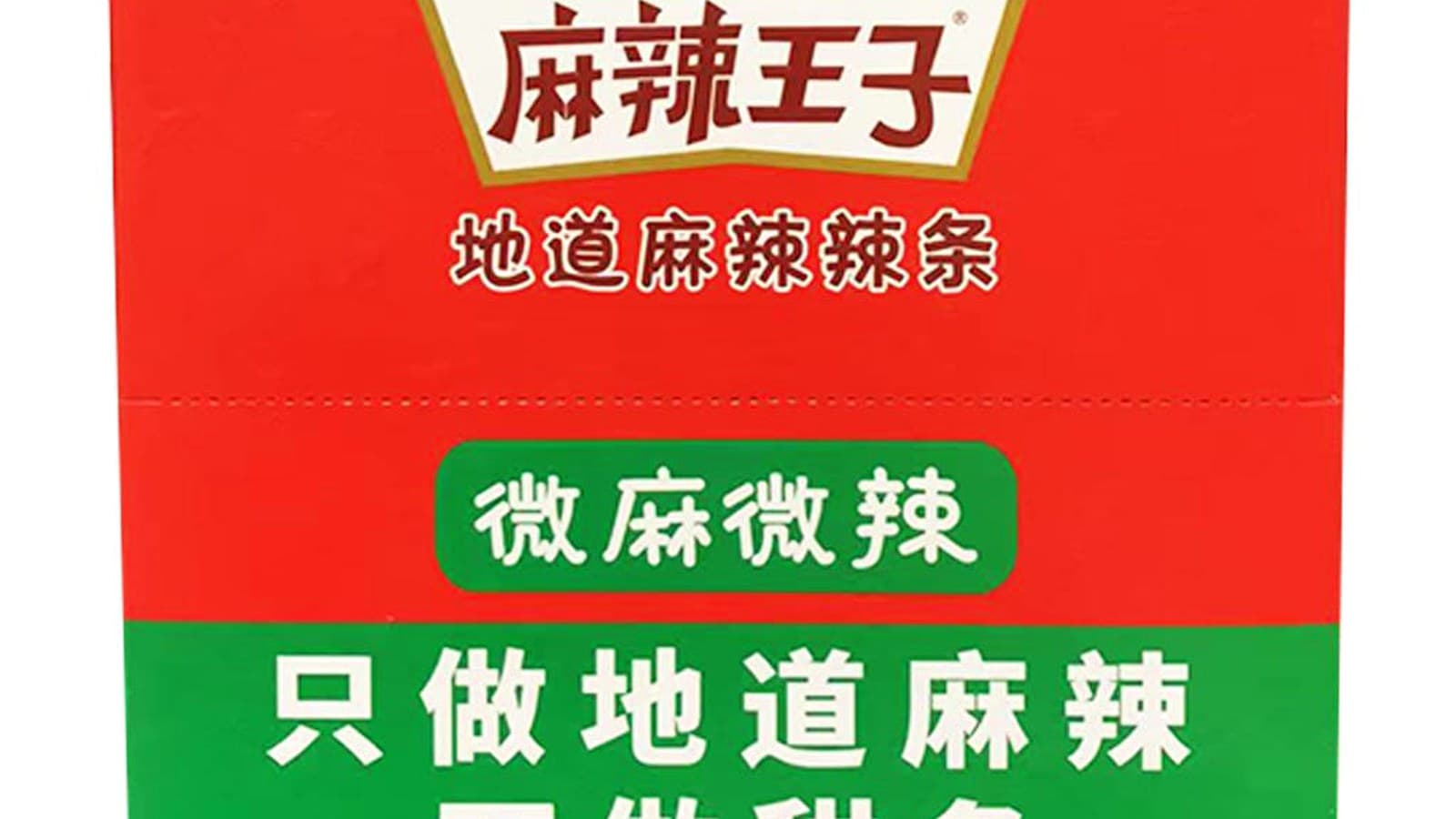
- Brand mark: "麻辣王子" in red on a predominantly red/gold package. Off-brand color schemes = verify.
One clean back-of-pack photo verifies four of these five checks. No back-label photo = wait for a better listing.
Taste / Flavor Arc
The flavor arc feels more aggressive than the standard beginner pattern:
- chili oil shows up early
- salty umami gives the bite shape
- sweetness appears later and stays in the background
- a lasting spicy finish clings to the lips
Compared with Weilong, the sweetness feels less dominant. Compared with Fan Tian Wa, the spice feels cleaner and more chili-led than blend-led.
Texture
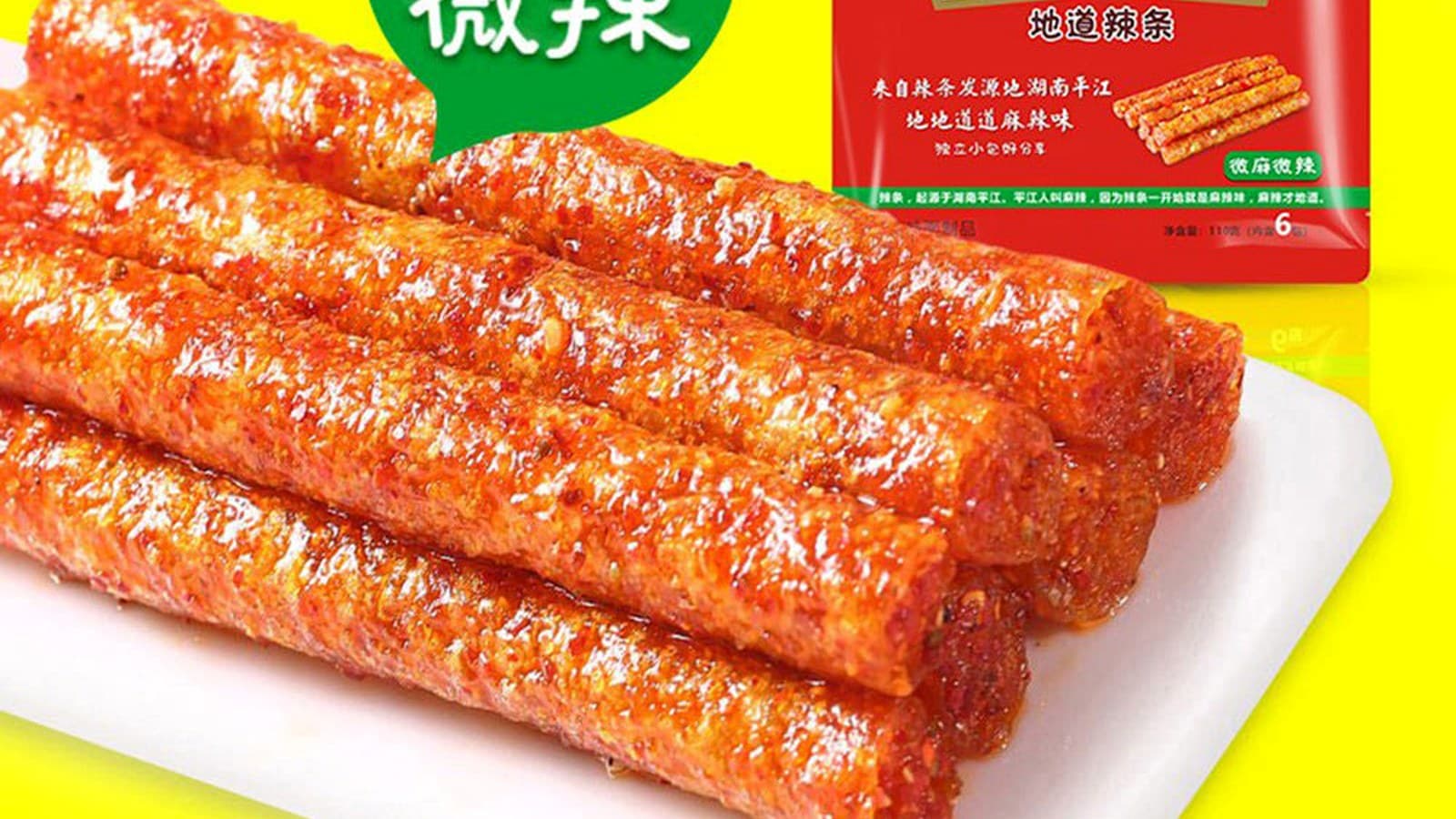
The chew is still recognizably latiao:
- elastic rather than crunchy
- oily enough to carry spice across the bite
- dense enough to slow you down
- less soft and rounded than the safest beginner picks
If you want pure crisp snacking, this is not that. Mala Prince works best when you actually enjoy chew and a slightly longer finish.
Heat Level
“Medium-high” is the practical label. It is not a novelty heat challenge, but it is clearly hotter and sharper than the most beginner-friendly bags.
Eat it more slowly than you would eat chips. The seasoning opens up better that way, and the heat feels more intentional instead of just harsher.
Freshness and Storage Risk
Mala Prince loses charm quickly when the oil tastes stale or the edges dry out. Before buying, check:
- whether the listing clearly shows package size
- whether recent reviews mention freshness rather than only delivery speed
- whether the seller is moving snack inventory regularly
- whether the price makes sense for a single pack or bundle
Once opened, seal it carefully. A sharper snack tastes rougher, not better, when storage is sloppy.
Who Should Buy It
Buy Mala Prince if you:
- already know you like spicy snacks
- want more chili force than Weilong gives
- enjoy chewy texture with a faster heat attack
- want a strong second step in a small tasting lineup
Who Should Skip It
Skip Mala Prince if you:
- are still unsure about the oily-chewy latiao format
- mostly want sweetness or a calmer first impression
- dislike lingering chili heat on the lips
If you are still testing the category, start safer and come back later.
Where to Buy Mala Prince Latiao
Mala Prince is available on these platforms (availability varies by region):
- Weee! — Most reliable US source for the Classic variant. Direct product page with current pricing. View listing →
- Sayweee / Yumsbox — Bulk imports sometimes carry the harder-to-find Mala Plus variant. Check package photos for the green peppercorn icon before ordering.
- Yami — Occasional stock; verify variant description before checkout.
💡 Buying tip: Always check recent freshness reviews before ordering. Mala Prince's oil-forward profile loses appeal on old stock. A few extra seconds reading recent feedback saves you from a disappointing bag.
Final Take
Mala Prince is the "turn up the heat" lane of the beginner journey. It is still readable, still clearly latiao, but it asks more from your spice tolerance. That makes it one of the best second-bag recommendations on the site.
Verdict: Buy it if you've already tried Weilong and want more chili impact. For first-timers, start here →.
Want the full brand landscape? See the best latiao brands comparison page to check how Mala Prince ranks alongside 9 other benchmark brands by heat, texture, and first-buy verdict.