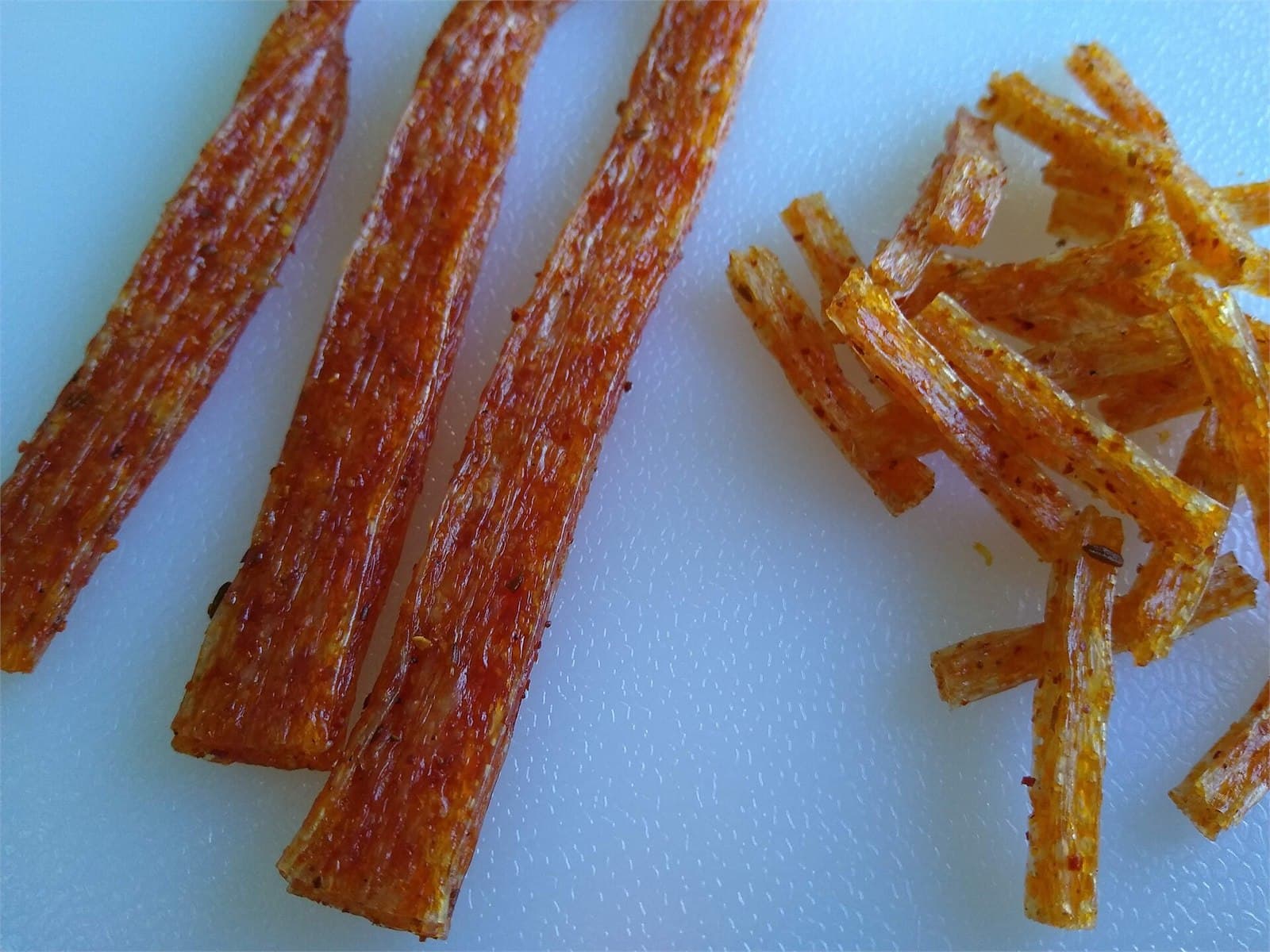
Latiao is built around a small set of repeatable core ingredients: wheat gluten for structure and chew, chili oil for heat and gloss, salt and sugar for the savory-sweet balance, and a soy-based seasoning system that gives it the rich umami depth many first-time eaters mistake for meat. There is no single secret ingredient — the recognizable latiao experience comes from how these components interact during mixing, extrusion, steaming, and oil-coating.
What this page is: a complete ingredient breakdown covering every major component in a standard latiao bag, plus the production steps that turn raw wheat gluten into glossy, chewy strips. What it is not: a diet-label checker — for vegetarian / vegan / halal / gluten-free guidance, see Is Latiao Vegetarian or Vegan?. For the sensory experience beyond ingredients, see What Does Latiao Taste Like?.
Quick Answer: What Is Latiao Made Of?
A standard latiao ingredient list, read from an actual product bag, typically includes seven categories:
- Wheat flour / wheat gluten — the structural backbone
- Vegetable oil (soybean or rapeseed) — carrier for chili and seasoning
- Chili (dried chili, chili powder, or chili extract) — heat and red color
- Salt — savory base
- Sugar — sweetness balance (mild in most mainstream varieties)
- Soy-based seasoning (soy sauce powder, hydrolyzed soy protein) — umami depth
- Flavor enhancers and spices (MSG, yeast extract, Sichuan peppercorn, sesame)
The ingredient order on the label often reads: wheat flour, vegetable oil, chili, salt, sugar, spices, food additives (flavor enhancers, preservatives). If the very first ingredient is wheat flour or wheat gluten, you are holding a standard latiao product.
Full Ingredient Breakdown
Each ingredient in a latiao bag serves a specific purpose. Here is what every component does and why it matters:
Wheat Gluten (Wheat Flour / Wheat Protein)
Wheat gluten is the structural foundation of latiao. When wheat flour dough is washed to remove starch, the remaining elastic protein network is gluten. In latiao production, this gluten is mixed, extruded, and steamed to create the dense, chewy, slightly stretchy texture that no other snack category replicates.
Key facts about wheat gluten in latiao:
- It provides the signature chew — latiao's texture is closer to seitan than to a chip or cracker
- It retains 18–22% moisture after production, which is why latiao feels soft and pliable, not dry
- It absorbs seasoning oil deeply, so the flavor penetrates the entire strip rather than sitting on the surface
- It contains significant protein (roughly 8–12g per 100g depending on the brand)
Because the base is wheat gluten, latiao is not gluten-free. Anyone with celiac disease or gluten sensitivity should avoid it entirely.
Soy-Based Latiao Variants
Not every product called "latiao" uses wheat gluten as its base. Some manufacturers — particularly those targeting soy-protein snack markets — produce a soy-based variant. The ingredient label will lead with soy protein or textured soy protein instead of wheat flour.
How to tell them apart:
- Wheat gluten latiao: denser, more elastic, chewier. The strip stretches slightly when pulled.
- Soy-based latiao: lighter, more absorbent, less elastic. The texture is closer to a firm tofu skin or soy jerky.
- Hybrid products: some brands blend wheat gluten and soy protein for a middle-ground texture.
The difference matters because soy-based products have a different mouthfeel, different protein profile, and different allergen profile. If you specifically want the classic wheat-gluten chew, check that the first ingredient is wheat flour or wheat gluten.
Chili (Dried Chili, Chili Powder, Chili Oil, Capsicum Extract)
Chili delivers both heat and the characteristic red-orange color of latiao. Brands use different chili formats:
- Whole dried chili / chili flakes: visible in the oil, common in Mala Prince and Hunan-style products
- Chili powder: evenly distributed through the dough or oil coating, common in mass-market products
- Chili oil (pre-infused): oil that has been heated with chili and spices before being applied to the strips
- Capsicum extract / oleoresin: used by some industrial producers for consistent heat and color
The actual heat level varies enormously — from barely-there mild to genuinely numbing. The How Spicy Is Latiao? page breaks down heat levels by brand.
Vegetable Oil (Soybean Oil, Rapeseed Oil, Palm Oil)
Oil serves three functions in latiao:
- Flavor carrier: chili, Sichuan peppercorn, and spice compounds are fat-soluble — the oil extracts and delivers them
- Texture and gloss: the surface oil gives latiao its signature shiny, appetizing appearance
- Mouthfeel: the oil content (typically 18–28% by weight) contributes to the rich, satisfying mouthfeel
The oil type varies by brand and region. Soybean oil is the most common in Chinese-manufactured latiao. Some premium brands use rapeseed oil (菜籽油) for a nuttier aroma. Palm oil appears in some export-focused products for shelf stability.
Salt and Sugar
Salt and sugar form the savory-sweet backbone of latiao's flavor. The ratio varies by brand:
- Salt-dominant (Mala Prince, some Hunan styles): sharper, more savory, the chili hits first
- Sugar-balanced (Weilong, most mainstream): a noticeable sweetness rounds out the heat, making it more approachable for first-time eaters
- Low-sugar (niche, regional): relies on umami and chili for flavor depth with minimal sweetness
Sodium content in latiao is significant — a typical 100g bag can contain 800–1,500mg of sodium. If you are monitoring sodium intake, check the nutrition panel before buying.
Soy-Based Seasoning (Umami System)
This is the component that creates the "meaty" illusion. The soy-based umami system typically includes:
- Soy sauce powder (酱油粉): dehydrated soy sauce, providing salt and fermented depth
- Hydrolyzed soy protein (水解植物蛋白): broken-down soy protein that produces free amino acids, creating a savory, broth-like flavor
- Yeast extract: adds a rich, roasted, almost chicken-stock-like note without any animal ingredients
Together, these create the deep savoriness that makes latiao taste more substantial than a simple salty snack. It is also why many first-time eaters assume latiao contains meat — the umami profile mimics meat-based snacks.
Sesame and Aromatic Spices
Sesame seeds (white or black) are often sprinkled on the surface of latiao or mixed into the chili oil. They add a toasty aroma and a slight textural contrast. Other aromatic spices that appear in various brands:
- Sichuan peppercorn (花椒): produces the tingling, numbing "má" sensation in mala-style latiao
- Cumin (孜然): common in northwest-China-inspired variants, adds a warm, earthy note
- Star anise (八角) and cinnamon (桂皮): used in some seasoning blends for depth
- Garlic powder and onion powder: appear in some modern, fusion-style products
Flavor Enhancers and Additives
Most commercial latiao includes food additives for consistency, shelf life, and flavor intensity:
- MSG (monosodium glutamate, 谷氨酸钠): the most common flavor enhancer — amplifies umami
- Disodium 5'-ribonucleotide (呈味核苷酸二钠): works synergistically with MSG for stronger umami
- Sodium erythorbate (异抗坏血酸钠) or TBHQ (特丁基对苯二酚): antioxidants that prevent the oil from going rancid
- Sodium metabisulfite (焦亚硫酸钠): preservative and color retention agent in some products
These are standard food-grade additives regulated under Chinese GB standards. If you prefer to avoid specific additives, read the ingredient label carefully — some export-focused brands now offer "clean label" versions with fewer additives.
How Latiao Is Produced
The transformation from wheat flour to glossy, chewy latiao strips follows a multi-step industrial process:
1. Dough Mixing
Wheat flour, water, salt, and sometimes a small amount of sugar and seasoning powder are mixed into a stiff dough. The gluten network begins developing at this stage — proper mixing time and water ratio determine the final chew.
2. Extrusion and Shaping
The dough is fed into an extruder, which forces it through a die plate under high pressure and heat. The combination of mechanical shear and thermal energy cooks the gluten network and sets the shape — strips, sheets, or thick ribbons depending on the die. This is the step where latiao gets its characteristic dense, layered texture.
3. Steaming or Cooking
After extrusion, the strips pass through a steam chamber or hot-water bath for full gelatinization. This step fully cooks the starch component and stabilizes the gluten structure. The strips emerge soft, elastic, and ready for seasoning.
4. Cutting
The continuous strip is cut to the desired length — typically 8–15cm for standard retail bags, shorter for snack-size packs, longer for "hand-torn" style products.
5. Oil and Seasoning Coating
This is the defining step. The cut strips are tumbled in a large drum with pre-prepared chili oil, seasoning powder, and spices. The oil must be at the right temperature — too hot and it degrades the chili flavor; too cool and it does not coat evenly.
The tumbling ensures every strip gets an even coating of oil and seasoning. By the end, the strips should be uniformly glossy, red-orange, and aromatic.
6. Cooling and Packaging
The seasoned strips are cooled on a conveyor, then weighed and sealed into foil-lined plastic packaging. Most latiao bags are nitrogen-flushed to displace oxygen — this prevents oxidation of the oil and extends shelf life to 6–9 months without refrigeration.
Quality-control checks at this stage include: moisture content (should be 18–22%), oil content (18–28%), microbial limits, and sensory evaluation (texture, color, aroma).
Common Misconception: Is Latiao Made of Meat?
No. This is the most persistent misconception about latiao, especially among first-time international buyers. Latiao is not made from meat, chicken, or fish.
The confusion arises because:
- The chewy, dense texture resembles meat jerky
- The soy-based umami seasoning creates a savory, broth-like depth
- Some brands use names like "vegetarian beef flavor" or "spicy chicken flavor" on the label
The reality: standard latiao is 100% plant-based in its structural ingredients. The base is wheat gluten (or sometimes soy protein), and the "meaty" flavor comes entirely from soy sauce powder, yeast extract, and MSG — all non-animal sources.
However, this does not mean all latiao is automatically vegan or vegetarian. Some brands:
- Use dairy-derived ingredients in seasoning blends
- Include animal-based flavor extracts (chicken powder, beef extract)
- Process in facilities that also handle meat, dairy, or seafood
For a complete guide to checking whether a specific product fits your diet, see Is Latiao Vegetarian or Vegan?.
Wheat vs. Soy Latiao: Ingredient-Level Comparison
| Attribute | Wheat Gluten Latiao | Soy-Based Latiao |
|---|---|---|
| Main ingredient | Wheat flour / wheat gluten | Soy protein / textured soy protein |
| Texture | Dense, elastic, stretchy | Lighter, more absorbent, less chewy |
| Protein source | Gluten (wheat protein) | Soy protein |
| Gluten-free | No | Usually yes (check label) |
| Oil absorption | Moderate — oil coats the surface | Higher — soy absorbs oil deeper |
| Caloric density | ~450 kcal/100g | ~400–480 kcal/100g |
| Common brands | Weilong, Mala Prince, Feiwang | Genji Food, some ZHUZHIYUAN lines |
The most reliable way to tell which type you are buying: look at the first ingredient on the label. If it says wheat flour or wheat gluten, it is wheat-based. If it says soy protein or soy flour, it is soy-based.
FAQ
What is the main ingredient in latiao?
Wheat gluten (wheat flour protein). It provides the chewy, elastic texture that defines latiao. Some variants use soy protein instead — check the first ingredient on the label.
Is latiao made of plastic?
No. This internet rumor has circulated for years but is entirely false. Latiao is made from wheat flour, vegetable oil, chili, and seasonings — all food-grade ingredients. The chewy texture that some people mistake for "plastic-like" comes from the wheat gluten network, the same protein structure that gives bread and seitan their chew.
Does latiao contain MSG?
Most commercial latiao brands include MSG (monosodium glutamate) as a flavor enhancer. It is listed on the ingredient label as 谷氨酸钠. If you prefer MSG-free products, some premium or export-focused brands now offer versions without it.
How much oil is in latiao?
Typically 18–28% by weight. The oil serves as a flavor carrier for the chili and spices. It is an intentional part of the product, not a manufacturing defect. If the oil content bothers you, you can blot the surface lightly with a paper towel before eating.
Is wheat-based latiao gluten-free?
No. Wheat gluten is the primary structural ingredient. Anyone with celiac disease, wheat allergy, or gluten sensitivity must avoid wheat-based latiao. Soy-based latiao is usually gluten-free but always verify on the label.
How long does latiao last?
Shelf life is typically 6–9 months from the production date when unopened. The nitrogen-flushed packaging prevents oil oxidation. Once opened, consume within 1–2 days for best texture — the strips will gradually dry out and harden after exposure to air.
Related Guides
- What Does Latiao Taste Like? — flavor profile, spice levels, and texture guide
- Is Latiao Vegetarian or Vegan? — diet label checks and ingredient signals
- How Spicy Is Latiao? — SHU estimates and brand heat comparison
- Latiao Main Ingredients Explained — deeper dive into each ingredient category
- Best Latiao Brands 2026 — 10-brand ranking by heat and texture