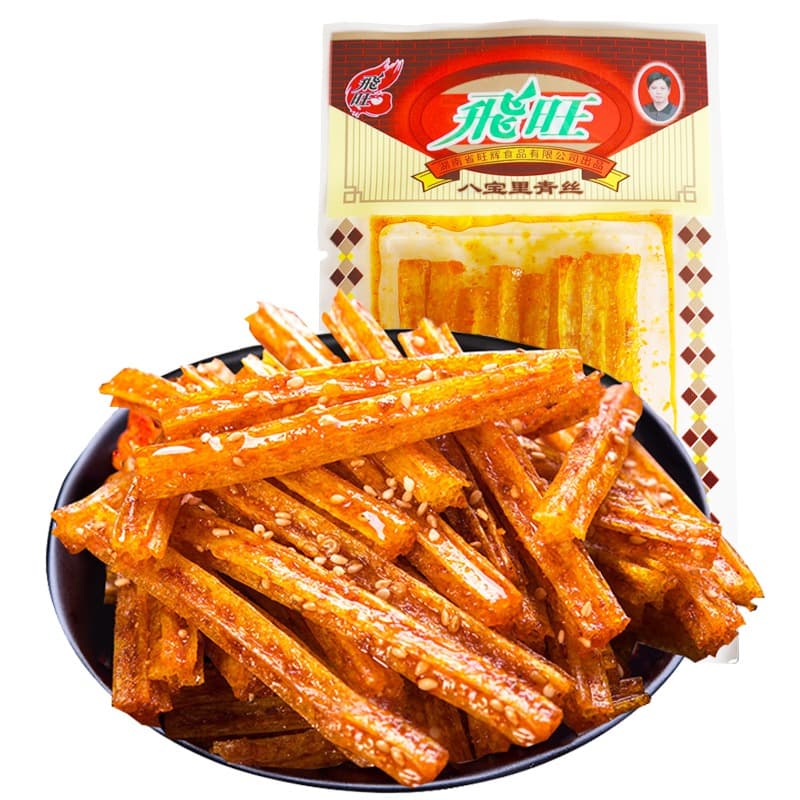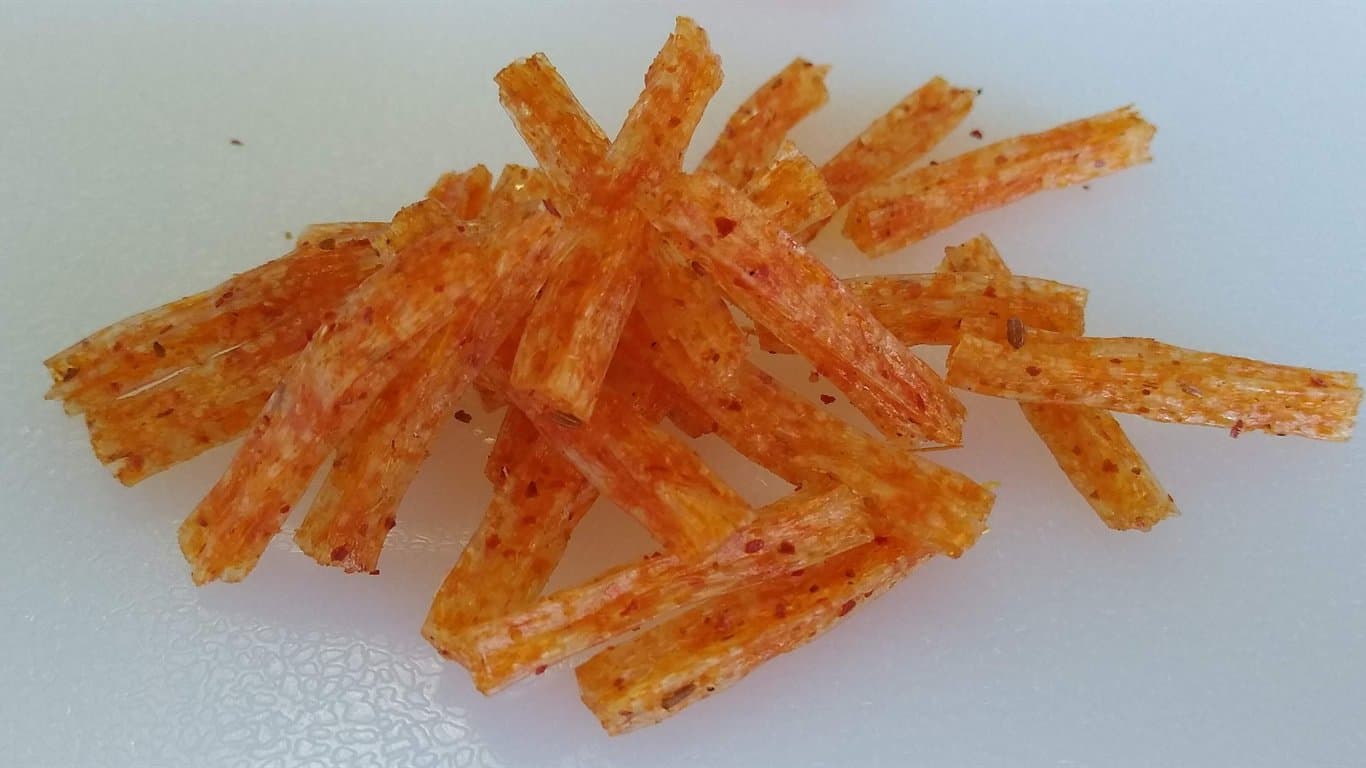
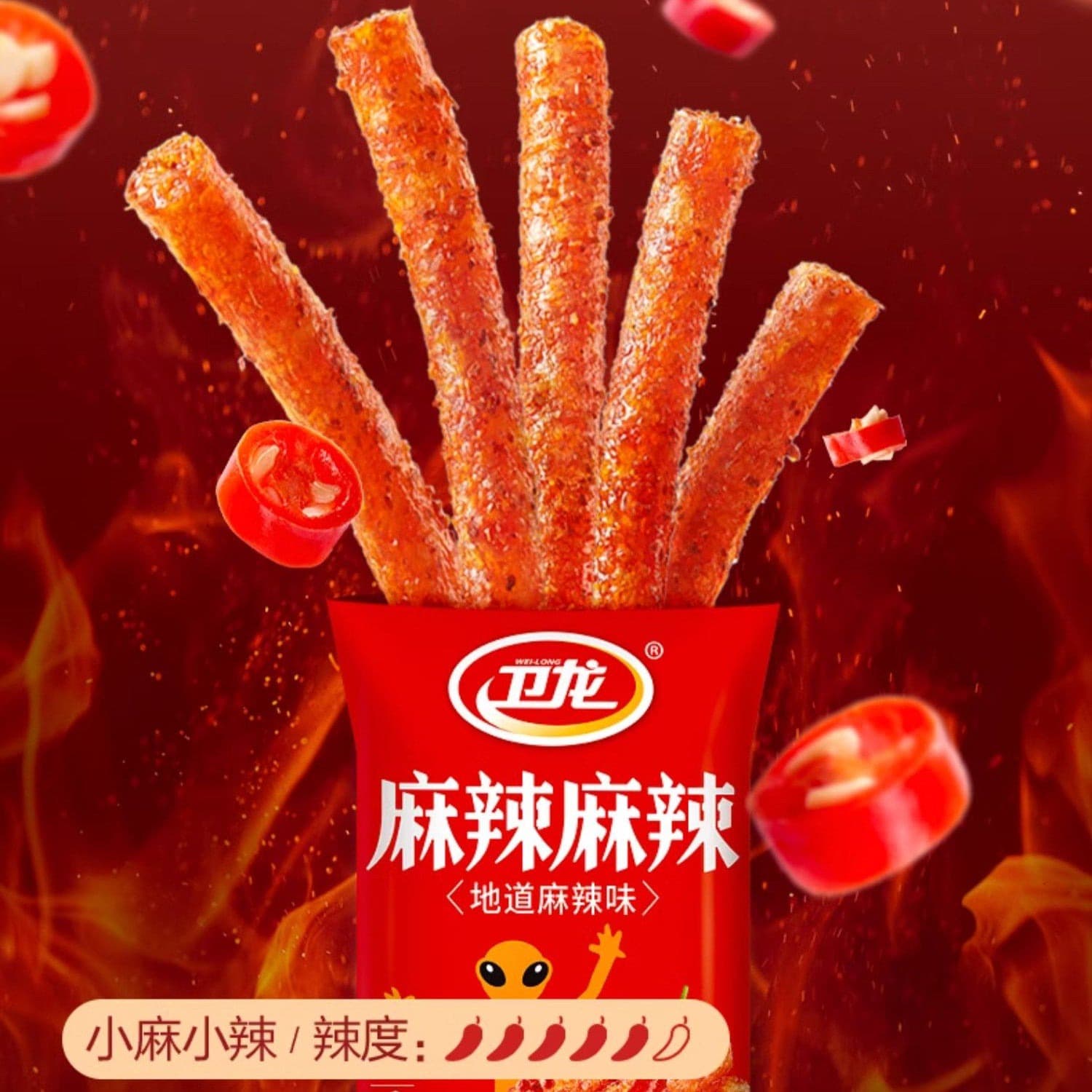
Latiao is spicy, but not every bag is a heat challenge. Many mainstream products land closer to medium snack heat: clear chili flavor, oily richness, a little sweetness, and a chewy base that makes the seasoning linger. The experience can feel stronger than the number on a simple heat scale because the oil coats your mouth and the chew keeps the seasoning around longer.
If you have never tried the category, start with What Is Latiao?, then use this heat guide before choosing a brand.
What this page is: a heat-quantification deep dive — SHU continuum with 4 real-world anchors, 3-stage burn timeline, and what actually relieves chili burn (hint: not ice water). What it is not: a cultural / identity intro to latiao. For origin, history, name variants, and what latiao is NOT, see What Is Latiao?. For which beginner brand to actually buy, see Best Latiao for Beginners by Heat and Texture.
Latiao on the SHU Continuum
The Scoville scale (SHU) is imperfect for latiao because oil and chew change perceived burn — but it gives you 4 real-world anchors that beat vague "medium" labels:
| Reference snack | SHU (typical) | What it teaches you |
|---|---|---|
| Frank's RedHot | ~450 | Below baseline — most latiao is hotter |
| Sriracha | ~1,000–2,500 | Roughly the Weilong Big Latiao range |
| Tabasco Original | ~2,500 | Mid-range latiao reference |
| 老干妈 chili crisp | ~3,500 | Roughly Mala Prince classic range |
| Tabasco Habanero | ~7,000 | Roughly Fan Tian Wa Ultra Spicy range |
| Cholula | ~1,000–2,000 | Below most latiao — useful for first-bite calibration |
Estimated latiao SHU bands (industry-typical, not lab-measured):
Latiao on the SHU continuum
Industry-typical SHU bands across reviewed brands and a few Western reference points. Bars are log-scaled — the gap between 1,500 and 7,500 is bigger than it looks linearly.
- Frank's RedHot (reference)450 SHU
Below baseline — most latiao is hotter.
- Cholula (reference)1,500 SHU
Useful first-bite calibration if you eat US hot sauce.
- Weilong Big Latiao1,800 SHU
Sriracha-adjacent. Safest entry bag for most beginners.
- Junzai Hot Chicken Tendon2,200 SHU
Slightly above Sriracha. Chew adds perceived heat.
- Tabasco Original (reference)2,500 SHU
- BiBiZan Grilled Gluten2,500 SHU
Sharing-pack format — accumulation effect more obvious.
- 老干妈 chili crisp (reference)3,500 SHU
- Mala Prince Classic4,000 SHU
Pingjiang-school chili-forward. Lingers 5+ minutes.
- Tabasco Habanero (reference)7,000 SHU
- Fan Tian Wa Ultra Spicy7,500 SHU
Habanero-adjacent. Not for first orders.
Important: SHU is not the only factor. The chili oil base coats your mouth longer than a vinegar-based hot sauce, so a 2,000-SHU latiao often feels stronger than a 2,000-SHU Tabasco.
The 3-Stage Burn Timeline
Western chili snacks (Takis, hot Cheetos) hit a burn peak fast and fade in 1–2 minutes. Latiao distributes the burn across three distinct phases — knowing the timeline helps you pace eating:
Phase 1: Oil Hit (0–30 seconds) The chili oil coats your tongue and lips. Initial burn lands in the front of the mouth. This is the phase where Western "spicy chip" eaters expect the peak — but for latiao, it's just the opening.
Phase 2: Chew Accumulation (1–3 minutes) By the third or fourth piece, seasoning has built up. The chew releases more oil with each bite, and the cumulative oil layer makes the burn feel stronger than any single bite. Most "this is hotter than I expected" reactions happen here, not at first bite.
Phase 3: Linger (3–10 minutes) After you stop eating, oil residue keeps capsaicin on the lips and tongue. A medium-heat latiao like Weilong lingers ~2 minutes; Mala Prince classic lingers 5+ minutes. This is why pacing matters — finishing the bag in 5 minutes overloads phase 3.
3-stage burn timeline
3-stage burn timeline visualized. This component only appears in the how-spicy guide — burn-pacing is its specific job.
01
Oil hit
0–30 sec
Chili oil coats tongue and lips. Initial burn lands at the front of the mouth.
02
Chew accumulation
1–3 min
By the third or fourth piece, oil layer compounds. Most 'this is hotter than I expected' moments happen here.
03
Linger
3–10 min
Oil residue keeps capsaicin on lips and tongue. Weilong ~2 min linger; Mala Prince 5+ min.
What Actually Relieves the Burn
Three methods that work, two common myths that don't:
Works:
- Whole milk or yogurt — casein protein binds capsaicin
- Sugar (a teaspoon of sugar or sweet rice) — partially counteracts capsaicin perception
- Starch (plain rice, bread) — physically absorbs the oil layer
Doesn't work:
- Ice water — capsaicin is fat-soluble, water spreads it around
- Beer — alcohol increases capsaicin absorption (counterintuitively)
Burn relief · 3 work, 2 myths
3 work, 2 myths. This component only appears in the how-spicy guide — burn-relief science is its specific job.
Whole milk / yogurt
worksCasein protein binds capsaicin.
Sugar (1 tsp or sweet rice)
worksPartially counteracts capsaicin perception.
Plain rice / bread (starch)
worksPhysically absorbs the oil layer.
Ice water
mythCapsaicin is fat-soluble; water spreads it.
Beer
mythAlcohol increases capsaicin absorption.
How Spicy Is Latiao for Most First-Time Buyers?
A practical beginner scale looks like this:
- Mild to medium: sweet-savory chili, friendly chew, no major burn.
- Medium: obvious chili oil, lingering warmth, still manageable for many snack fans.
- Medium-high: sharper chili, sometimes numbing spice, better as a second or third bag.
- High: less common in beginner recommendations and usually not the smartest first order.
The safest first purchase is rarely the hottest one. A benchmark bag teaches you the texture and seasoning style before you chase stronger chili.
Heat ladder · Heat
Where the brands we have reviewed sit on a 1–5 heat scale, sorted from highest to lowest.
- Mala Prince
Chili-forward
4/5 - Fantianwa
Wing-style seasoning
4/5 - Weilong
Benchmark first buy
3/5 - Junzai
Dense chew
3/5 - Bibizan
Large-format bag
3/5 - Yanjinpuzi
Spicy tofu-skin
3/5 - Feiwang
Value-pack risk
3/5 - Bestore
Polished packaging
2/5 - Genji Food
Soy-route option
2/5 - Zhuzhiyuan
Vegetarian-meat format
2/5
How It Compares With Western Spicy Snacks
Many first-time buyers try to compare latiao with hot chips, spicy jerky, or chili crisps. That comparison helps, but it is not exact:
- compared with hot chips, latiao usually feels oilier and longer-lasting
- compared with jerky, it is usually softer, sweeter, and more elastic
- compared with chili crisp, it carries spice inside a chewy snack rather than on top of another food
- compared with novelty "challenge" snacks, mainstream latiao is usually more about flavor and texture than pain
That is why a medium latiao can feel stronger than expected without actually being an extreme heat product.
Why Latiao Can Feel Hotter Than Expected
Latiao heat is not only about chili amount. It is shaped by the whole format:
- Oil carries spice and keeps it on your lips and tongue.
- Chew slows the bite so you spend more time with each piece.
- Sweetness can hide heat at first and let it show up later.
- Numbing spices can confuse the scale because they feel tingly rather than simply hot.
- Aroma matters because chili oil smells stronger than dry seasoning.
That is why two products with similar ingredient lists can feel different once you actually eat them.
Which First Online Order Is Usually Safest?
For most beginners, the safest first online order is a medium-heat benchmark, not an aggressive “extra spicy” listing. In practice, that usually means reading one benchmark review such as Weilong before moving to hotter options.
If a marketplace title sounds extreme but does not show clear package photos, treat that as a reason to slow down rather than a reason to click faster.
Heat and Texture Should Be Chosen Together
For beginners, heat is only half the decision. Texture can be just as important. A softer, balanced chew can make medium heat feel friendly, while a dense or very oily strip can make the same heat feel heavier.
If you want a practical shortlist, the guide to best latiao for beginners by heat and texture organizes the first choices by both factors.
FAQ
Is latiao hotter than spicy chips?
Sometimes it feels hotter because chili oil and chew keep the seasoning in contact with your mouth longer than a crisp chip would.
What is the safest heat level for a first bag?
Medium or mild-to-medium is safest. It gives you the category flavor without turning the first try into a challenge.
Is numbing spice common?
Some products use mala-style seasoning, but not every latiao is numbing. Check the brand review or ingredient notes before assuming.
Should beginners avoid very hot latiao?
Usually yes. Start with texture and flavor first, then move hotter after you know you enjoy the base snack.