Not every spicy strip-style snack begins with wheat gluten. A bean-based route can use soy protein, bean-curd sheets, or tofu-skin-style materials to build a different kind of chew. For shoppers, the result can feel firmer, denser, or more fibrous than mainstream wheat-based latiao. For the factory, it means a different upstream process.
What Counts as “Bean-Based” Latiao?
In practice, bean-based spicy strips usually follow one of two production ideas:
- textured soy protein route — soy protein is extruded into a fibrous chew, then seasoned
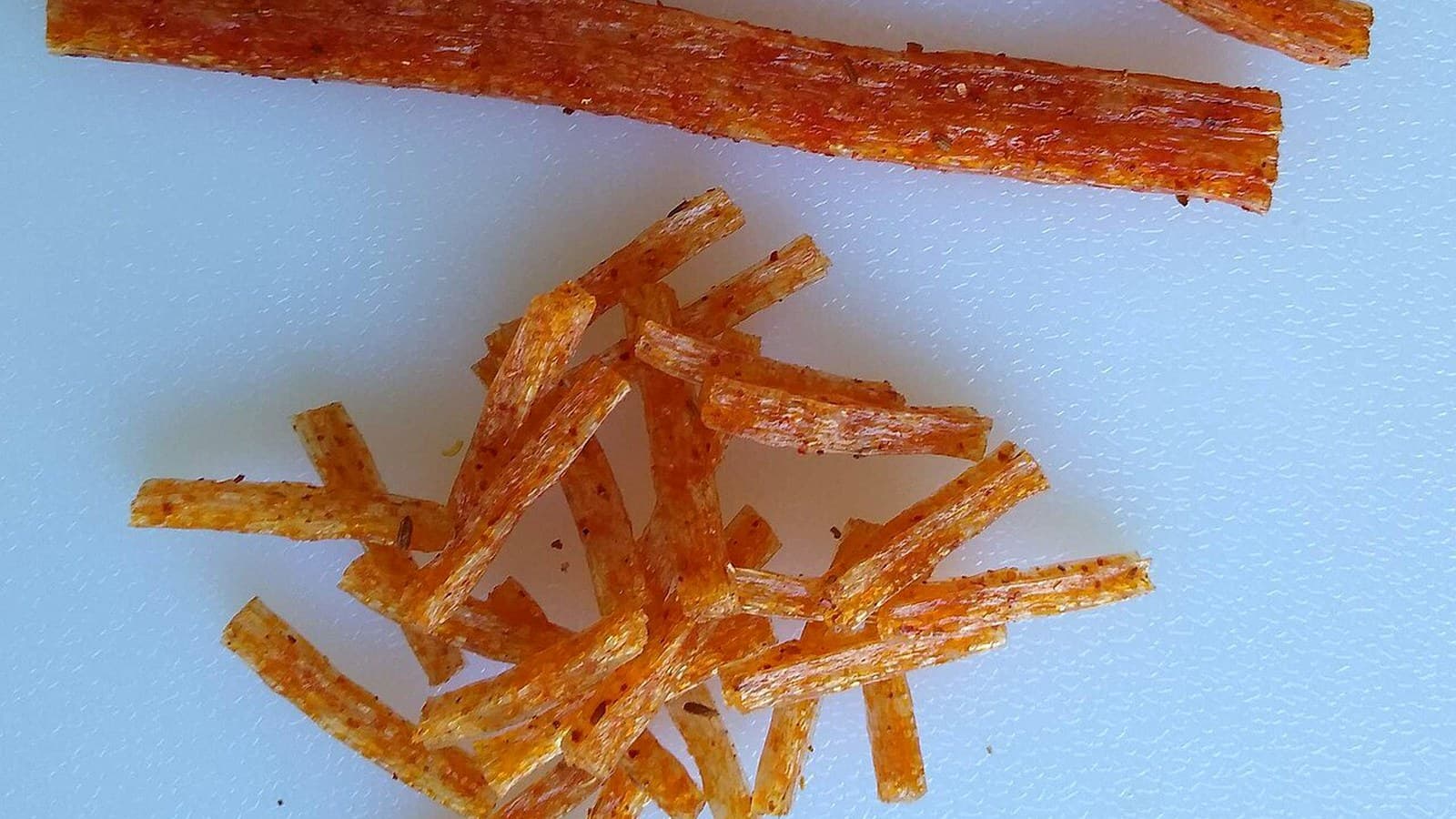
- bean-curd-sheet / tofu-skin route — soy milk is processed into sheets, then cut, seasoned, and packed
Both routes can end in a chili-oil snack, but the structure and machinery are different from a standard wheat-gluten line.
Two soy routes side by side
Two soy routes — TSP extrusion vs tofu-skin pan-forming. This component only appears in the bean-based production article — the route fork is its specific job.
TSP route (textured soy protein)
- 01Defatted soy meal
- 02Twin-screw extrusion at 80–160°C
- 03Fibrous strand alignment
- 04Dried to 28–32% moisture
- 05Spray-coat seasoning
Layered fibrous, jerky-adjacent
Tofu-skin route
- 01Whole soybeans
- 02Soy milk cooked at 95–100°C
- 03Sheet film at 80–85°C pan
- 04Lift, dry to 18–22%
- 05Cut + spray-coat
Sheet-papery, crisp-then-melt
Two Soy Routes Side by Side
The two bean-based routes share starting material (soybean) but diverge in process, equipment, and final texture. Industry-typical comparison:
| Dimension | Textured Soy Protein (TSP) | Bean-Curd Sheet (Tofu Skin) |
|---|---|---|
| Starting material | Defatted soy meal (~50% protein) | Whole soybeans |
| Key equipment | Twin-screw extruder | Open-pan film former |
| Process temperature | Barrel 80–160°C (zoned, 4–6 zones) | Pan surface 80–85°C |
| Moisture (high-moisture variant) | 60–70% during extrusion | N/A |
| Moisture (low-moisture / dry TVP) | 28–32% | Final 18–22% after drying |
| Cycle time | 3–5 minutes per batch | 6–12 minutes per film layer; 8–10 layers/day per pan |
| Typical line capacity | 50–500 kg/h | 100–300 kg/h |
| Typical investment | 80–150万 RMB (mid-tier) | 25–60万 RMB (mid-tier) |
| Typical Chinese supplier | Jinan Saixin, 华泰 (TSP) | Zhengzhou Hento, Yufeng (film) |
| Final chew | Layered fibrous, jerky-adjacent | Sheet-papery, crisp-then-melt |
The investment gap matters for OEM economics: a tofu-skin line is 30–50% cheaper to install, which is why brands like YANJINPUZI and Genji Food can price tofu-skin spicy chips competitively. TSP lines are 2-3× more expensive but produce the meat-mimic chew that ZHUZHIYUAN-style products require.
Why Anti-Trypsin Inactivation Matters
Raw soybeans contain trypsin inhibitors (anti-nutritional factors that block protein digestion). Industrial bean-based snack production must inactivate these to meet food safety standards.
Industry-typical inactivation parameters:
- Heat treatment: 95–100°C for 5–8 minutes during soy milk cooking
- Inactivation rate: 80%+ trypsin inhibitor activity reduction at 95°C / 5 min (per food engineering literature)
- Regulatory reference: GB 2711-2014 (sanitary indicator requirements for bean products)
For TSP extrusion, the in-barrel temperatures (80–160°C) automatically provide sufficient inactivation. For tofu-skin lines, the pan-cooking step is the critical control point — under-cooked soy milk leads to product that fails GB 2711-2014 sensory and chemical indicators.
This is why "factory-made" bean-based snacks are food-safe while raw home-soaked soybeans are not. Industry-typical TSP extrusion uses barrel temperatures stepping from 80°C feed zone to 160°C die zone, per Cereal Foods World process notes.
Route One: Textured Soy Protein
This route is common when a factory wants a meat-like bite from soy materials. The process can create a chew that feels more layered or stringy than classic latiao.
Textured soy protein takes pre-blended raw materials through extrusion to create a fibrous, meat-like chew.
Raw material blending
Soy protein raw materials are blended with the dry recipe.
Moisture adjustment
Moisture is adjusted so the material can extrude into fibrous strands.
Extrusion
Extrusion creates a fibrous internal structure that mimics meat.
Cutting and stabilizing
Pieces are cut, then dried or otherwise stabilized.
Seasoning and oiling
Seasoning and oil are applied across the cut pieces.
Portioning and packing
The product is portioned, weighed, and packed for retail.
Route Two: Bean-Curd Sheet / Tofu Skin
This route looks different earlier in the line. The final bite can feel smoother, denser, and more sheet-like than an extruded wheat strip.
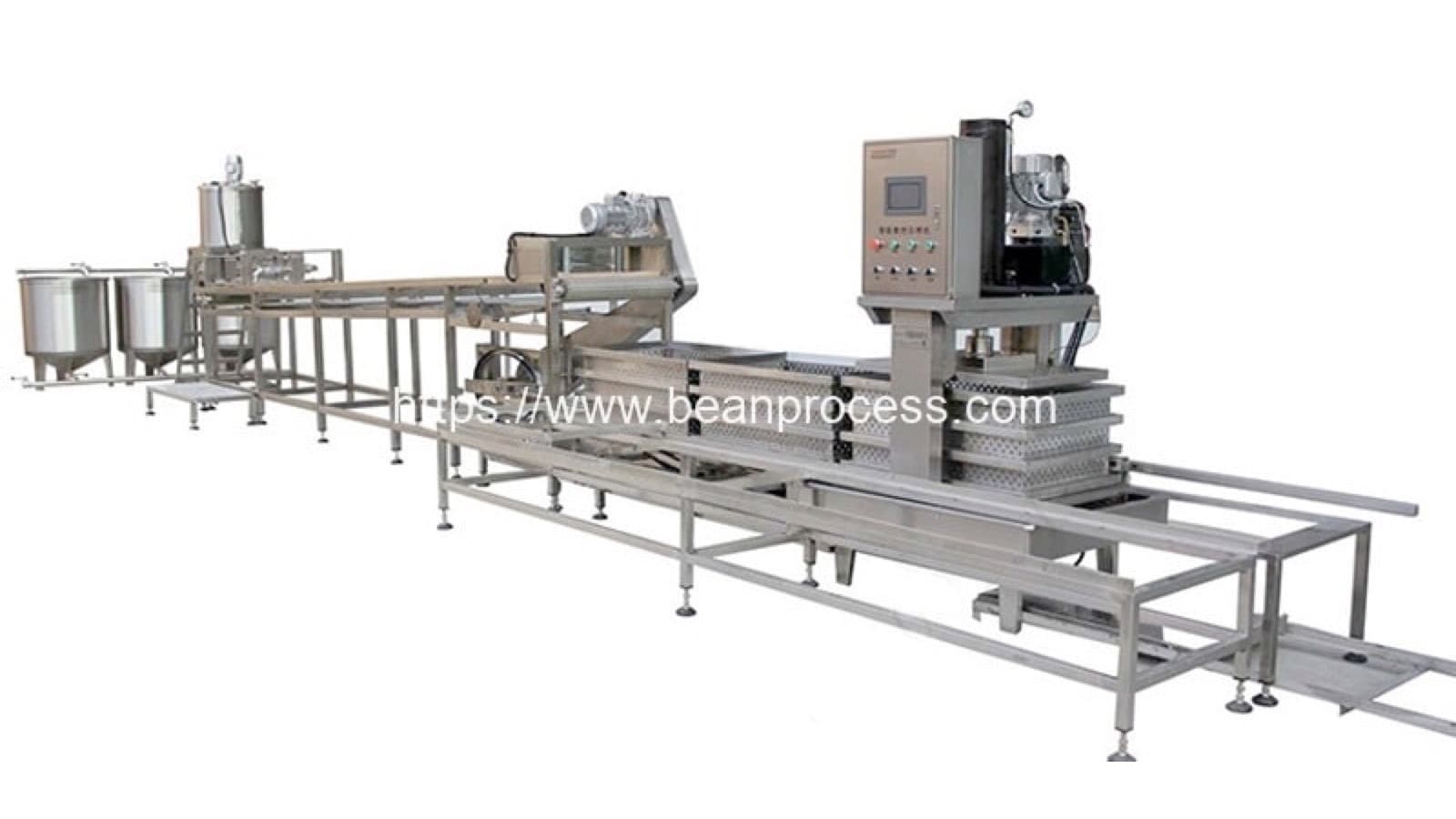
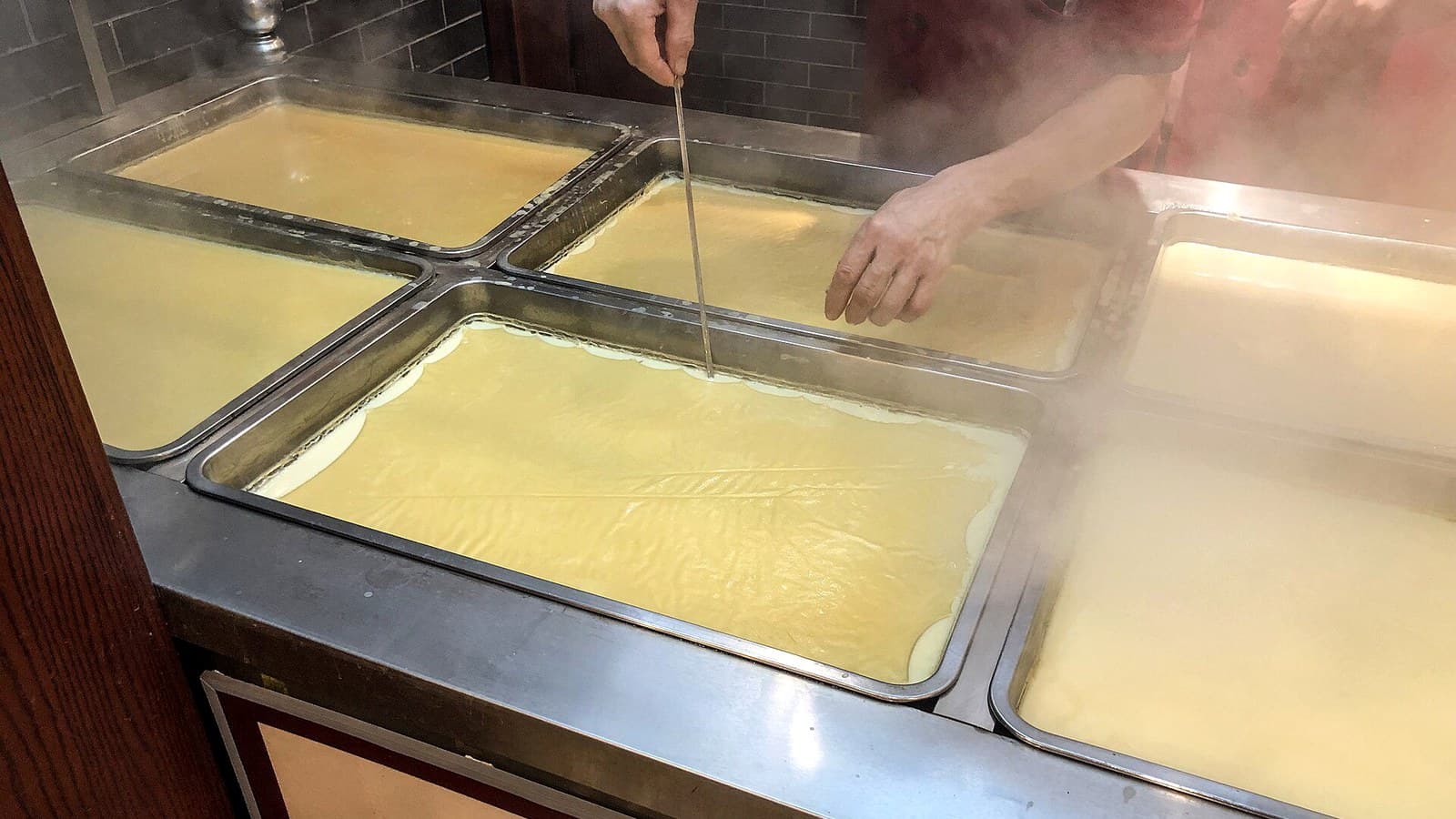
Bean-curd sheet (tofu skin) lines start from soybeans and capture the protein film that forms on heated soy milk.
Cleaning, soaking, grinding
Soybeans are cleaned, soaked, and ground into raw material.
Cooking and filtering
Soy milk is cooked and filtered to a consistent base.
Sheet forming
Sheet-forming happens at the surface during heating, capturing protein film.
Lifting and drying
Sheets are lifted off the surface, then dried or partially dried.
Cutting
The sheets are cut into strips or pieces sized for the final snack.
Seasoning and packing
Seasoning, oiling, and packaging follow on the same line or at a sister station.
Which Machines Matter Most?
For bean-based spicy strip products, the key machines depend on the route:
- soybean cleaning and soaking systems
- grinders and soy-milk kettles
- sheet-forming or tofu-skin production lines
- extruders for textured soy protein
- cutting, drying, and seasoning equipment
- weighing and packaging systems
Because bean materials are sensitive to moisture and structure, drying and handling control matter a lot.
Where the Machines Commonly Come From
Public supplier listings show recurring production clusters:
- Zhengzhou, Henan and nearby areas for tofu-skin, bean-curd-sheet, and soy-product processing lines
- Jinan, Shandong for extrusion systems used in soy protein and snack processing
- Foshan, Guangdong for the packaging stage once the bean-based strips are seasoned and portioned
Again, these are common industrial hubs, not exclusive locations.
How Bean-Based Products Differ from Wheat-Based Ones
Compared with wheat-based latiao, bean-based products often feel:
- less stretchy and more fibrous
- denser in the center
- more dependent on soy aroma
- more obviously shaped by drying or sheet handling
That is why the same chili-oil seasoning can taste quite different across wheat and bean routes.
Why Consumers Should Care
If you ever buy a product that feels more tofu-like, more “vegetarian meat” like, or less elastic than mainstream latiao, production route is usually the reason. Understanding that helps you shop more intentionally and compare products fairly.
You can then use the buying guide to find a product page that clearly states what the snack actually is.
Source Notes
- GB 19295-2021 速冻面米与调制食品 (frozen flour, rice and prepared food sanitary indicators) — China's mandatory hygiene baseline applied to bean-based snack lines
- GB 2711-2014 植物蛋白饮料卫生标准 (sanitary standard for plant-protein products) — covers trypsin-inhibitor inactivation thresholds for soy products
- Cereal Foods World journal — twin-screw TSP extrusion process documentation, including the 80–160°C zone-temperature sequencing referenced above
- LWT — Food Science and Technology — published trypsin-inhibitor activity reduction studies at 95°C / 5 min
- Hento Machinery's bean-curd-sheet line in Zhengzhou — manufacturer reference for tofu-skin pan-forming line
- China General Chamber of Commerce food-industry portal — sector-association coverage of soy-protein processing trends
Final Take
Bean-based spicy strips are not just wheat-based latiao with a different label. They often come from a genuinely different process, a different machine set, and a different texture logic. Once you see that, product descriptions become much easier to decode.
FAQ
Why does textured soy protein cost more to produce than tofu skin?
The TSP twin-screw extruder represents 30–50% of total line investment, and the equipment itself is 2–3× more expensive than a tofu-skin film former. Add the higher-protein defatted soy meal raw material cost (vs whole soybeans for tofu skin), and TSP-route products end up 20–40% more expensive at retail. ZHUZHIYUAN-style "vegetarian meat" pricing reflects this.
Are bean-based latiao products gluten-free?
Usually yes for the substrate, but not always for the seasoning. The TSP and tofu-skin substrates contain no wheat. However, soy sauce, MSG-equivalent seasonings, and some flavor additives in the chili-oil mix may contain wheat-derived ingredients. Treat "bean-based latiao" as wheat-substrate-free but verify gluten-free claims via the explicit allergen statement on the package.
Can a wheat-latiao factory easily switch to bean-based production?
Not easily. The two routes share almost no equipment beyond the seasoning tumbler and packaging line. A wheat-latiao factory wanting to add bean-based products typically needs a parallel line investment of 50–150万 RMB. This is why most factories specialize in one route — the OEM economics don't favor switching.