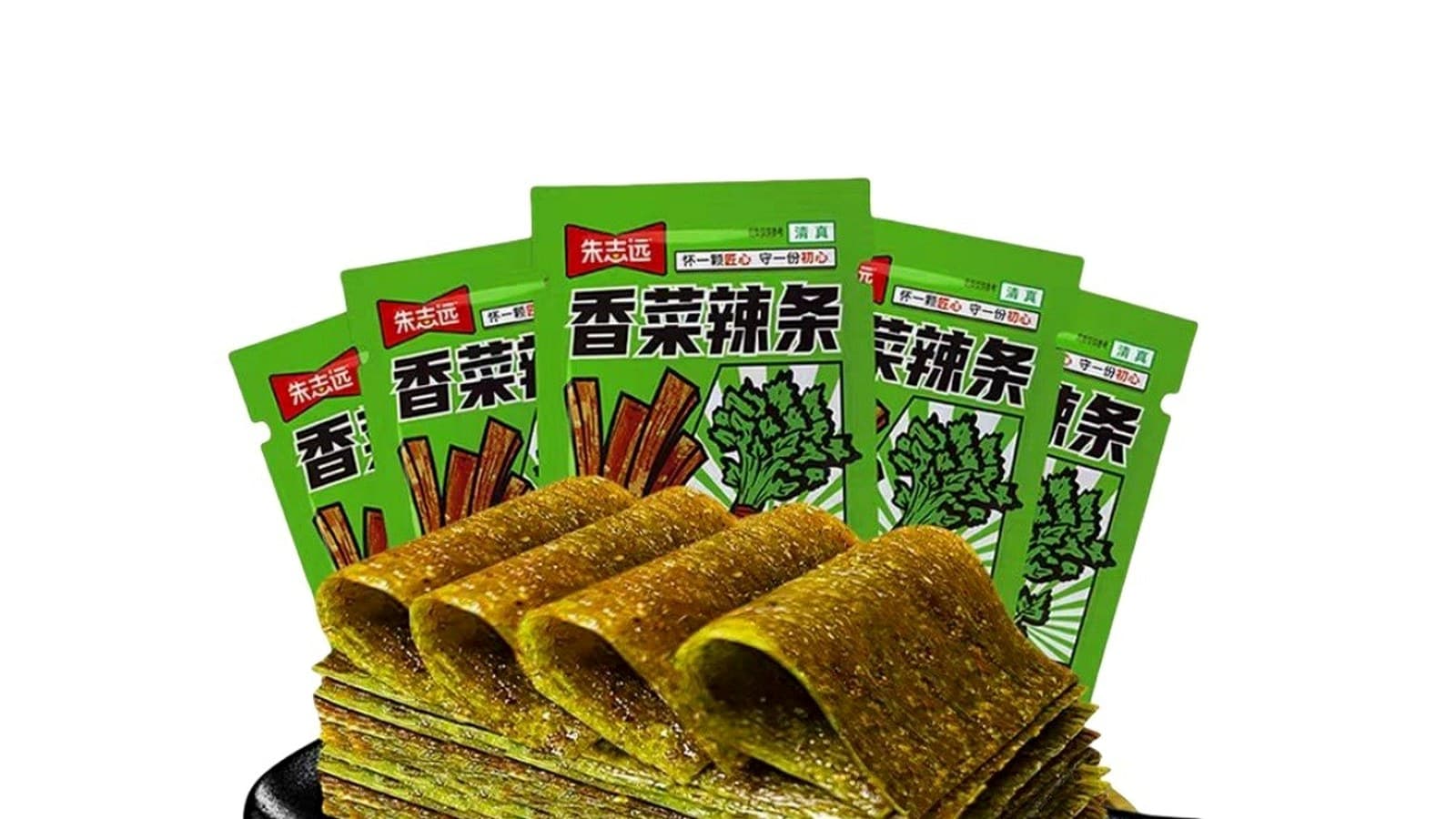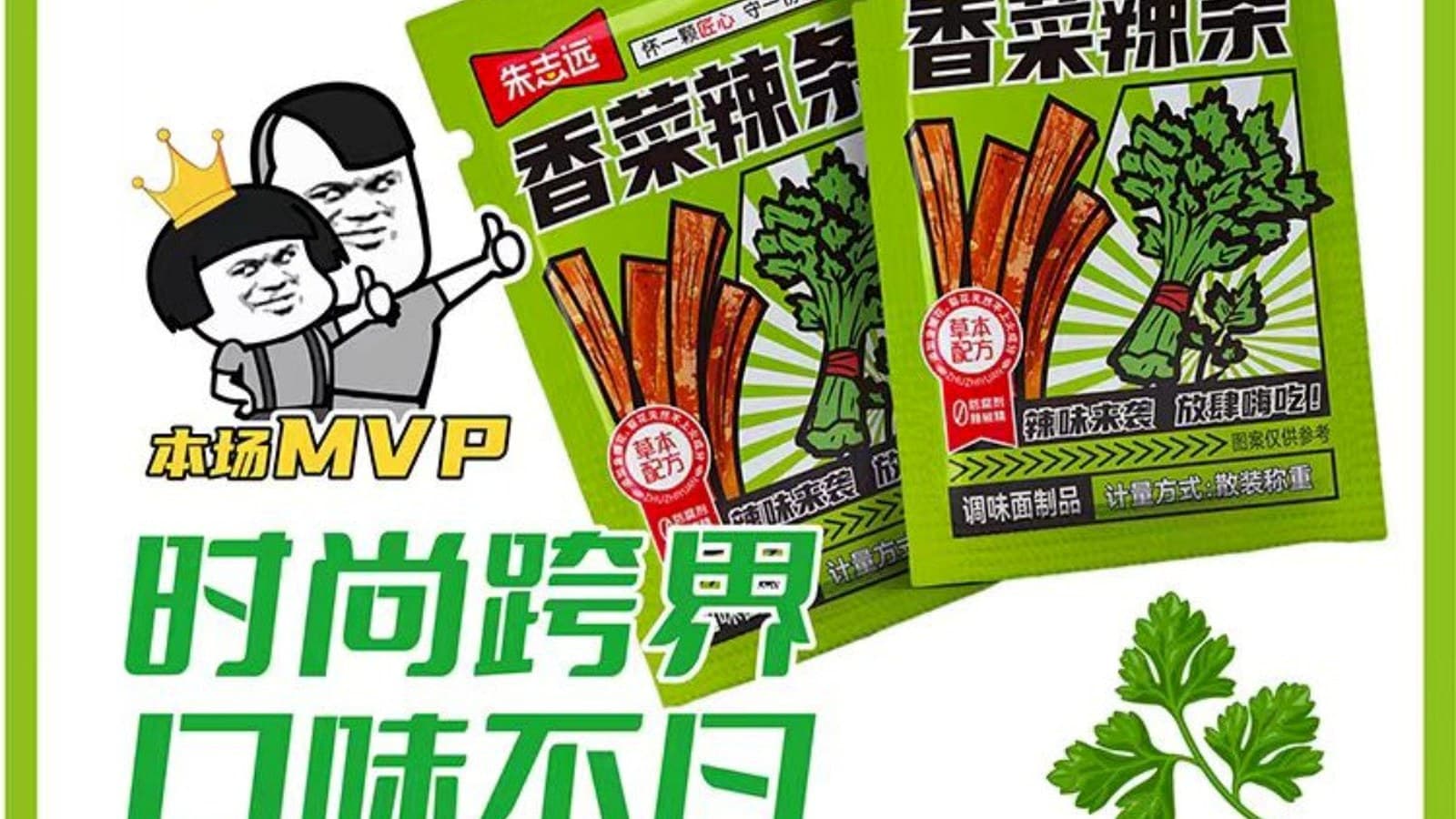
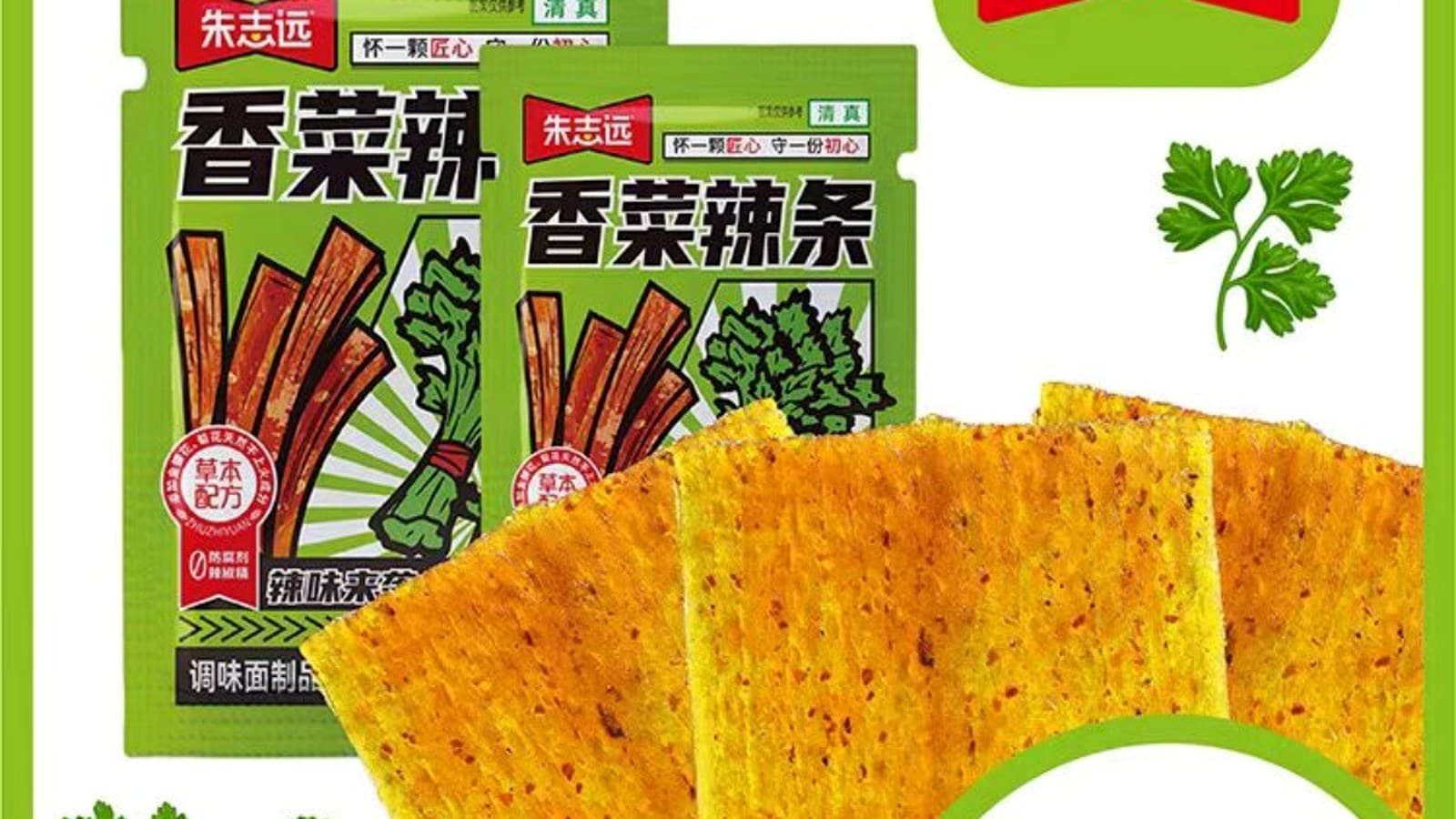
ZHUZHIYUAN is helpful because it forces you to answer a simple question before buying: do you want a classic latiao baseline, or do you want to compare that baseline against a soy-forward vegetarian-meat format? If your answer is the second one, the brand becomes genuinely useful.
Quick Verdict
ZHUZHIYUAN is a comparison brand. It is most useful after you already understand at least one mainstream benchmark. Its value comes from showing how different the chew and category language can feel once soy-forward snack formats move closer to the latiao shelf.
Plant-Protein Extrusion vs Wheat Gluten: Two Different Engineering Logics
ZHUZHIYUAN's spicy strip is not made the same way Weilong is made. Where Weilong's gluten chews because protein chains stretched in steam, ZHUZHIYUAN's strip chews because soy-protein fibers were extruded under heat-pressure — closer to plant-based jerky engineering than to latiao tradition.
The process gap in plain language:
- Weilong route (wheat gluten): Wheat flour → wash starch out → form gluten ball → steam → stretch into strips → cool → coat with chili oil seasoning. The chew comes from the protein network's elasticity developed during stretching.
- ZHUZHIYUAN route (TVP / textured vegetable protein): Defatted soy meal → moisture-adjusted to ~28-32% → twin-screw extruder at ~140-160°C die temp → fiber alignment under shear → cool, cut, dry → spray-coat with chili oil. The chew comes from aligned fiber bundles that resemble cooked meat fiber.
This isn't just trivia — it changes how you should evaluate the product:
- Weilong's protein scaffold absorbs oil into the matrix
- ZHUZHIYUAN's fiber bundles let oil sit between layers, not within them
- A "stale" Weilong tastes flat; a "stale" ZHUZHIYUAN can taste cardboard-like because the surface oil dries off and exposes the dry fiber underneath
If you've eaten Beyond Meat or Impossible Burger, you've eaten the same TVP/HMME extrusion logic ZHUZHIYUAN uses — just shaped differently and seasoned with chili instead of meat-flavor.
Two extrusion logics: wheat gluten vs TVP
Two extrusion routes side by side: Weilong wheat-gluten flow vs ZHUZHIYUAN TVP flow. This flowchart only appears in the ZHUZHIYUAN review — it's the structural reason these two products do not eat alike.
Weilong wheat-gluten route
- 01Wheat flour
- 02Wash starch out
- 03Gluten ball forms
- 04Steam set
- 05Stretch into strips
- 06Coat with chili oil
ZHUZHIYUAN TVP route
- 01Defatted soy meal
- 02Adjust moisture 28–32%
- 03Twin-screw extrude (140–160°C)
- 04Fiber alignment under shear
- 05Cool, cut, dry
- 06Spray-coat seasoning
Tasting Notes (Plant-Jerky Profile, based on category research)
Because ZHUZHIYUAN does not have a verified US purchase route as of 2026-04-30, this profile is reconstructed from public category research and TVP-extruded snack characteristics rather than direct tasting:
- First bite: noticeable tear-resistance — closer to plant-based jerky than to springy latiao; fibers visibly align in the bite direction
- Texture progression: chewy but not bouncy; the bite breaks along fiber lines rather than stretching back
- Oil distribution: surface-applied chili oil coats the fiber bundle exterior; oil does not penetrate as deeply as in wheat gluten
- Aftertaste: a faint soy-bean note that wheat-gluten latiao does not have — closer to vegetarian beef jerky than to chili-strip latiao
- Heat estimation: ~1,000–2,000 SHU; the fiber surface area is high so chili reads quickly, but the linger is shorter
- Use case fit: high-protein snack lovers, plant-based eaters, fitness-conscious buyers — not wheat-latiao traditionalists
Why ZHUZHIYUAN's Cross-Border Distribution Lags Weilong by 5+ Years
Weilong started overseas marketplace listings around 2018 and reached cross-border consumer-facing US channel maturity by ~2022 (Yami / Weee / Walmart selective). ZHUZHIYUAN, despite operating in a similar timeframe, has no verified US purchase route as of 2026-04-30. Three structural reasons:
- Vegetarian-meat is a niche shelf, not a chili-snack shelf — overseas Asian-American marketplaces categorize ZHUZHIYUAN's SKUs into their plant-protein / vegetarian section, where shelf turnover is slower and search discovery is weaker than the chili-snack section.
- Brand recognition lags — Weilong's IPO and viral TikTok videos pulled consumer awareness ahead of supply chain. ZHUZHIYUAN never had a category-defining moment that crossed language barriers.
- Cold-chain ambiguity — TVP-extruded high-protein snacks sometimes carry cold-chain handling preferences that complicate cross-border shipping. The category has not converged on a clear shelf-stable spec the way wheat-gluten latiao has.
Practical implication: if you want plant-based chili-flavored Chinese snacks today, Genji Food's tofu-skin spicy chips and YANJINPUZI's soy product line are easier-to-buy alternatives. Treat ZHUZHIYUAN as a brand to watch in 2026-2027 if cross-border verified routes appear.
What Makes It Different
Compared with a mainstream wheat-based strip:
- the texture can feel more like seasoned vegetarian meat than elastic dough
- the product naming can emphasize soy or vegetarian-meat identity
- the buying decision depends more on ingredient and format clarity
That makes ZHUZHIYUAN a learning tool, not a universal first recommendation.
Who Should Buy ZHUZHIYUAN
Buy it if you want:
- a soy-forward comparison product
- practice reading format and ingredient cues
- a clearer sense of how vegetarian-meat snacks differ from classic latiao
Who Should Skip ZHUZHIYUAN
Skip it if you want:
- the cleanest possible category benchmark
- one easy first purchase with minimal interpretation
- the most familiar wheat-strip chew
Soy-Forward Snack Alternatives You Can Buy Today
While ZHUZHIYUAN's verified cross-border route remains unavailable, several soy-forward or plant-protein Chinese snacks are accessible now. Understanding these alternatives helps you decide whether to wait for ZHUZHIYUAN or start exploring the soy-snack category immediately:
- Genji Food tofu-skin spicy chips: Available on multiple platforms. Uses tofu skin instead of TVP extrusion, but the soy-base identity and chili-forward seasoning make it the closest currently-available comparison. The texture is flakier and less meat-like, but the flavor philosophy overlaps.
- YANJINPUZI soy product line: Salt-baked tofu and soy-based strips that lean more snackable protein than spicy indulgence. A gentler entry into soy-forward Chinese snacks.
- BESTORE spicy gluten slices: Not soy-based, but the mild, approachable retail-snack formatting occupies a similar beginner-friendly comparison product role.
If your primary interest is the plant-protein engineering — the TVP extrusion, the fiber alignment, the meat-like chew — none of these alternatives fully replicate ZHUZHIYUAN's structural identity. Genji Food comes closest in flavor; no currently-available brand matches the texture.
What To Watch For When ZHUZHIYUAN Becomes Available
When ZHUZHIYUAN eventually establishes a verified US purchase route, here are the signals that will tell you the listing is worth buying:
- Direct brand page showing the signature packaging — typically a green or gold bag with Chinese-character branding.
- Ingredient transparency explicitly mentioning soy protein, TVP, or textured vegetable protein as a primary ingredient.
- Freshness indicators in reviews mentioning chewy or still moist rather than dry or crumbly.
- Pack size clarity in grams — a listing that hides the weight is a red flag.
When the verified route appears, ZHUZHIYUAN will be most useful as a direct side-by-side comparison with a Weilong baseline. Buy both, taste them in the same session, and the structural difference between wheat-gluten chew and TVP fiber chew will become immediately obvious in a way that written descriptions cannot fully convey.
Final Take
ZHUZHIYUAN earns its place as a comparison product because it shows the category boundary clearly. It is useful, but only if you buy it for that reason. If you want one all-purpose benchmark, start elsewhere and come back later.