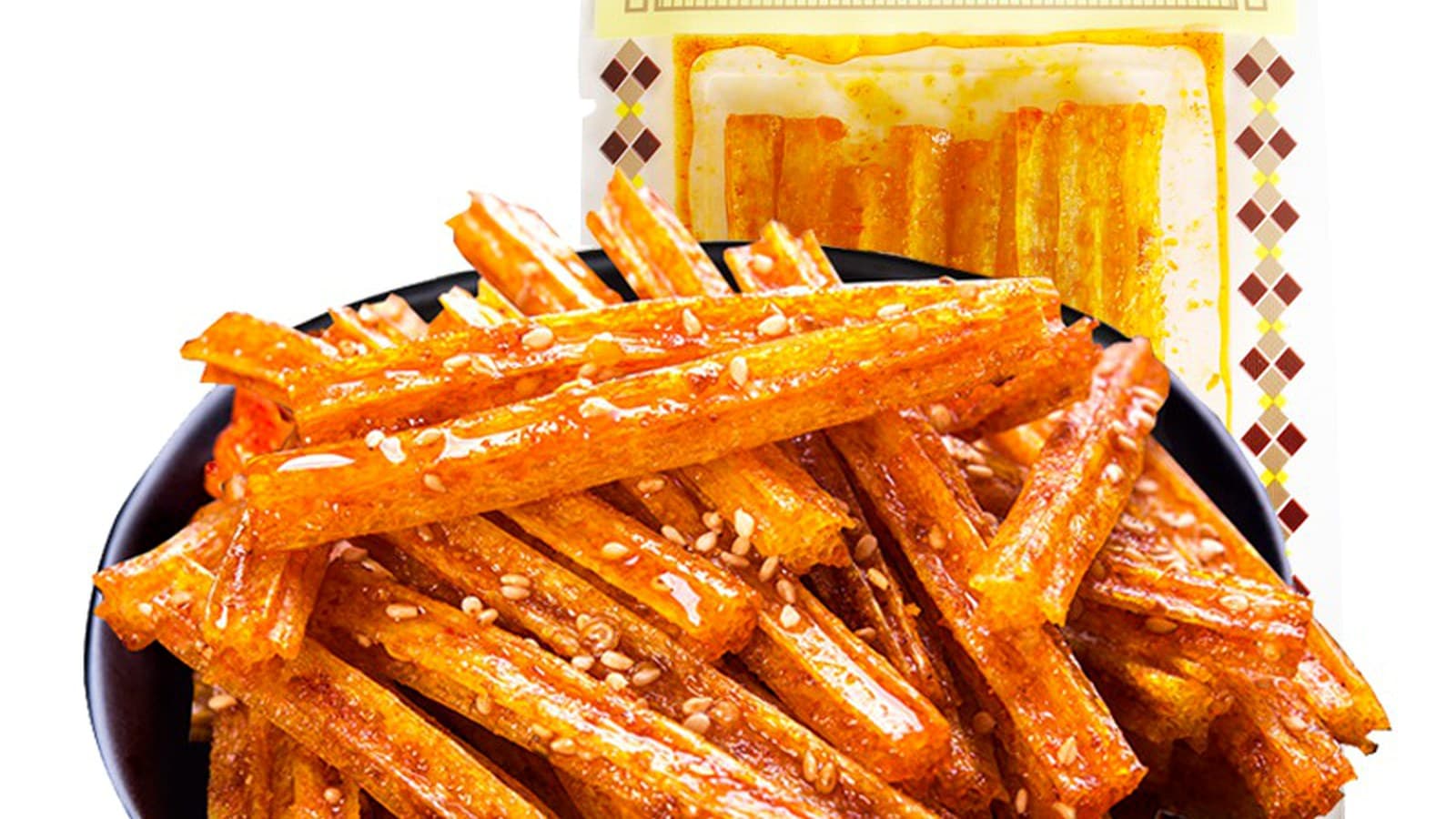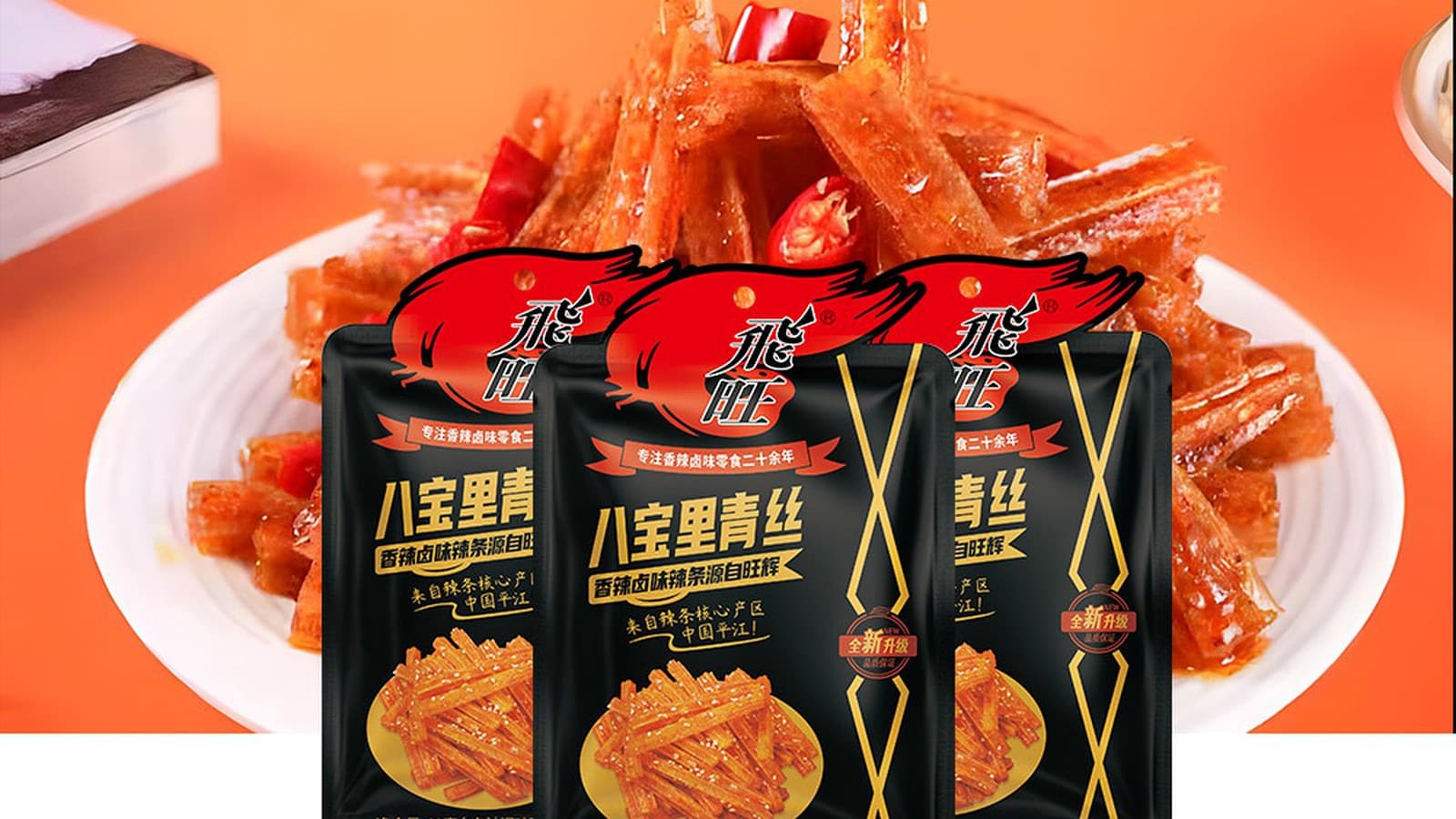
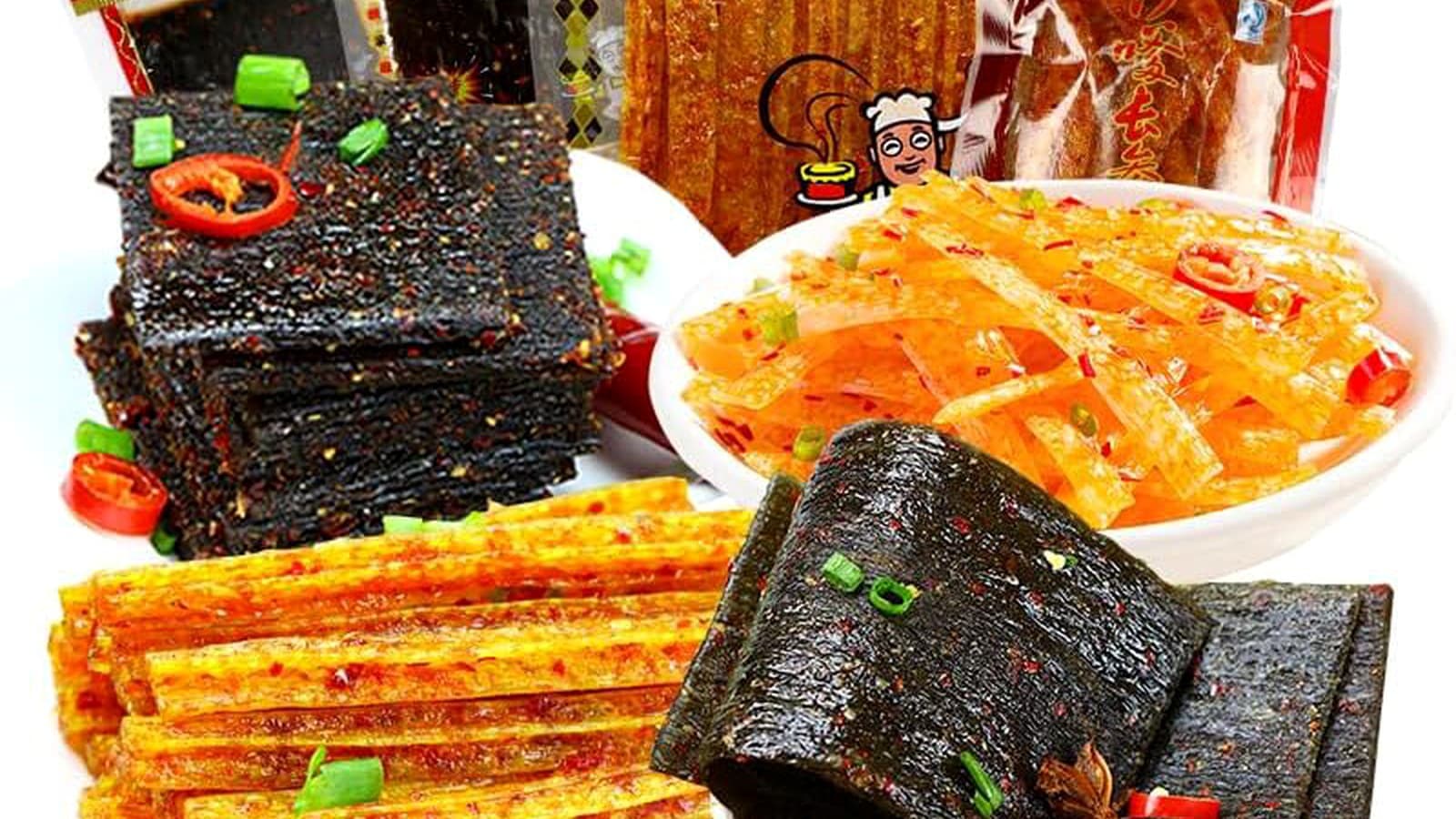
FEIWANG is the kind of brand that proves a bargain is only useful when the listing is readable. Low-cost latiao packs can look tempting, but the risk is not only flavor disappointment. It is often unclear pack math, stale stock, or mixed product formats hidden behind one low number.
Above-the-fold verdict: FEIWANG is not a beginner-safe first purchase. It is a value-pack comparison tool — useful only when the listing is unusually clear. Buy it to practice reading pack math and freshness signals, not as your introduction to latiao.
Quick Verdict
FEIWANG can be worth comparing if the page is unusually clear. It is not the brand I would use to explain the category to a beginner, but it is a good lesson in how much listing quality changes the buying decision.
Decoding "Changsha Stinky Tofu Flavor": What's Actually in the Coating
The current FEIWANG SKU we anchor to is the Changsha Stinky Tofu Flavor (长沙臭豆腐风味) — and that flavor name causes more confusion than any other latiao SKU on this site. The snack does not contain stinky tofu. That funk you're tasting isn't accidental — it's a deliberate ferment-soy powder blend designed to ride your memory of a Hunan night-market stall, compressed into a wheat-gluten strip.
The actual seasoning composition (industry-typical for "stinky tofu" 长沙臭豆腐 latiao):
- Fermented soy powder — the controlled "funk" that triggers the stinky-tofu memory
- Garlic powder (high dose) — Hunan night-market stinky tofu always lands heavy on garlic
- Cilantro / coriander leaves (dried, crushed) — the cooling herbal top note
- Black pepper — adds front-of-mouth tingle
- Chili oil — the latiao base layer that ties everything together
When all of these hit a wheat-gluten chewy substrate, the result is front-load garlic-funk → mid-chew fermented soy → herbal-cilantro tail. Most Western buyers expecting "spicy strip" are surprised by the garlic intensity; most Chinese buyers familiar with Changsha night markets recognize it instantly.
Changsha night-market → Feiwang strip: 4 flavor migrations
Four flavor migrations from Changsha night-market stinky-tofu stalls into Feiwang's seasoning. This map only appears in the Feiwang review — it's the regional translation no other brand attempts.
- 01
Fermented soy powder
From: Tofu fermentation vat
- 02
Garlic mince
From: Pre-fry oil-bath stage
- 03
Cilantro flakes
From: Final topping ladle
- 04
Black-pepper chili oil
From: Wok-finishing drizzle
Tasting Notes (Stinky Tofu Variant, based on category research)
Based on category research:
- Aroma on opening: pungent garlic, then fermented soy — closer to a strong street-food smell than to clean factory chili oil
- First bite: garlic-driven savoriness; chili oil arrives second, not first
- Mid-chew: the fermented soy funk emerges — short and tolerable for most, but a discovery moment for Western palates
- Finish: cilantro coolness offsets the heat; a notably herbal, slightly green-tasting linger
- Heat estimation: ~1,500–2,500 SHU — moderate; the spice isn't the point, the flavor architecture is
This profile makes FEIWANG Stinky Tofu the most regional flavor in our review set. It's not a beginner-safe purchase, but it's a memorable one if you specifically want to taste a Hunan night-market translation in latiao form.
Bargain Multipack Math: When ¥3 per Bag Actually Saves Money
FEIWANG's value-pack positioning needs honest math. A typical 240g bag at $3.49 looks cheaper per gram than a 65g Weilong at $2.49, but the comparison is incomplete:
- Weilong 65g × $2.49 = $0.038/g
- FEIWANG 240g × $3.49 = $0.0145/g (looks 60% cheaper)
- But: if you don't finish FEIWANG within 14-21 days of opening (industry-typical aroma decay window for high-oil seasoning), the per-gram cost of eaten product nearly doubles
- Real economic cost = price ÷ servings_actually_enjoyed, not price ÷ total grams
Under-counting the "stale waste" factor is the most common mistake with low-priced multipacks. Two scenarios:
- You eat ≥3 sessions/week: FEIWANG 240g pays off, ~$0.020/g effective
- You eat 1 session/week: FEIWANG 240g loses to Weilong 65g because the second half of the bag goes stale
The bargain is real, but only conditional on consumption pace. Don't outsmart your own pantry.
Three Useful Buying Paths
FEIWANG
Changsha Stinky Tofu Flavor 240g
Best entry if you want to compare FEIWANG as a value-pack shelf choice.
Live product page: verify pack size and price.
Use pack count, recent reviews, and visible expiry details.
External shopping link · may use affiliate tracking
Do not treat the lowest headline number as a full buying answer.
FEIWANG
FEIWANG Spicy Strips Product Page
Helpful for seeing how a direct FEIWANG page presents snack category wording.
Live product page: confirm product type before buying.
Use package photos to separate tofu snacks from strip snacks.
External shopping link · may use affiliate tracking
Mixed-format pages are a warning, not a convenience.
FEIWANG
FEIWANG Product Page Recheck
A comparison route, not a universal first order.
Live product page: compare with benchmark brands.
Use seller clarity and freshness comments as the live signal.
External shopping link · may use affiliate tracking
Variety packs increase the risk of hidden old stock when the page is vague.
Who Should Buy FEIWANG
Buy it if you want:
- a price-sensitive comparison point
- practice reading pack math and seller clarity
- one more shelf example after you already understand a benchmark brand
Who Should Skip FEIWANG
Skip it if you want:
- one clean beginner baseline
- minimal listing risk
- a product page that does most of the explaining for you
How to Read a FEIWANG Listing in 60 Seconds
FEIWANG listings vary more in quality than any other brand on this site. Before clicking buy, scan for these five signals:
- Pack count is explicit: The listing says 3 packs by 80g or 6 packs by 30g — not assorted or variety.
- Product photos show the actual FEIWANG package: The real FEIWANG bag has the brand name in red on a bright yellow or orange background.
- Expiry or production date is mentioned: Even if approximate, a listing that acknowledges freshness is more likely to rotate stock.
- Recent reviews mention aroma: If the last three reviews say tastes fresh or strong smell when opened, the seller is moving inventory.
- Per-pack price is easy to calculate: The total price divided by the stated pack count gives a clean per-unit number.
A listing that passes all five checks is worth comparing. A listing that fails two or more is a wait for a better seller situation.
Where FEIWANG Sits in a Price-Quality Matrix
FEIWANG occupies a specific niche: cheaper than Weilong per gram, more flavorful than basic unbranded strips, but riskier on freshness. In a four-quadrant framework, FEIWANG's value proposition depends entirely on which quadrant the current listing lands in. The brand itself is consistent; the seller is the variable. Buy FEIWANG from a trusted page and it earns its spot. Buy from a weak page and you are paying to learn a lesson about listing quality.
FEIWANG vs Benchmark Comparison
| Dimension | Weilong (Benchmark) | Mala Prince | FEIWANG |
|---|---|---|---|
| Best for | Safe first purchase | Second step for heat seekers | Low-cost comparison tool |
| Flavor profile | Sweet-forward, balanced chili | Chili-forward, minimal sweetness | Garlic-fermented soy, regional |
| Heat level | Mild–medium | Medium–high | Medium |
| Listing risk | Low — most stable listings | Medium — variant confusion | High — pack math / stale stock |
| Package size | 65g standard | 65–85g | 240g (larger format) |
| Beginner suitability | Excellent | Good after Weilong | Not suitable as first bag |
| Price per gram | $0.038/g | Similar to Weilong | $0.015/g (but check waste factor) |
FEIWANG's main job in a tasting lineup is as a low-cost comparison point — it shows you how far a flavor can travel within the same wheat-gluten category. Use it after you've built a benchmark with Weilong or Mala Prince, not before.
Final Take
FEIWANG is less a flavor lesson than a shopping lesson. If the listing is clear, it can be a useful bargain comparison. If the listing is weak, it becomes a case study in why value packs need stricter buying discipline than benchmark brands.