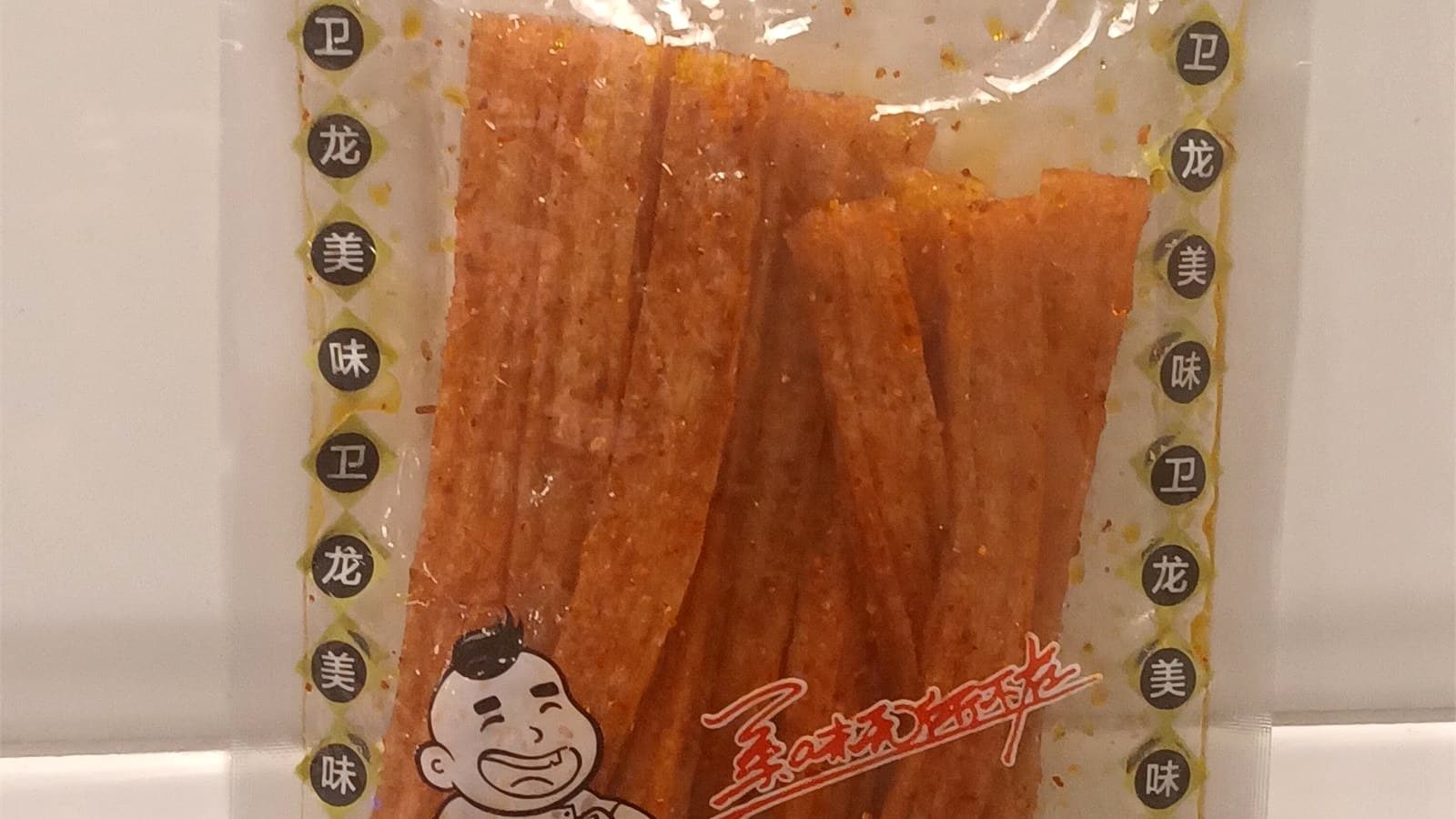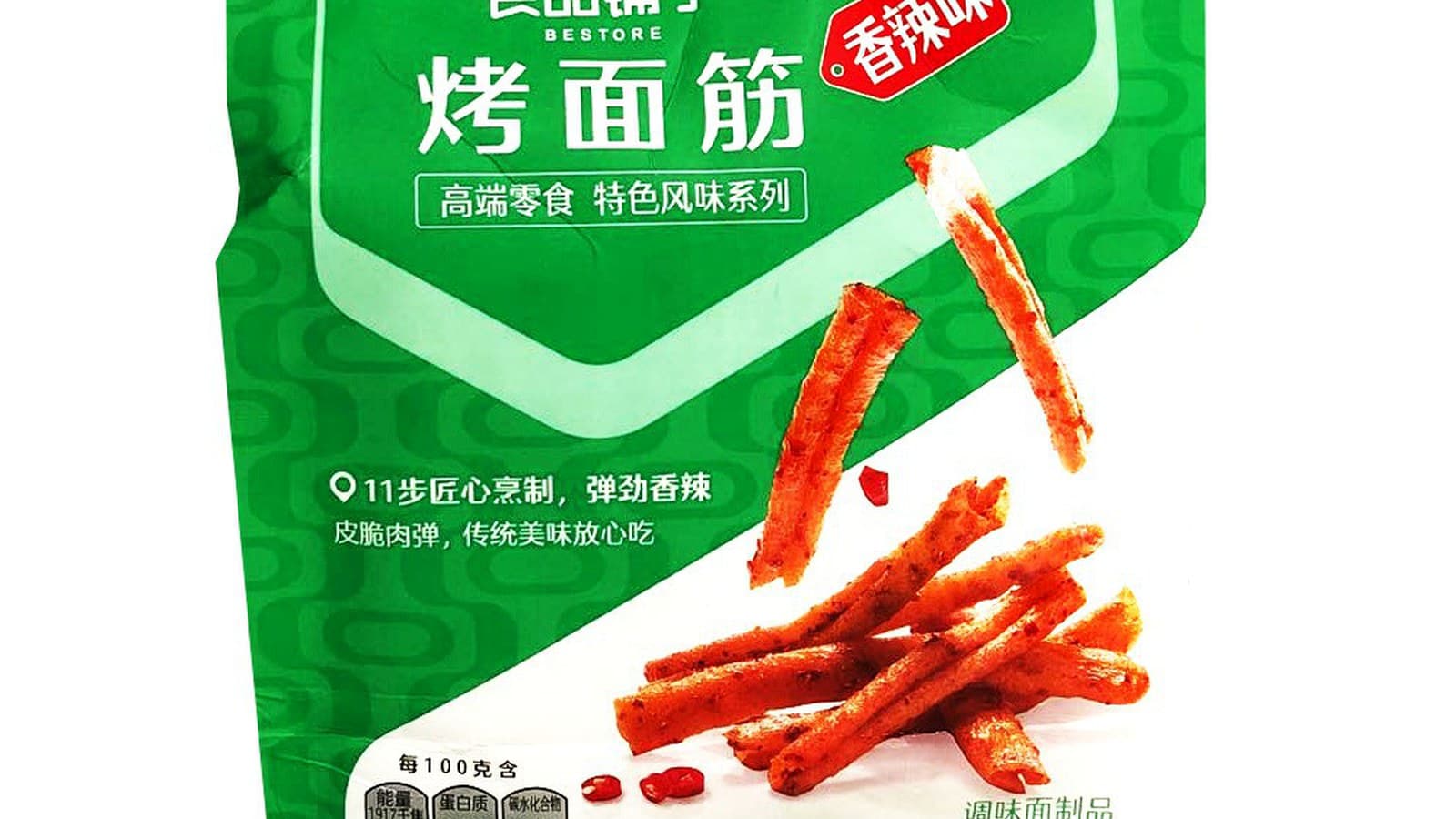
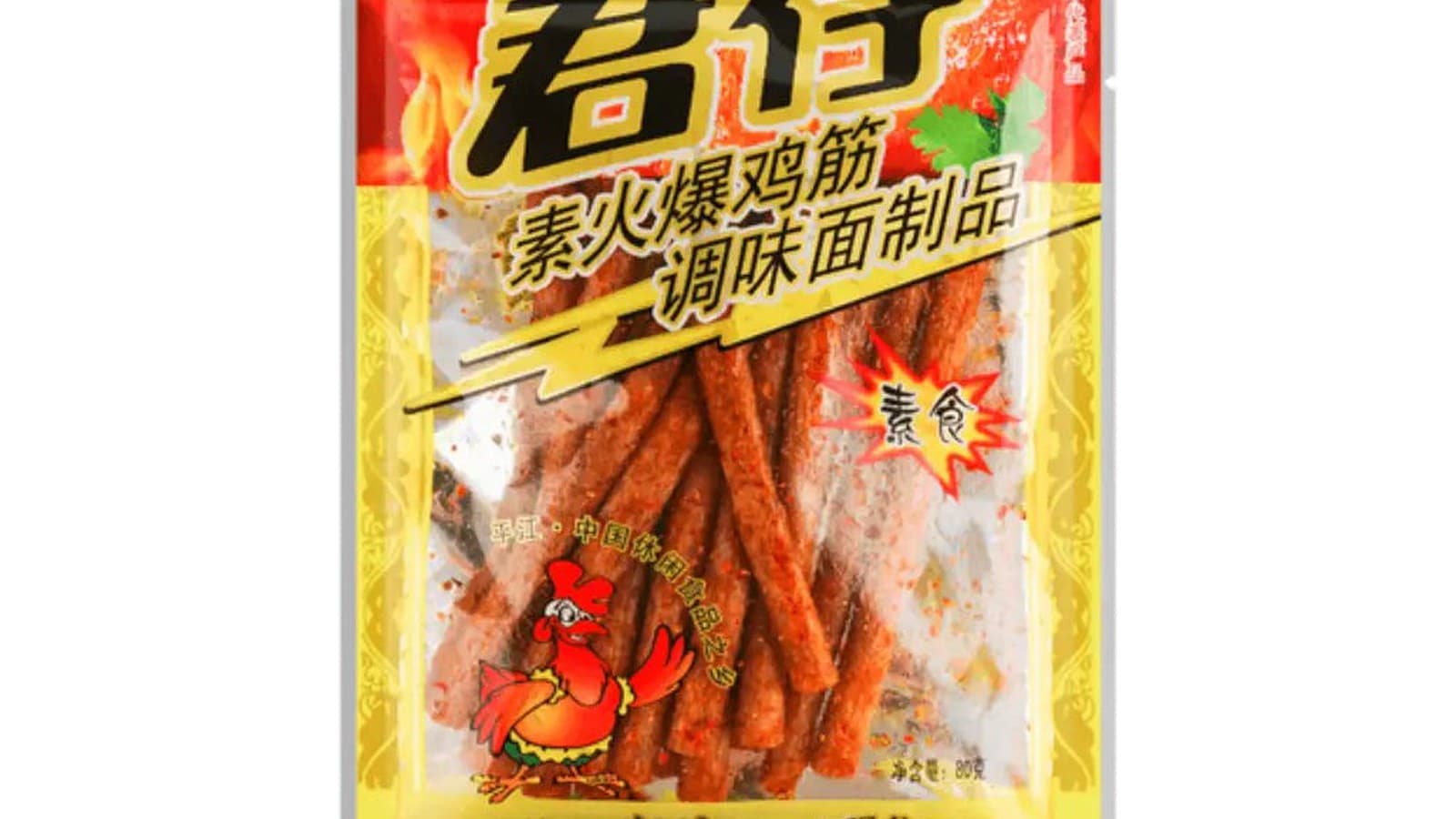
Freshness matters more than many first-time buyers expect. Latiao is oily, seasoned, and sealed. When storage is poor, the problem is not only flavor. Texture, aroma, and package confidence all change too. That is why freshness signals belong in the buying decision, not as an afterthought.
This page focuses on what you can check before buying, especially on marketplace listings.
Decoding the Production Date Stamp
Chinese-made latiao production dates are usually printed on the back panel, lower-right corner, in one of two formats:
- 6-digit YYMMDD: e.g.,
260301= March 1, 2026 - 8-digit YYYYMMDD: e.g.,
20260301= March 1, 2026
Industry-typical shelf life by base material:
| Latiao base | Unopened shelf life | After opening (room temp) |
|---|---|---|
| Wheat-gluten (Weilong, Mala Prince, Junzai, Fan Tian Wa, BiBiZan) | 6–9 months | 14–21 days |
| Tofu skin (Yanjinpuzi BBQ, Genji Food) | 9–12 months | 7–10 days |
| Konjac/魔芋 (sister category) | 12–18 months | varies |
Practical reading rule: at ≤4 months from production date, the bag is "fresh window"; 4–6 months is "acceptable window"; 6+ months on wheat gluten is "stale risk." If a marketplace listing's most recent reviews mention "fresh" timestamps from 90+ days ago and no recent reviews mention freshness at all, treat that as a stale-stock signal.
Storage Decay Curve
Once you receive the bag, environmental conditions change actual freshness life:
- 25°C room temperature, sealed: full shelf-life rating holds
- 30°C+ ambient (summer apartment without AC): lipid oxidation roughly doubles per 10°C, halving practical aroma life
- 4°C refrigerator, sealed: extends practical aroma life ~50%, but condensation on opening can introduce moisture
- Opened bag at room temperature: 14–21 day window for wheat gluten before chew/aroma noticeably flatten
Summer cold-chain decision: in July/August Yami West Coast warehouse → ground 5–7 day delivery, the package can spend hours at 35°C+ inside delivery trucks. For oily latiao in summer, paying $15 to upgrade to 2-day expedited shipping may protect your bag better than choosing a "fresher" listing date that arrives via slow ground.
Freshness checklist · 5 / 7 = safe buy
Pre-buy checklist: 5 / 7 boxes ticked = safe purchase. This component only appears in the freshness guide — it's the structural answer to 'how do I tell before I click buy'.
- 01
Production date stamp visible (YYYYMMDD or YYMMDD)
- 02
Date is ≤ 4 months old
- 03
Package shows no oil bleed-through at the seam
- 04
Vacuum / nitrogen-flush bag resists finger compression
- 05
Recent (last 30 days) reviews mention 'fresh' / 'aroma intact'
- 06
Seller's last shipment timestamp ≤ 7 days ago
- 07
Storage temperature recommendation printed on package
Shelf Life Cheat Sheet (Pre + Post-Buy)
A pocket reference:
- Pre-buy: prefer production date ≤4 months ago; prefer recent (≤30-day) reviews mentioning aroma; prefer sellers with ≤7-day last-shipped indicators
- Post-buy unopened, 25°C sealed: full shelf life
- Post-buy unopened, 30°C+: cut shelf life by ~50%
- Post-buy opened, sealed back into a glass jar: 21 days max for wheat gluten; 10 days max for tofu skin
- Post-buy opened, original bag re-rolled: 14 days max — original seal is one-shot
What Freshness Problems Usually Look Like
For shoppers, freshness issues usually show up as:
- stale or dull aroma
- oil leakage or messy seal condition
- texture that feels too dry, too hard, or oddly uneven
- package photos that look old, crushed, or unclear
- repeated buyer complaints about expired or near-expiry stock
One problem does not always prove the whole listing is bad. Several weak signals together should make you choose another seller.
What to Check on the Listing
Before buying, look for these clues:
- Recent reviews that mention taste or package condition, not only shipping.
- Clear product photos that match the title and show a real packaged item.
- Storage-friendly packaging such as sealed single packs or a clean outer bag.
- Reasonable turnover signals such as active recent reviews instead of only very old comments.
- Consistent seller details with no obvious mismatch between the title, photos, and brand.
If the listing never shows the real package or all reviews are old, you do not have enough signal for a first order.
Storage Matters After Delivery Too
Freshness is not only the seller's responsibility. Once the bag arrives:
- keep unopened packs in a cool, dry place
- avoid direct sun and high heat
- reseal larger bags if they are not single-serve
- use clean handling if you are portioning from a larger pack
If you know you snack slowly, that matters when deciding between single packs and variety packs.
Final Buying Reminder
Freshness is one reason to choose a cleaner listing over a cheaper one. If the product page cannot show basic package confidence, storage clues, and recent buyer trust, it is not the smartest first order.
FAQ
Is the date YYMMDD or DDMMYY — how do I tell them apart?
Chinese latiao always uses YYMMDD or YYYYMMDD (year-month-day) per GB 7718-2011. So a stamp 260315 is March 15, 2026 — never March 15, 26th of some month. The fastest way to verify: look for an obvious year (2026 / 26) leading the string. Western buyers occasionally misread a Chinese stamp 261015 (Oct 15, 2026) as Day 26 / Oct 15 — but Chinese factories never use day-first.
Box arrived oily on the outside — return or keep?
Mild oil bleed (a small spot on the inner corner): keep, oil is not contaminated. Significant oil saturation through the outer carton: return — it usually means a bag inside burst, and the unburst bags may have absorbed cardboard fibers into their seam. Photograph the carton corner and the affected bag's seam. Yami / Weee both accept this as a partial-return claim. Amazon refunds without return for "damaged on arrival" with photo evidence.
Will fridge storage cause moisture re-absorption?
Yes — refrigerator humidity (60–80% RH) is higher than the latiao's equilibrium moisture (~14%), so the bag absorbs ambient moisture if poorly sealed. Result: chew turns soggy and oil separates. Refrigerate latiao only if: (1) the bag is unopened (vacuum / nitrogen-flush still intact) AND (2) you're storing for >2 months. For opened bags at room temperature, finish within 14 days; refrigeration creates more problems than it solves.