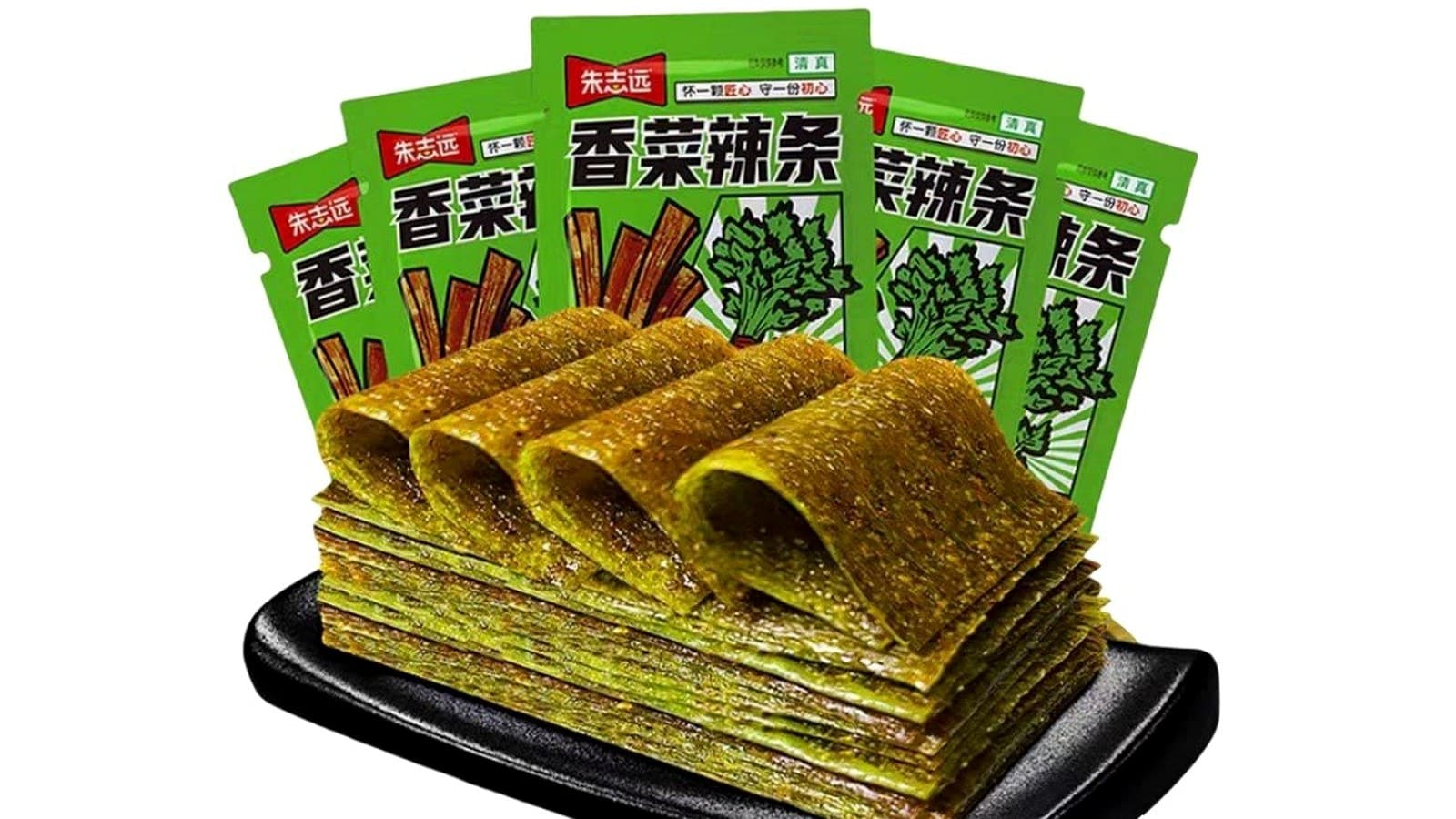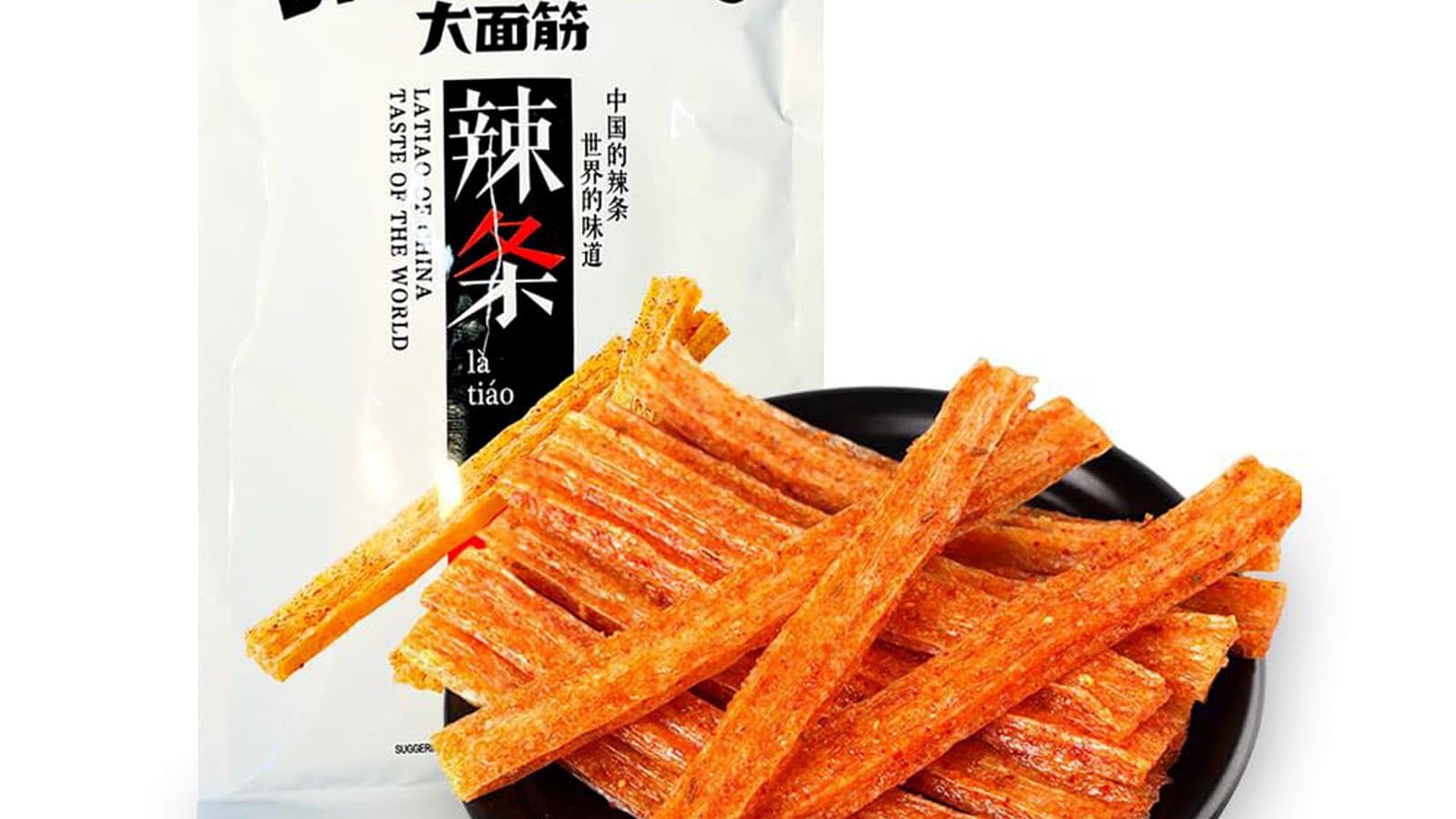
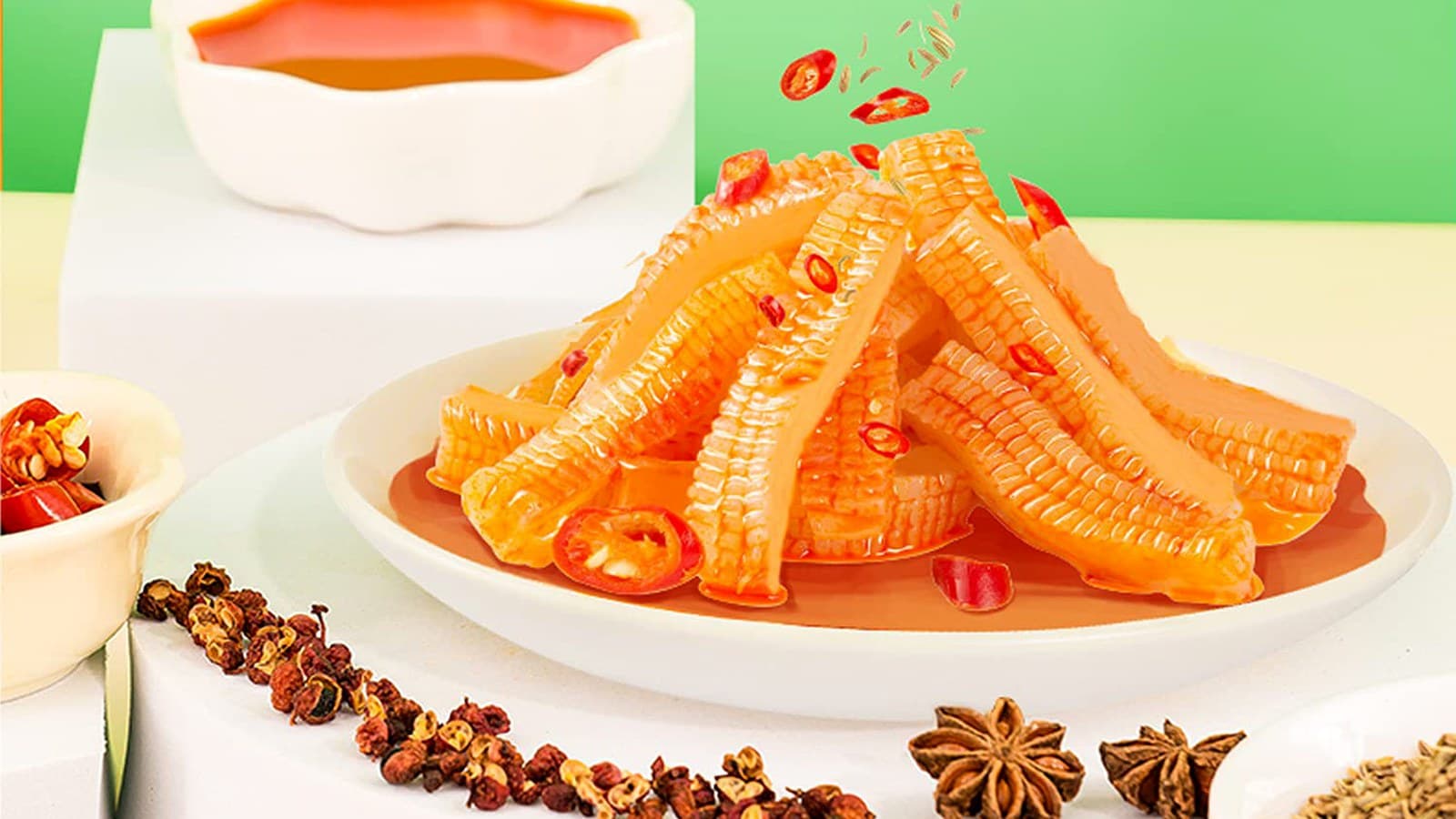
A first latiao order should be treated like a tasting flight, not a warehouse refill. The aim is to learn quickly: what heat level you tolerate, what chew you enjoy, and which brands feel reliable enough to revisit. Random carts waste that chance because they mix too many variables at once.
The 3-Bag Tasting Flight Card (Recommended Sequence)
The most informative first order isolates one variable at a time across three bags. Recommended structure:
| Day | Bag | Estimated SHU | What it teaches | Eating protocol |
|---|---|---|---|---|
| Day 1 | Weilong Big Latiao 106g (benchmark) | 1,500–2,000 | Mainstream wheat-gluten baseline — what "normal latiao" feels like | Empty stomach (30 min before any meal); 200ml room-temp water alongside; do not brush teeth before |
| Day 3 | Mala Prince 18g single (contrast: heat) | 3,000–5,000 | Same wheat-gluten base, sharper chili, less sweetness — isolates the heat axis | Same protocol; 48-hour gap from Day 1 prevents palate fatigue |
| Day 5 | Junzai Hot Chicken Tendon (contrast: texture) | 1,800–2,500 | Different gluten texture (layered, not extruded), denser chew — isolates the texture axis | Same protocol; another 48-hour gap |
Key rules:
- 48-hour gap between bags — gives your palate time to recover; same-day comparisons exaggerate differences and confuse memory
- Empty stomach + plain water — eliminates flavor interference from prior food/drink
- Don't brush teeth immediately before — toothpaste compounds (especially mint) skew taste perception for 30+ minutes
If you want a chew-first flight instead of heat-first, swap Day 3 to BiBiZan grilled gluten (denser chew, similar heat) and Day 5 to Mala Prince (heat contrast at the end).
3-bag tasting flight · 48h spacing
The default 3-bag flight: Weilong baseline → Mala Prince heat contrast → Junzai texture contrast, spaced 48h apart. This component only appears in the tasting-order guide — flight building is its specific job.
Slot 1 · Benchmark (Day 1)
Weilong Big Latiao 106g
Sets the elastic-baseline; ~1,500–2,000 SHU; balanced sweet-savory.
Slot 2 · Heat contrast (Day 3)
Mala Prince 18g classic
Pingjiang chili-forward; ~3,000–5,000 SHU; teaches 'sharper-than-Weilong'.
Slot 3 · Texture contrast (Day 5)
Junzai Hot Chicken Tendon
Layered fan-shape ridges; tests whether you prefer dense vs balanced chew.
Protocol: 30 min before each tasting, no tooth-brushing, room-temperature water (200ml on hand). 48h between bags reduces palate fatigue.
Tasting Note Card (4 Fields)
Recording each bag in a structured way makes Round 2 sharper. Use these four fields:
- Heat (1-5): 1 = barely felt; 3 = noticeable but manageable; 5 = uncomfortable
- Chew (soft → tough): where on the spectrum did it land?
- Aftertaste (seconds): how long did the linger last after you stopped chewing?
- Reorder (Y/N + why): would you buy this exact bag again?
Print or save these fields as a personal template. After three bags, you'll see patterns: if all your "Y" reorders are heat=2-3 + chew=balanced, your tolerance is mainstream and Weilong is your zone. If your Y is heat=4 + chew=dense, you've discovered you're a Mala Prince + Junzai buyer.
The four-field structure is what turns a tasting flight into a buying signal — it's the difference between "I tasted three things" and "I now know what to order next month."
Use a Three-Part Tasting Structure
A strong first order usually has three roles:
- benchmark bag: the bag you expect to become your reference point
- contrast bag: a product that changes one important variable, such as spice or chew
- optional add-on: a small extra only if the listing is clear and the budget allows it
This structure keeps the order readable. You always know what each item is supposed to teach you.
Pick One Variable to Compare
The biggest mistake is buying three bags that are all different in every possible way. If the brand, spice, texture, and ingredient route all change at once, your reaction becomes messy.
Choose one variable to explore first:
- spice level
- texture density
- wheat-gluten versus soy-based route
- single-pack versus bundle convenience
Sequence Matters
If possible, eat the bags in order:
- benchmark first
- contrast second
- optional add-on last
That sequence sharpens your memory. You are comparing back to something stable instead of starting with the loudest or strangest bag.
Keep Notes Like a Buyer, Not a Reviewer
You do not need a full tasting notebook. Just note four things after each bag:
- Would I finish this alone?
- Is the heat level comfortable?
- Is the chew better or worse than expected?
- Would I reorder this exact listing?
Those four answers are enough to guide a much better second order.
Final Take
A first tasting order works when every bag has a job. One benchmark, one deliberate contrast, and one optional add-on are enough to turn a random purchase into a useful decision-making round.
FAQ
Can I taste all 3 bags in one sitting instead of spacing them 48h apart?
Technically yes, but you'll lose 30–40% of the comparison value. Capsaicin desensitization sets in by bag 2 — the second flavor reads "less spicy" even when SHU is identical. If time-constrained, taste 1 bag in the morning, the second after lunch (4+ hours), and the third the next day. Pure same-sitting tasting works only if you commit to 1 piece per bag (3 pieces total, palate cleansed between each).
What drink neutralizes the burn between tastings?
Whole milk works best (casein binds capsaicin in 30–60 sec). Cold yogurt is second-best. Avoid water, beer, soda — they spread capsaicin around. Plain rice cracker or unsalted bread works as a non-liquid palate cleanser between bags. Wait 5 minutes after the antidote before the next bag's first bite.
Which 4 tasting-note fields should drive the second order?
(1) Heat 1–5: did the bag's actual burn match the listing's claim? (2) Chew duration: 0–10 sec / 10–30 sec / 30+ sec — your sweet spot determines next pick (Genji vs Weilong vs BiBiZan). (3) Aftertaste linger seconds — short (Weilong ~120s) vs long (Mala Prince 300+s); pick again based on which felt right. (4) Reorder Y/N: the simplest filter — only repeat-buy if you'd pay full price again with no discount.