Heat gets attention, but texture decides whether you want a second bite. Many buyers say they dislike a bag because it is too oily or too spicy, when the real issue is that the chew profile does not fit what they expected. Buying by texture is often a faster route to a satisfying order.
Texture by the Millimeter
Vague labels like "chewy" or "soft" don't translate across brands. Industry-typical thickness across 10 reviewed brands:
| Brand | Cut shape | Approximate thickness | Implied chew profile |
|---|---|---|---|
| Weilong Big Latiao 106g | Flat ribbon | 2.5–3 mm | Even, elastic, mid-density |
| Weilong 65g | Thinner strip | 1.5–2 mm | Faster chew, shorter linger |
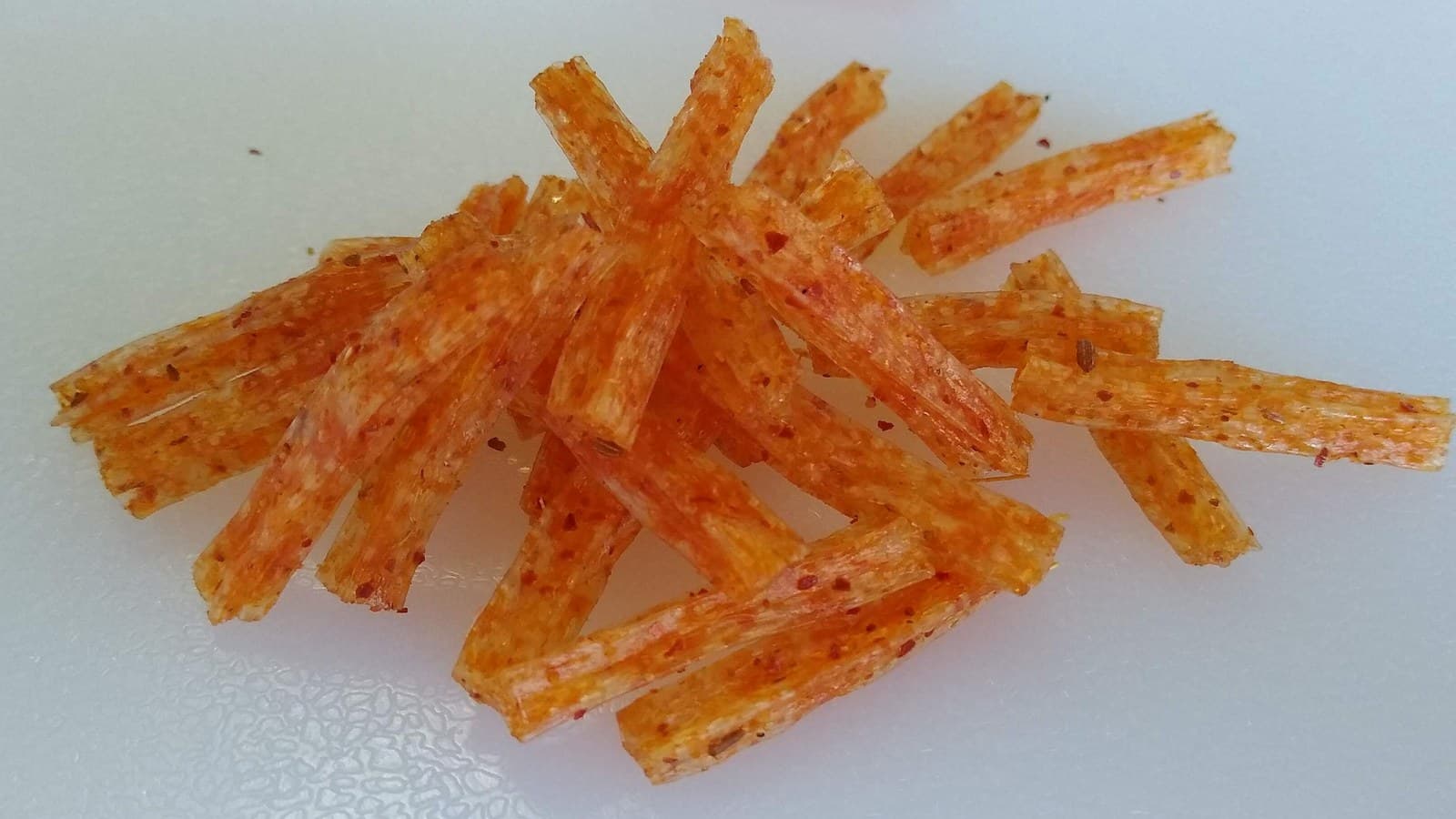
| Mala Prince 18g | Thin strip | 1.0–1.5 mm | Quick chew, chili-front |
| Junzai Hot Chicken Tendon | Layered strip | 2.5–3 mm | Dense, fibrous resistance |
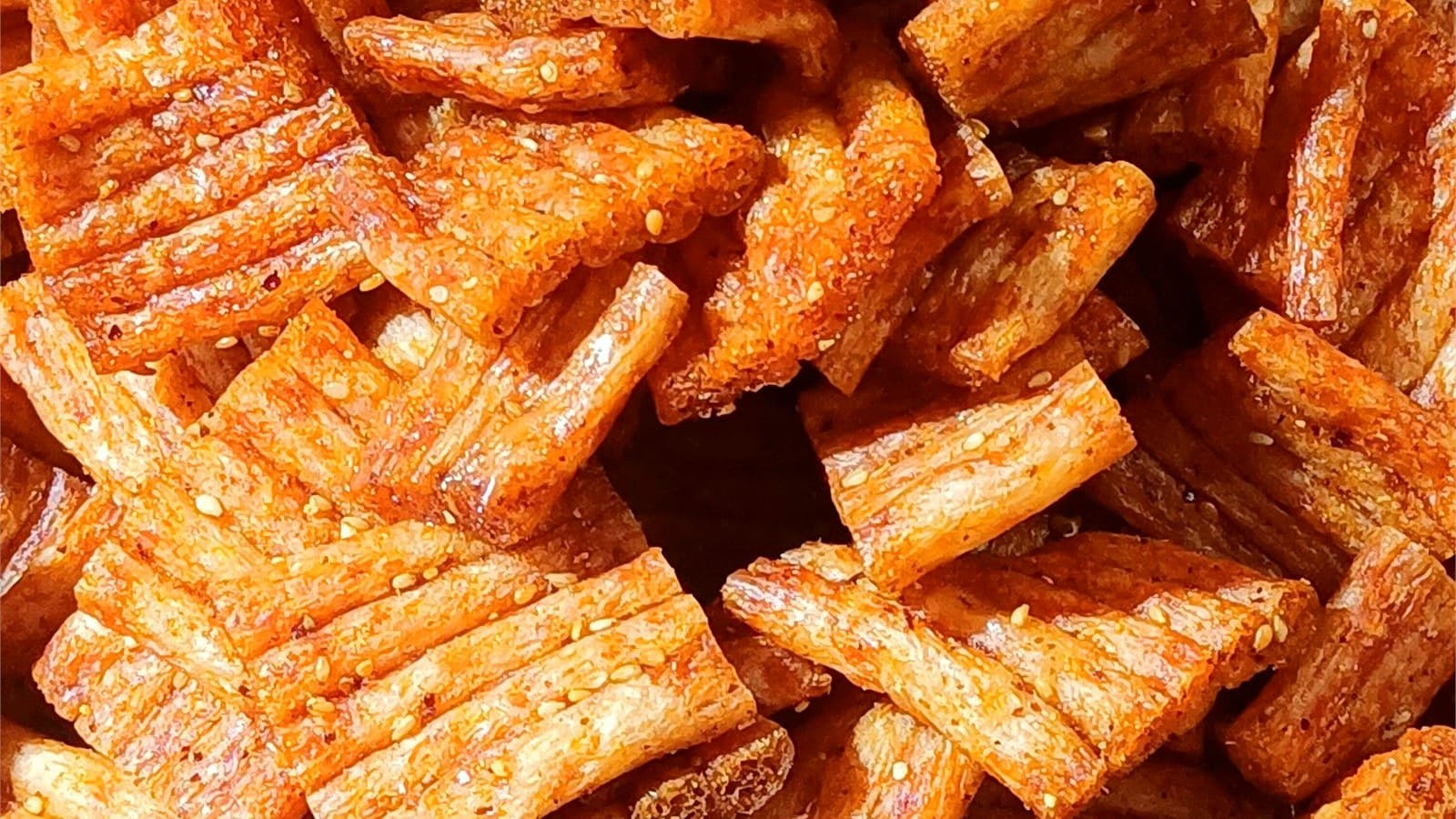
| BiBiZan grilled gluten | Block / chunk | 4–5 mm | Substantial, jaw-engaging |
| YANJINPUZI tofu skin | Sheet | 0.5–0.8 mm | Thin, crisp-then-melt |
| Genji Food large chip | Sheet | 0.3–0.5 mm | Crisp, soy-bean texture |
The pattern: thickness × shape predicts chew duration. A 3mm Weilong ribbon takes ~30 seconds per piece to chew; a 0.5mm Genji sheet finishes in ~5–8 seconds. Buying by thickness gives you a far better chew prediction than reading "chewy" in the listing description.
Chew Force & Dental Safety
For readers with braces, dental work, or jaw sensitivity, bite force matters as much as flavor. Industry-typical chew force ranges:
| Texture class | Estimated bite force (Newtons) | Dental fit |
|---|---|---|
| Soft tofu skin (YANJINPUZI, Genji) | 3–8 N | Safe for braces, pediatric (8+) |
| Mid wheat strip (Weilong 65g, Mala Prince) | 5–15 N | OK for most adults; mild caution for braces |
| Dense layered (Junzai, Weilong Big Latiao) | 12–25 N | Standard adult chew; not ideal during braces adjustment week |
| Block grilled gluten (BiBiZan) | 15–30 N | Jerky-class; avoid with new dental work or sensitive teeth |
Practical rule: if you avoid beef jerky for dental reasons, avoid BiBiZan and Junzai. Stay with thin-strip (Mala Prince 18g, Weilong 65g) or sheet-style (Genji, YANJINPUZI) for safer chew. The flavor isn't compromised — only the chew commitment is.
5-question texture quiz
5-question quiz that translates honest preferences into SKU shortlist. This component only appears in the texture guide — quiz-style decision is its specific job.
01. Do you prefer hard candy or soft candy?
- soft: Genji tofu skin / BESTORE
- hard: BiBiZan grilled gluten
02. Can you bite through beef jerky comfortably?
- yes: BiBiZan / Junzai (15–30N)
- no: Genji / YANJINPUZI tofu skin (< 5N)
03. Do you want chew duration ≥ 30 seconds?
- yes: Weilong Big Latiao / BiBiZan
- no: Genji thin sheet (3–5 sec finish)
04. Braces / orthodontia / dental sensitivity?
- yes: Stay ≤ 10N — Genji / soft tofu skin only
- no: Open lane: any SKU with attention to hardness
05. Wheat or soy preference?
- wheat: Weilong / Mala / Junzai / BiBiZan / Fan Tian Wa
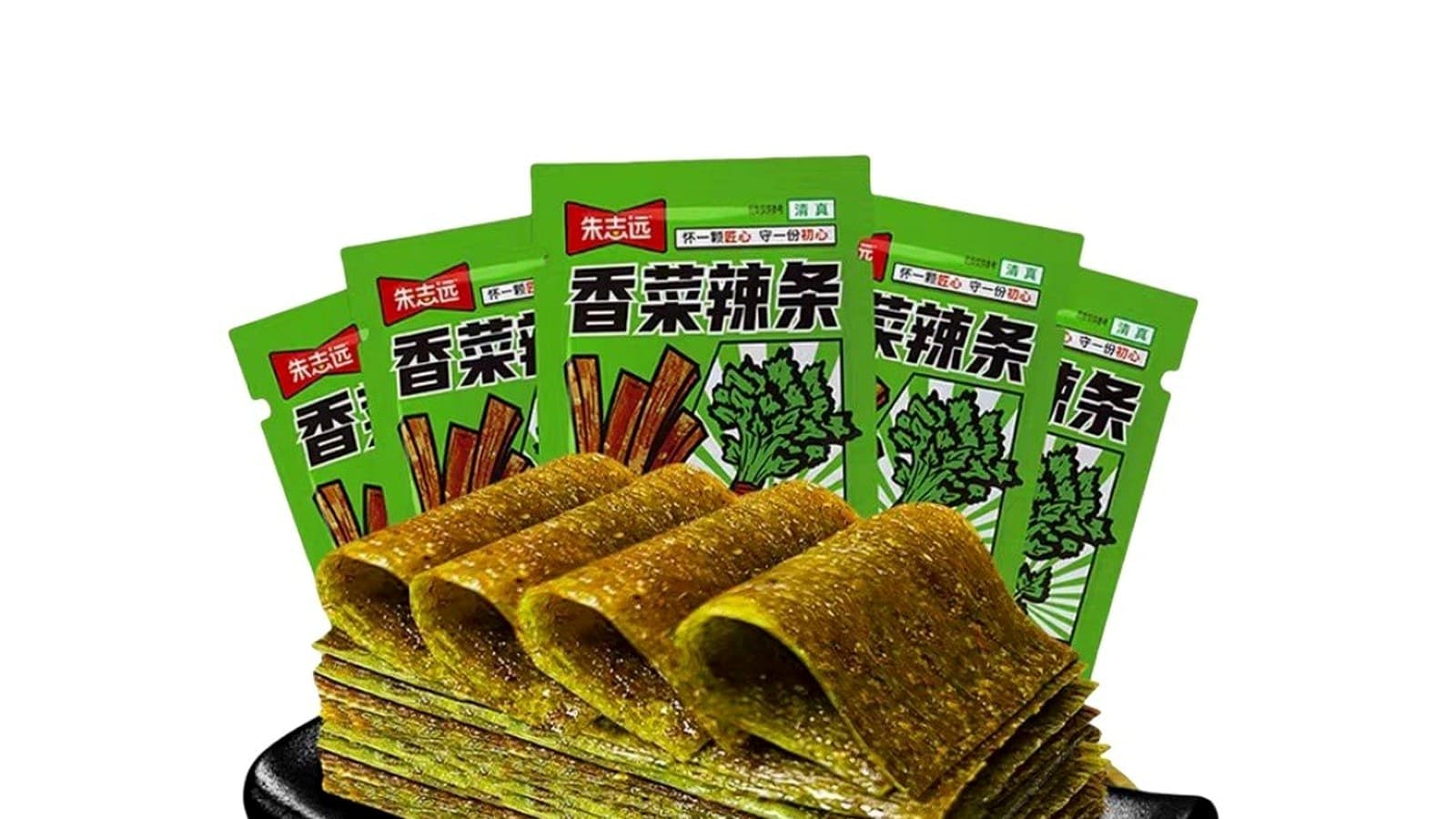
- soy: Genji / YANJINPUZI / ZHUZHIYUAN
The Four Texture Routes That Matter Most
Soft and easy-going
These bags are easiest for cautious first-time buyers. They feel less demanding and are simpler to share.
Balanced classic chew
This is the best learning zone. You get enough elasticity to understand the category without the bag feeling stubborn or overly dense.
Dense and jaw-forward
These bags suit buyers who want a more substantial bite and do not mind slower chewing. They can feel satisfying, but they are not always the best first benchmark.
Soy-sheet or tofu-skin texture
These are useful if you prefer layered, bean-based chew over classic wheat-gluten elasticity. They are not wrong. They are simply a different route.
Match Texture to Buying Goal
If your goal is to understand what latiao normally feels like, buy a balanced classic chew first. If your goal is to find a personal favorite, then it makes sense to compare one classic strip against one denser or soy-forward alternative.
Buying by texture also helps households. Someone who dislikes tough jerky-style snacks may still enjoy a softer, oilier bag. Someone who wants more resistance may find a soft bag forgettable.
A Safer First Texture Comparison
If you want to compare without overbuying, choose two bags that keep spice level relatively close but separate texture clearly. That way your reaction tells you whether you prefer softer, springier, denser, or bean-based formats.
Final Take
Texture is the most underrated buying filter in latiao. If you choose a chew profile that fits your preference, the whole category becomes easier to enjoy and easier to compare.
FAQ
Can latiao be eaten with braces or orthodontia?
Tofu-skin and thin sheet styles (Genji 200g ≈ 0.4mm; YANJINPUZI BBQ ≈ 0.7mm) at chew force under 5N are generally safe — no harder than soft cheese on the brackets. Avoid BiBiZan grilled gluten (15–30N, near jerky-class) and Junzai Hot Tendon (15N+). When in doubt, stick to mild thin sheets and break pieces small with fingers before chewing. Children under 12 with newer braces should default to under-10N options only.
Which is easier to digest — thick or thin latiao?
Thin sheets (Genji, YANJINPUZI tofu skin) digest faster (~2 hours stomach transit) because they have lower water-absorption capacity and break down quickly. Thick wheat-gluten (Weilong Big 2.5–3mm, BiBiZan 4–5mm) takes 3–4 hours due to gluten network density. Both are fine for healthy adults; for sensitive stomachs or post-illness recovery, thin sheets are gentler. Note: high oil content of any latiao slows fat absorption regardless of thickness — limit single sittings to ~50g.
If moisture is below 10%, will the strip be hard for 30+ minutes?
No — extreme dehydration (under 10%) is uncommon for shelf-stable latiao because it would crumble during seasoning. Industry-typical wheat latiao is 8–12% moisture; under 8% is "stale-bag" territory (over-aged or moisture-damaged) and should be returned. Even at 8%, chew duration per piece is 30–60 seconds, not 30 minutes. If a bag truly chews like rock for 30+ minutes, that's a defective batch — not an intended texture. Return for refund.