Readers often ask where the machines for latiao production are bought. The safe answer is not a fake supplier list. It is a cautious map of line types, supplier regions, and verification steps.
Three Capacity Tiers and Investment Ranges
Latiao production lines fall into three capacity tiers, and the equipment cost ladder is steeper than most casual buyers expect.
| Tier | Capacity | Typical machine count | Investment range (RMB) | Realistic buyer |
|---|---|---|---|---|
| Tier 1: Workshop / pilot | 50–150 kg/h | 4–6 units | 30–80 万 | New brand testing market, small OEM |
| Tier 2: Mid-scale factory | 200–500 kg/h | 8–12 units | 150–400 万 | Regional brand, white-label producer |
| Tier 3: Industrial line | 800 kg/h+ | 15–25 units | 500–1500 万 | Major brands (Weilong, Bibizan-class) |
A workshop line at Tier 1 can produce roughly 1.2 tons per 8-hour shift — enough to test market response but not enough to reach Amazon-level retail volume without scaling. Industrial lines at Tier 3 run multiple shifts and produce 6–10 tons/day, which is what brands like Weilong need for their 50+ SKU catalog.
The investment gap is not just machine cost — it includes:
- 30–50% of total = main extruder + forming line
- 15–25% = packaging line (high-speed pillow packaging at Tier 3)
- 10–15% = seasoning and oil application
- 10–20% = utilities (boiler, compressed air, cooling)
- 5–10% = inspection and metal detection equipment
Capacity tier × investment × buyer profile
Workshop / mid-scale / industrial line investment + capacity + buyer profile. This component only appears in the machine-buying article — capacity tier match is its specific job.
Tier 1 · Workshop / pilot
- Capacity
- 50–150 kg/h
- Investment
- 30–80 万 RMB
- Realistic buyer
- New brand testing market
Tier 2 · Mid-scale factory
- Capacity
- 200–500 kg/h
- Investment
- 150–400 万 RMB
- Realistic buyer
- Regional brand, white-label producer
Tier 3 · Industrial line
- Capacity
- 800 kg/h+
- Investment
- 500–1,500 万 RMB
- Realistic buyer
- Major brand (Weilong-class)
Typical Machine Groups
A small-to-mid line may involve:
- mixer or hydration system
- forming or extrusion machine (single-screw for Tier 1, twin-screw for Tier 2-3)
- steaming or cooking stage
- cooling conveyor
- seasoning tumbler (drum-style or paddle-style)
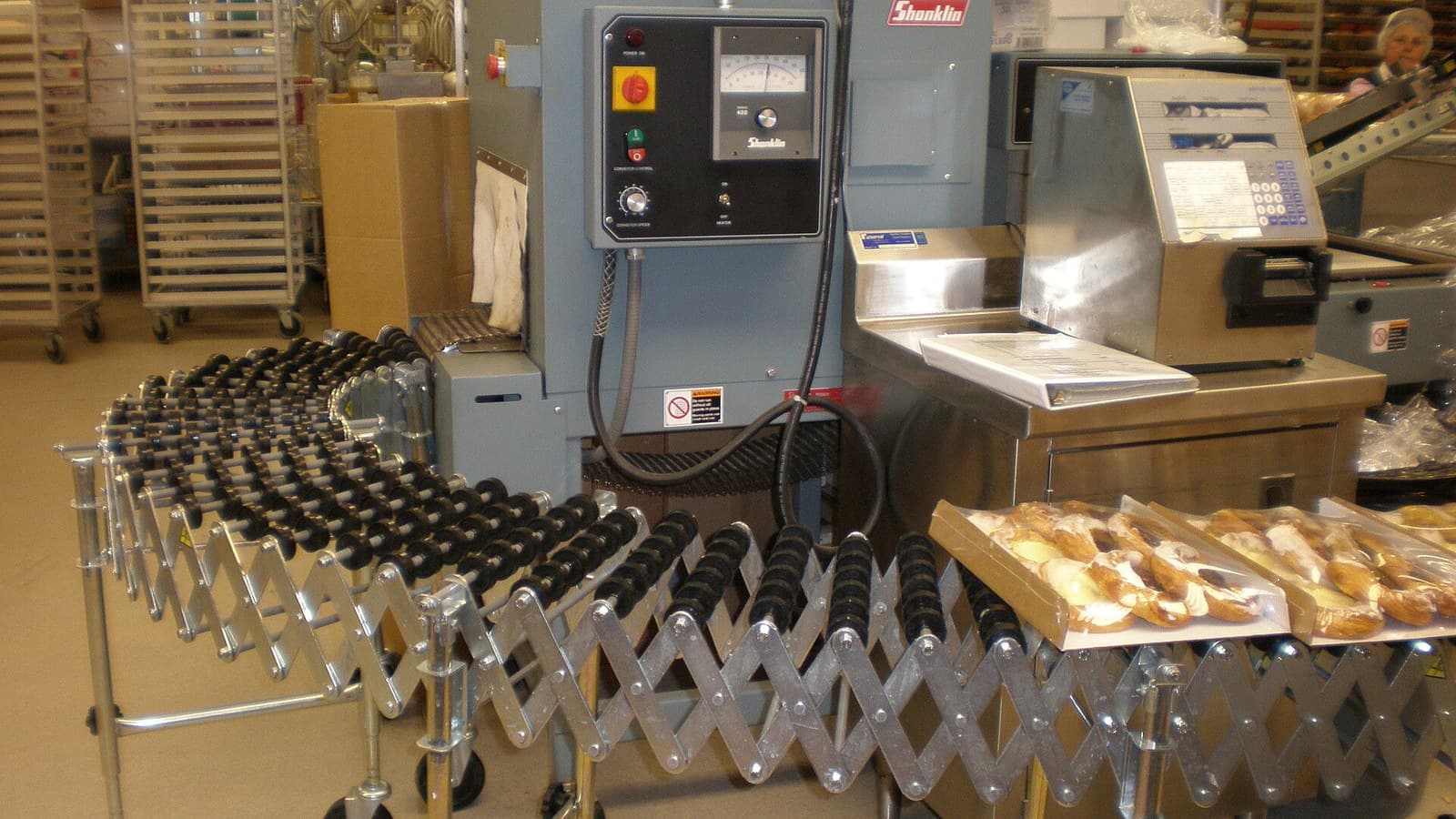
- weighing and packaging machine (pillow packaging at Tier 1-2; vertical form-fill-seal at Tier 3)
- metal detection and weight check
- nitrogen flush system (for retail SKUs targeting longer shelf life)
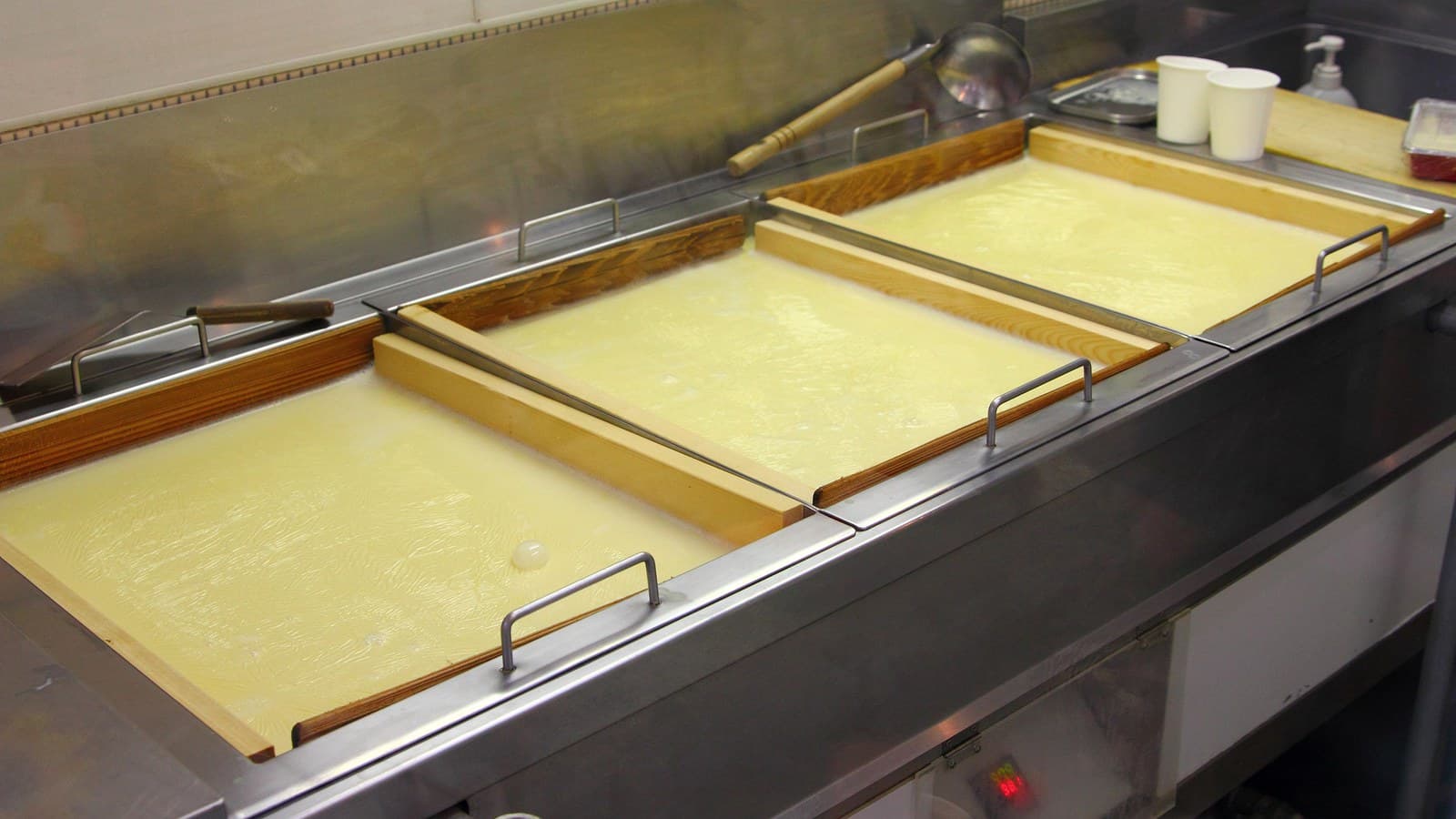
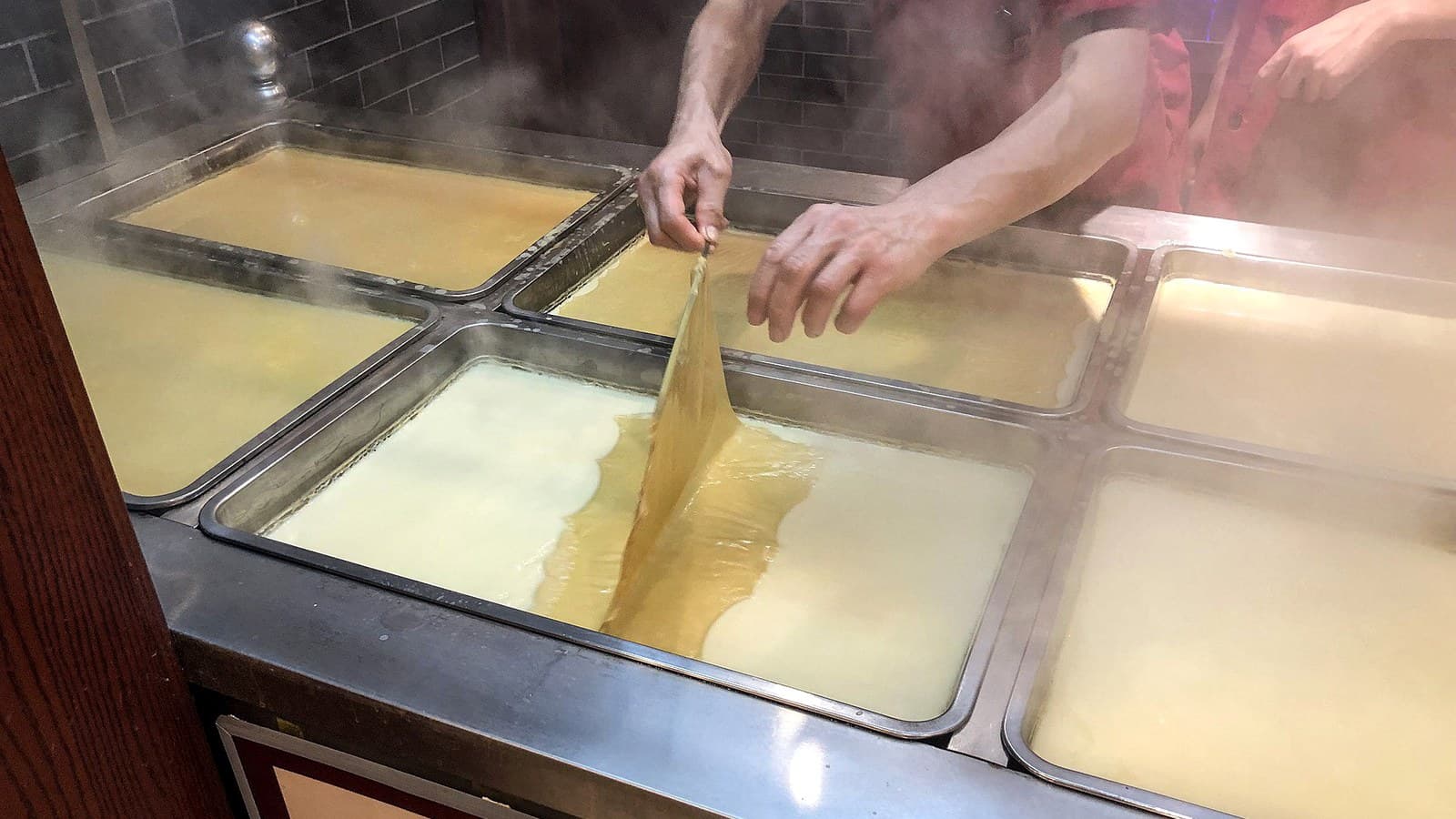
Bean-based lines may also require soy milk, tofu-skin, or textured soy protein equipment — see How Bean-Based Latiao Is Made for the route comparison.
Common Supplier Regions and Cluster Matrix
Public food-machinery listings often cluster around three regional hubs, each specializing in different line stages:
| Region | Specialization | Typical equipment | Notable supplier categories |
|---|---|---|---|
| Jinan, Shandong | Extrusion and snack processing | Twin-screw extruders, cooling conveyors | Saixin, 华泰, Sunward |
| Zhengzhou, Henan | Tofu-skin and food-processing equipment | Bean-curd-sheet lines, soy milk kettles | Hento, Yufeng |
| Foshan, Guangdong | Packaging machinery | Pillow packaging, VFFS, multi-head weighers | Various OEM packagers |
| Wenzhou, Zhejiang | Auxiliary food machinery | Conveyors, mixers, smaller modular lines | Mid-tier suppliers |
These regions are not guarantees. They are starting points for research. A Jinan extruder supplier may be excellent for the extrusion stage but unable to provide a turnkey line — you may end up sourcing extrusion from Shandong, packaging from Guangdong, and auxiliaries from Zhejiang separately.
4-region supplier cluster matrix
4-region supplier cluster matrix. This component only appears in the machine-buying article — supplier-region routing is its specific job.
Jinan, Shandong
Extrusion + snack processing
Saixin, 华泰, Sunward
Zhengzhou, Henan
Tofu-skin + soy processing
Hento, Yufeng
Foshan, Guangdong
Packaging machinery (pillow / VFFS)
Soontrue + various OEM
Wenzhou, Zhejiang
Auxiliary food machinery
Mid-tier modular line vendors
Verification Checklist Before Issuing PO
Never trust a supplier page only because it uses latiao keywords. The 8-point checklist that experienced buyers actually run:
- Production-line video — full-line operation video from a real customer's plant, not a CG render or stock footage
- Machine parameters in writing — capacity (kg/h), power consumption (kW), water consumption (L/h), footprint (m²)
- Export reference list — at least 3 customers in the buyer's region/country with verifiable contact (email or LinkedIn)
- Export documentation precedent — CE certification (for EU), FDA registration (for US export), or local food machinery standards compliance
- After-sales terms — warranty period (typical 12–24 months), spare parts availability, on-site commissioning days included
- Sample output product — physical sample of the strip / sheet output, not just photos
- Factory inspection (in-person or video walkthrough) — see the supplier's own production floor
- Payment structure — never 100% upfront; typical structure is 30% down + 60% before shipping + 10% after commissioning
If a supplier hesitates on any of points 1–3, that is a strong signal to look elsewhere.
Pre-wire-transfer 7-point factory verification
Beyond the 8-point document checklist, before wiring the deposit, request these 7 factory verification items in one bundled email:
- 营业执照统一社会信用代码 (Unified Social Credit Code on the business license) — 18-digit ID; cross-check on
gsxt.gov.cn - SC food production license — the same 14-digit code that appears on retail packs (covered in the ingredient-list article)
- Export commodity inspection certificate — for any equipment shipping internationally
- ISO 22000 food-safety management — required for export to most non-China markets
- CE EMC + LVD marks for EU shipments — electrical / electromagnetic compliance
- SUS 304 contact-surface certification — minimum food-grade stainless steel marker; SUS 316 is better but not always required
- Reference customer export bill-of-lading — a real shipping doc from a recent international order, with names redacted as needed
Industry-typical mid-tier wheat latiao lines (200–500 kg/h) FOB Qingdao between 60–150 万 RMB; SUS 304 contact-surface certification is the minimum food-grade requirement. Anything below that is a red flag regardless of how cheap the quote is.
Common Red Flags in Supplier Listings
Patterns that should make a buyer pause:
- Generic "snack production line" pages with no latiao-specific output reference
- Identical product photos across multiple "different" suppliers — indicates resellers, not OEMs
- Suspiciously low pricing (e.g., a "complete latiao line" claimed under 100 万 RMB) — usually means missing components or used equipment relabeled
- No physical address or only a generic city-level address on the supplier page
- Pressure to commit fast ("price valid only this week") — legitimate industrial equipment suppliers do not run flash sales
Final Take
Machine sourcing belongs in the production module, but it should stay factual and cautious. This site explains the buying logic; it does not pretend to be a machinery broker. Use the three-tier capacity model to pick the right scale, run the 8-point verification checklist before issuing a PO, and assume that any supplier unwilling to share videos, references, or export documentation is not the right partner.
FAQ
Can I really start a latiao brand with a Tier 1 workshop line at 30万 RMB?
Yes for product testing, no for retail-level operations. A 30万 RMB line can produce ~1 ton/day, enough to validate the recipe and test market response in a regional area. But Amazon-level retail volume requires Tier 2+ investment, and food safety certification (SC license) typically requires industrial-grade equipment that workshop lines can't pass. Plan the upgrade path before committing to Tier 1.
Why are most reputable suppliers concentrated in just 3-4 Chinese cities?
Industrial clustering: Jinan (Shandong) became the extrusion equipment hub through technology transfer from grain processing in the 1990s; Zhengzhou benefited from being central to wheat / soy raw material flow; Foshan (Guangdong) inherited general packaging machinery expertise from broader food / beverage industries. These clusters mean ~70% of latiao-suitable equipment ships from these three regions, even if the individual supplier brand is unfamiliar.
Is buying used latiao production equipment a viable shortcut?
Sometimes — but with strict caveats. Used twin-screw extruders from defunct snack lines can be acquired at 30–50% of new price, but require professional inspection (worn screws cost 5–15万 RMB to replace, and worn dies produce inconsistent strip diameter). Used packaging equipment is usually a worse deal because seal-quality variance directly affects shelf life. Default to new for sealing, accept used for non-critical conveyors.
Source Notes
- State Administration for Market Regulation (SAMR) food-production licensing — the regulator behind the SC license required for any latiao production line
- Hento Machinery (Zhengzhou) bean-curd-sheet + wheat extrusion line — manufacturer reference for mid-tier wheat / soy production
- Soontrue Machinery (Foshan) packaging catalog — Tier 3 nitrogen-flush pillow-pack equipment vendor referenced in this article
- China Food and Packaging Machinery Industry Association — sector body providing CE / FDA export documentation guidance for buyers
- GB 19295-2021 食品包装卫生标准 — packaging-line compliance baseline that any equipment buyer must verify with the supplier