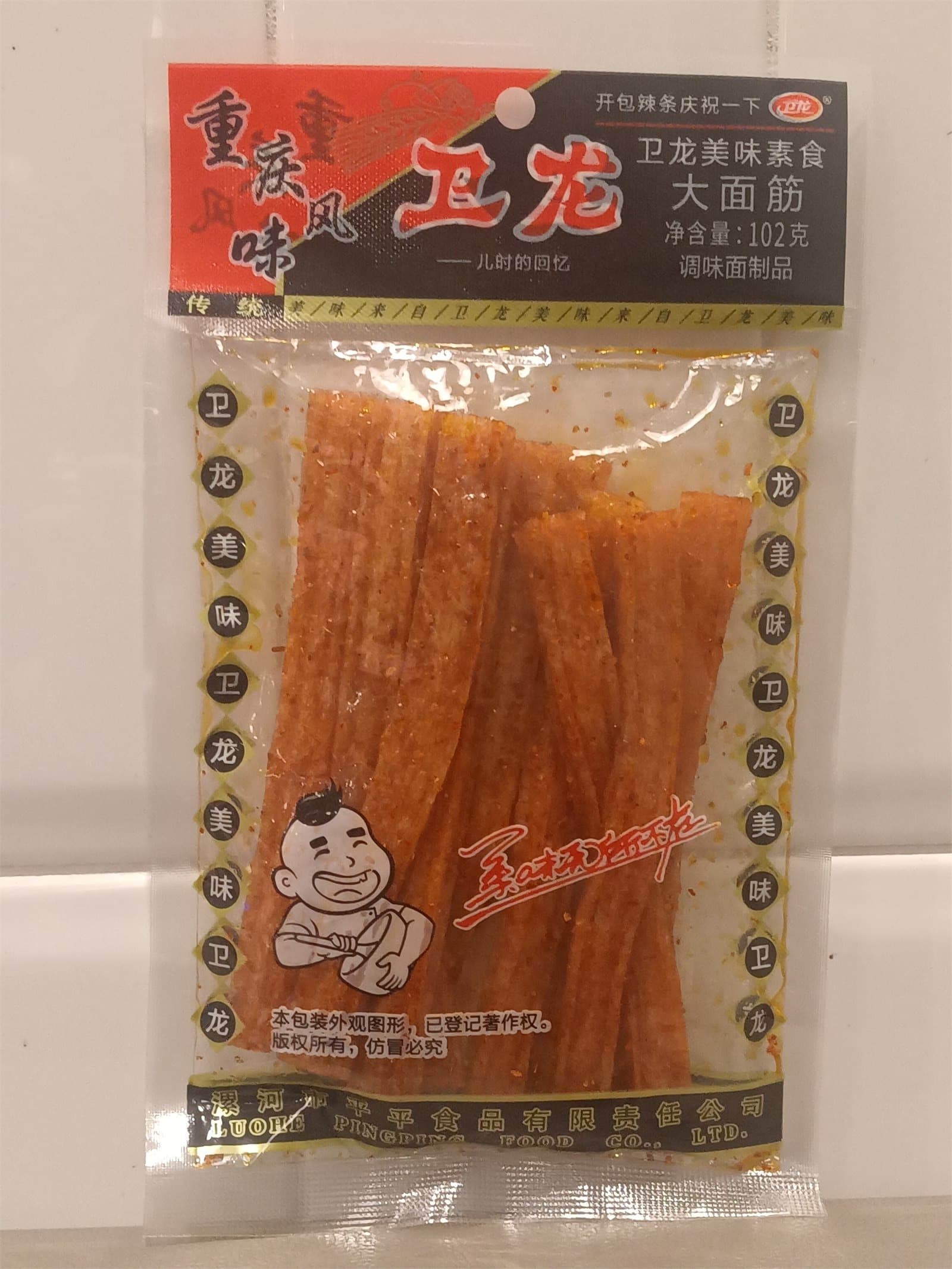
Latiao is undeniably addictive — chewy, spicy, and packed with flavor. But when you look at the back of the bag, the nutrition panel tells a more complicated story. This guide answers the question honestly: is latiao healthy, and if not, how can you fit it into a balanced diet without regret?
If you are new to latiao, start with What Is Latiao?. For a deeper dive into what is actually inside the ingredient list, read How to Read Latiao Ingredient Lists. If you are comparing latiao to other chewy snacks like konjac or grilled gluten, see Latiao vs Konjac and Gluten Snacks.
Latiao Nutrition: What Is Actually Inside One Bag
A standard 65g bag of classic latiao — the size most people eat in one sitting — typically contains:
- Calories: 320-420 kcal (roughly 16-21% of a 2000-calorie diet)
- Total fat: 18-28g, of which saturated fat is usually 4-8g
- Sodium: 900-1400mg (that is 40-60% of the WHO-recommended daily limit of 2000mg)
- Carbohydrates: 30-45g, mostly from wheat flour and added sugar
- Protein: 6-10g, largely from wheat gluten
- Fiber: Often less than 1g per bag
The fat content comes mainly from the vegetable oil used in the seasoning — typically soybean oil, palm oil, or rapeseed oil. Because latiao is a fried or oil-coated snack, the oil soaks into the wheat-gluten base, making each strip calorie-dense. A single 65g bag can pack the caloric equivalent of a small meal, but without the satiety or nutritional diversity you would get from real food.
The sodium number is the most concerning. Many latiao products deliver more than half your daily sodium in one snack session. Regular high-sodium snacking is linked to elevated blood pressure, increased stroke risk, and water retention. If you already eat a high-sodium diet — common with instant noodles, cured meats, and restaurant food — adding latiao on top can push you well past safe levels.
Processed Snack, Not Whole Food
Latiao belongs to the category of ultra-processed foods. The base ingredients — wheat flour, wheat gluten, vegetable oil, chili, salt, sugar, and soy sauce — are not inherently unhealthy in isolation. The issue is what happens during manufacturing.
The production process involves extrusion, frying or heavy oil-coating, and aggressive seasoning with salt, sugar, MSG, and a long list of flavor additives. Multiple studies associate high consumption of ultra-processed foods with increased risks of obesity, type 2 diabetes, cardiovascular disease, and all-cause mortality. Latiao is not uniquely harmful — it sits in the same category as potato chips, instant noodles, and packaged cookies — but it is definitely not a health food.
That said, latiao does have one nutritional bright spot: protein. Because the chewy base is wheat gluten, a 65g bag typically delivers 6-10g of protein. For a snack, that is not trivial. Compare this to potato chips (2-3g protein per 50g) or candy (0g), and latiao looks slightly better on the protein front. But the high fat and sodium still dominate the overall picture.
Additives, Preservatives, and the Ingredient Panel
A typical latiao ingredient list runs 15-30 items long. Beyond the core wheat-chili-oil base, you will often find:
- Monosodium glutamate (MSG / E621): Flavor enhancer, generally recognized as safe by major health authorities, though some people report sensitivity symptoms like headaches
- Disodium 5'-ribonucleotide (E635): Another umami booster, often used alongside MSG
- Tertiary butylhydroquinone (TBHQ / E319): A synthetic antioxidant preservative used to extend shelf life in fried snacks. The FDA allows it at very low levels, but some animal studies at extremely high doses raised concerns; at the trace levels in latiao, risk is low for occasional consumption
- Artificial colors (e.g., Sunset Yellow FCF / E110, Allura Red AC / E129): Used to give latiao its appetizing red-orange hue. Some research links these azo dyes to hyperactivity in sensitive children, and the EU requires warning labels, though the evidence is not universally accepted
- Sodium benzoate (E211) and potassium sorbate (E202): Common preservatives that prevent mold and bacterial growth in high-moisture packaged snacks
- Artificial sweeteners (e.g., acesulfame K, sucralose): Used in some "reduced sugar" latiao variants; generally safe but some people prefer to avoid them
If you want a cleaner latiao, look for brands with shorter ingredient lists — ideally under 15 items — and avoid products where artificial colors, TBHQ, or artificial sweeteners appear in the first half of the panel. For detailed guidance on decoding Chinese ingredient labels, read How to Read Latiao Ingredient Lists.
Healthier Latiao Choices: What to Look For
You do not have to quit latiao entirely to make better choices. Here are five practical strategies:
-
Check the portion size. Many bags are 65-100g. If you cannot stop at half a bag, buy the smaller 20-30g single packs instead. Portion control is the single most impactful change you can make.
-
Compare sodium per 100g across brands. Two latiao brands that look identical can differ by 400mg of sodium per 100g. Flip the bag and scan the number. If you are shopping on a platform like AliExpress or a Chinese grocery app, use the guide to reading latiao product listings to find nutrition panels faster.
-
Choose baked over fried where available. A few brands now offer baked latiao, which uses significantly less oil. The texture is slightly different — less glossy, more puffed — but the fat content can drop by 30-40%.
-
Pair latiao with whole foods. Instead of eating latiao alone as a standalone snack, pair it with cucumber sticks, cherry tomatoes, or a hard-boiled egg. The fiber and protein from real food slow digestion and reduce the blood-sugar spike from the refined carbs in latiao.
-
Watch the sugar. Some latiao products — especially the sweeter "five-spice" or "honey-glazed" variants — add 5-10g of sugar per bag. If you are tracking sugar intake, stick to the classic mala (numbing-spicy) flavor, which tends to use less added sugar.
For a broader look at how latiao compares to similar snacks in the chewy-spicy category, see Latiao vs Konjac and Gluten Snacks.
Who Should Be Extra Careful
Certain groups should approach latiao with more caution:
- People with hypertension or heart conditions: The sodium load in one bag can exceed 50% of the daily limit. If your doctor has advised you to keep sodium under 1500mg/day, one 65g bag could push you to or past that threshold.
- Those with IBS or sensitive digestion: The combination of chili oil, wheat gluten, and multiple additives can trigger bloating, reflux, or digestive discomfort in sensitive individuals.
- People managing their weight: At 320-420 kcal per bag with minimal fiber, latiao is easy to overeat and does not promote fullness. If you are in a calorie deficit, factor it in carefully.
- Children: The artificial colors and high sodium make latiao a poor choice for young children as a regular snack. An occasional small portion is fine, but it should not be a daily habit.
- People with gluten sensitivity or celiac disease: Classic latiao is wheat-based and contains gluten. Some soy-based or konjac-based alternatives exist, but always check the label. Read Is Latiao Vegetarian or Vegan? for more on dietary compatibility.
The Bigger Picture: Enjoyment vs. Perfection
Latiao is not a health food, and it was never meant to be. It is a cultural snack — spicy, nostalgic, and deeply satisfying. The goal is not to eliminate it, but to enjoy it mindfully.
If you eat a mostly whole-food diet, exercise regularly, and keep your overall sodium and saturated fat intake in check, a bag of latiao once or twice a week is unlikely to harm your health. The problem arises when latiao becomes a daily habit, especially if it replaces more nutrient-dense foods.
For practical tips on buying latiao wisely — including how to spot fresh batches and avoid common shopping mistakes — see Where to Buy Authentic Latiao Online and Common Latiao Buying Mistakes to Avoid.
FAQ
Is latiao healthier than potato chips?
Not meaningfully. Both are fried, high-fat, high-sodium snacks. Latiao has slightly more protein (6-10g vs 2-3g per serving), but the calorie and sodium numbers are similar. Neither is a health food — choose based on taste, not nutrition.
Can I eat latiao every day?
Nutritionists generally advise against daily consumption of any ultra-processed high-sodium snack. If you do eat it daily, stick to a small 20-30g pack and adjust your other meals to compensate for the extra sodium and calories.
Does latiao contain trans fat?
Most modern latiao uses vegetable oils that are not partially hydrogenated, so trans fat is typically 0g or trace. However, if the ingredient list includes "partially hydrogenated oil" or "氢化植物油," trans fat may be present. Always check the nutrition panel.
Is baked latiao actually healthier?
Baked latiao generally contains less oil than fried versions, reducing total fat and calories. However, sodium and additive levels are often similar. It is a modest improvement, not a health transformation.
Are there any latiao brands with cleaner ingredients?
A few smaller brands market "clean-label" latiao with shorter ingredient lists, no artificial colors, and no TBHQ. These are becoming more common on cross-border e-commerce platforms. Look for terms like "无添加" (no additives) or "非油炸" (non-fried) on the packaging, but always verify by reading the ingredient panel yourself.